Michelle Beadle Joining Matthew Berry’s Roku Show
Want more from Front Office Sports
in your search results?
When Munetaka Murakami jumped from Nippon Professional Baseball to Major League Baseball, many scouts questioned whether his bat would translate Stateside.
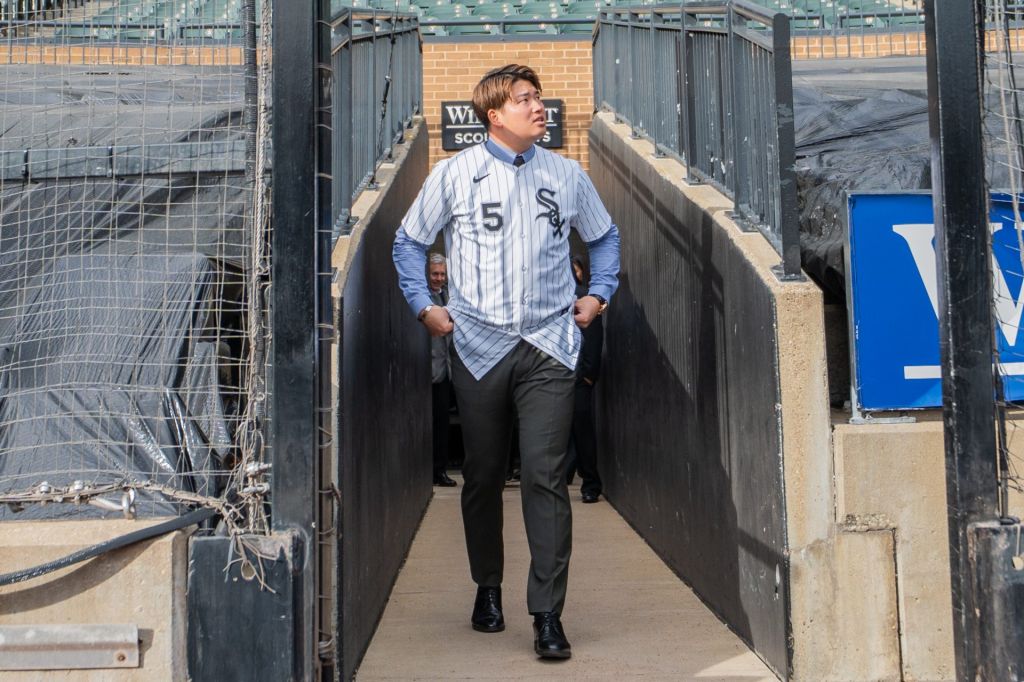
Although he broke the NPB single-season record for a Japanese-born player with an astonishing 56 home runs to carry the Tokyo Yakult Swallows to the 2022 Central League pennant—fans had dubbed him “Murakami-sama,” or “The Village God”—American front offices mostly refused to roll the dice on him. The Chicago White Sox capitalized on that hesitation and signed the 26-year-old infielder to a two-year, $34 million contract beginning in the 2026 season.
He quickly clubbed a rookie-record 20 home runs before June to upend the division and lift the White Sox into first place. A leg injury sidelined him for part of the season shortly afterward, but he returned to become the second Japanese-born participant in the Home Run Derby. He remains a massive success for Chicago and has also impacted clubhouse culture—a Japanese bidet was even added to the locker room. If the White Sox are to go far in this year’s postseason, Murakami will have to be a big part of the push.
The Japanese star represents yet another NPB supernova making a splash Stateside. Premium talent exports from Japan include Shohei Ohtani, Yoshinobu Yamamoto, and Ichiro Suzuki. But NPB is not a little-brother league to MLB, meant only as a feeder to the U.S.: It operates as a rich, fiercely competitive ecosystem on its own. Drawing more than 25 million spectators annually across its 12 franchises, NPB routinely packs many stadiums to more than 80% capacity.
Baseball is strongest when MLB and NPB are firing on all cylinders. The American game wouldn’t be what it is today without elite Japanese talent. “Godzilla” Hideki Matsui became a World Series MVP for the Yankees; Hideo Nomo did the near-impossible by throwing a no-hitter in the thin altitude of Coors Field; Yu Darvish became the fastest starting pitcher in MLB history to reach 1,500 strikeouts.
Still, despite its prestige and power, NPB is facing a reckoning. The immense popularity and success of Japanese players jumping to the U.S. earlier and earlier—or bypassing the league completely—has left it trying to protect its deeply rooted strength and independence, while also grappling with fulfilling the dreams and aspirations of its biggest stars to play in MLB.
Posting Players
MLB front offices no longer view Japanese stars as isolated curiosities but as cornerstones.
“The talent level has been there for a very long time,” says RJ Lara, director of collections and archives at the National Baseball Hall of Fame and Museum. “What teams have figured out is how to integrate the play style of Japanese players into their lineups, their routines, and their everyday clubhouse cultures.”
That success has made American front offices eager to get players from Japan to MLB as quickly as possible. But they can’t simply swoop in to pluck whoever they want.
An NPB player must accrue nine years of professional service in Japan before earning unrestricted international free agency. To leave earlier, their Japanese club must agree to “post” them, yielding a transfer fee from the MLB team based on the player’s new Stateside contract.
This structured relationship traces back to 1964, when the Nankai Hawks sent young reliever Masanori Murakami to the San Francisco Giants for minor league development. He pitched so well that the Giants refused to send him back, sparking a bitter international dispute. Murakami eventually returned to Japan, forcing the creation of the original United States–Japanese Player Contract Agreement. That document laid the foundation for today’s complex posting system.
Retaining superstar talent remains every Japanese club’s default preference, yet teams regularly agree to post their best players for business reasons.
Denying a player the opportunity to pursue an MLB dream breeds resentment, risking toxic clubhouse discord and alienating future high school recruits who want organizations supportive of their overseas ambitions. Under standard posting rules, teams are also incentivized with massive windfalls. MLB teams pay a release fee of 20% on the first $25 million of contract value, 17.5% on the next $25 million, and 15% on any amount beyond $50 million. The Orix Buffaloes, for example, collected more than $50 million when Yamamoto signed his megadeal with the Dodgers.
This year, alongside the White Sox acquiring Murakami, the Blue Jays signed Kazuma Okamoto from the Yomiuri Giants (widely regarded as the Yankees of NPB for their 22 Japan Series championships, nameless uniforms, and strict facial-hair policy). He’s the first position player the prestigious Tokyo franchise ever posted, which allowed it to collect more than $10 million.
Still, despite the big payday for NPB franchises, the finances are still complicated. It’s a gamble to post a player without knowing what his MLB contract will be. Both Murakami and Okamoto, for instance, signed U.S. deals slightly lower than expectations, resulting in smaller posting fees for their former clubs. NPB teams cannot undo an MLB deal once they post the player.
Diminished financial returns fundamentally alter how Japanese front offices are now evaluating the posting equation. Especially as players are leaving earlier, relying strictly on transfer checks as a sustainable financial crutch is no longer viable—and it’s forced the league to reconsider how it protects its enterprise.
Uncharted Paths Across the Pacific
Alongside increased pressure to post players, the league is also facing players getting more creative with their exit ramps, especially as modern success stories pile up.
First, more players are pushing to be posted before their nine years are served. Japanese players younger than 25 years old, or with less than six years of pro experience, fall under MLB’s international amateur signing-bonus pools, which dampens the financial return for their NPB team.
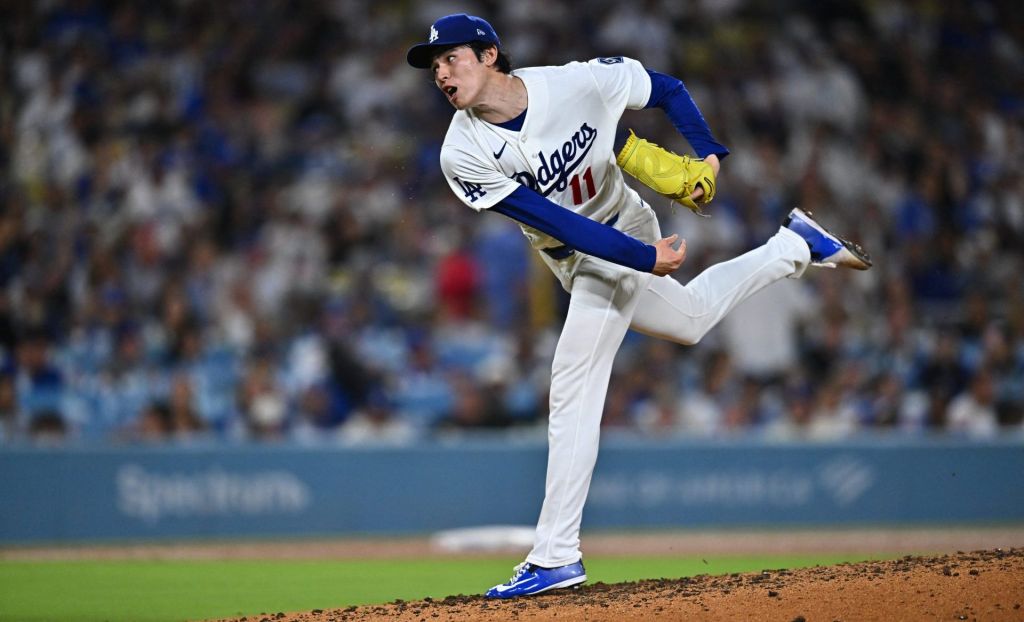
To sign with the Dodgers before turning 25, Roki Sasaki pushed for an early posting from the Chiba Lotte Marines. The Marines faced losing millions of dollars he would have brought by staying with the team; it also stifled the return to a modest fraction of an amateur bonus pool. But Sasaki forced Chiba Lotte’s hand—and when he landed in Los Angeles, he played a pivotal role out of the bullpen during the Dodgers’ 2025 World Series run.
There are also players who once would have played in NPB, sidestepping the league entirely.
Rintaro Sasaki is widely considered one of the most exciting Japanese prospects. In 2025, the teenage slugger opted to play abroad at Stanford, a move widely viewed as a loophole to bypass NPB and declare directly for the MLB draft. Knowing full well he could just stay in the U.S., the Fukuoka SoftBank Hawks still rolled the dice and used their 2025 first-round draft pick on him—taking the punt that their development pipeline was strong enough to lure him back to Japan.
After a solid, two-season run at Stanford, MLB interest swirled. The Miami Marlins selected Sasaki in the 2026 MLB draft, and he decided to sign with them to enter minor league development, instead of heading to the Hawks. It’s a risk for Sasaki—there’s no formal guarantee that an NPB club would welcome him back should his development stall. But whatever happens, his decision establishes a radical new template for the next generation of Japanese amateur stars—and adds another factor to how NPB is handling the future.
Push for Reinvention
With the changes, franchises are moving away from treating posting fees as temporary cash infusions to hunt for roster replacements. Organizations are instead directing capital toward ballpark infrastructure, international digital outreach, and turning their stadiums into year-round lifestyle destinations that draw crowds regardless of who takes the field.
After losing standout closer Yuki Matsui to the Padres in 2024, the Tohoku Rakuten Golden Eagles say they did not view the move as a loss, but rather a signal that the franchise needed to make a financial shift with the transfer fee it received.
“We position these funds as a sustainable source of reinvestment for our future,” Yuki Okamura, spokesperson for the Rakuten Eagles, tells Front Office Sports. “We strategically reallocate this capital into enhancing our development facilities, strengthening our scouting networks, and acquiring new talent.”
This reframe is part of a broader push to modernize within NPB.
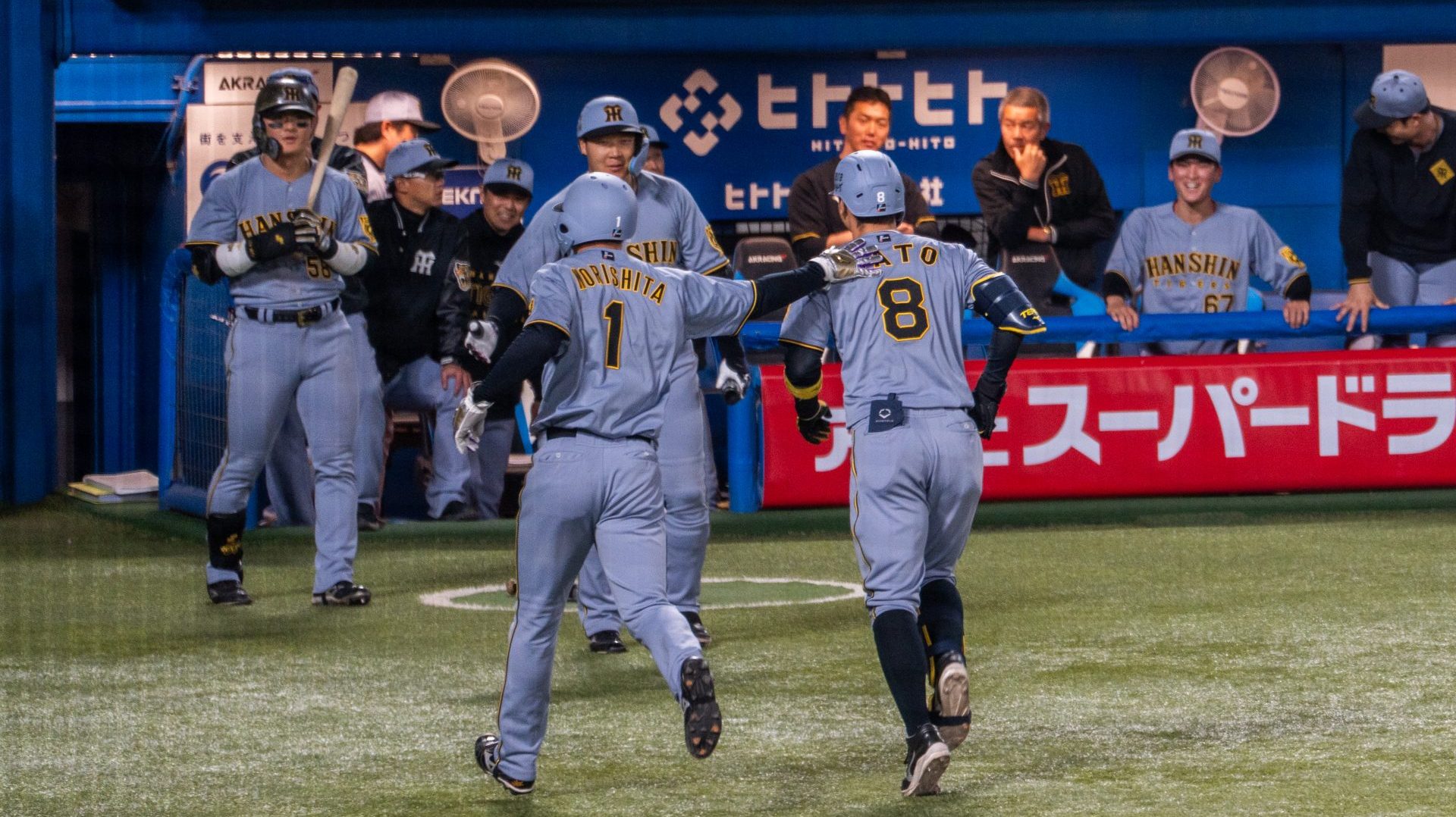
Rakuten, backed by its massive tech ecosystem, integrated a proprietary five-language AI translation tool on its website and tapped into global shipping networks to get merchandise overseas. The organization is actively mapping out expanded English ticketing options at Rakuten Mobile Saikyo Park Miyagi to court international travelers. The Yomiuri Giants are running an English Instagram account and plastering Tokyo airports with ads aimed at inbound tourists. And the Hokkaido Nippon-Ham Fighters, who launched Ohtani, have pushed this concept to an architectural extreme.
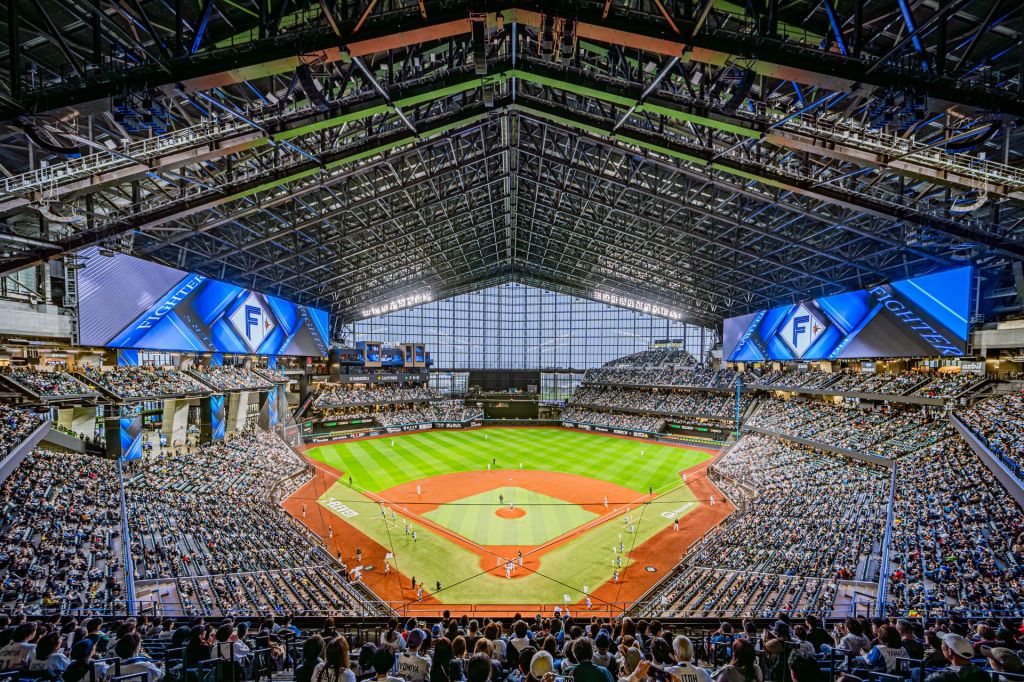
Working with HKS, the firm behind the Texas Rangers’ Globe Life Field, the Fighters built Es Con Field Hokkaido. It is the anchor of a year-round destination that features the Tower Eleven hotel and an active onsen right inside the stadium overlooking the field. Wesley Chang, the Fighters’ corporate strategy department chief, tells FOS the venue currently pulls in roughly 1,000 North American visitors a year. They are actively looking to drive up that number through international social media collaborations and partnering with YouTubers to frame the stadium as one of the world’s best.
If NPB plays its new cards right, its franchises also stand to benefit from Japanese stars’ success in MLB. Passionate Swallows supporters are migrating their allegiance to the White Sox following Murakami’s arrival—but Southsiders in Chicago are also adopting the Tokyo team, creating a cross-pollination of baseball devotion. (The White Sox did not respond to requests for comment regarding this international fan-base surge.) Fostering that international brand loyalty can give Japanese franchises a new fan base that survives roster turnover.
There is a cautionary tale here, however. Following ESPN’s 2020 broadcasts of the Korea Baseball Organization during the North American sports shutdown, KBO saw a spike in international interest. It has ultimately not been able to sustain that attention, especially without a targeted appeal to overseas fans. NPB is actively fighting to make sure that doesn’t happen in Japan.
And now, losing generational talent is simply just evolving into part of the business model in Japanese baseball.
“Through the success of players such as Shohei Ohtani and Yu Darvish, awareness of the Fighters has expanded well beyond Japan to audiences across North America and Asia,” Chang says. “While losing star players can present challenges, we believe that supporting their ambitions ultimately strengthens the Fighters’ global brand over the long term.”
Sustaining this commercial model requires Japanese teams to view departing superstars as international ambassadors rather than roster casualties. Lara of the Baseball Hall of Fame believes this modernization represents the most viable path forward for Japanese baseball.
“Baseball is an entirely global sport now,” Lara says. “Japanese front offices are realizing that trying to restrict players from testing themselves against the world is a losing battle. Embracing that reality, building these incredible destination ballparks, and using their former players’ success in America to turn international travelers into lifelong fans is how the league stays strong.”