This week, the Protect College Sports Act (PCSA), a bipartisan college sports bill, is expected to pass the Senate after another slate of procedural votes before a final floor vote. The more than 170-page legislation faces an uphill battle in the House—but if it passes, it could reshape college sports.
It would double the revenue-sharing cap and attempt to limit cap-circumvention NIL deals, implement a one-time transfer and five-for-five eligibility policy, impose agent restrictions, and offer certain requirements for health and safety standards and Olympic and women’s sports participation. It would also limit conference realignment, coaching transfers, and allow schools to pool and sell media rights together.
All of these provisions would take effect not on the day the bill is signed into law, but rather the first offseason/transfer portal period for each sport, FOS recently confirmed.
Paying Players
Most notably, the bill would double the amount of money schools could pay players, from about $21 to $48 million. In addition to the current $21 million schools can pay players directly thanks to the House v. NCAA settlement, schools could spend an additional $22.5 million to “retain” current players. Schools could also offer an additional $5 million to athletes in women’s and Olympic sports.
Players would be allowed to earn third-party NIL (name, image, and likeness) deals. The bill attempts to halt the use of NIL deals as revenue-sharing cap circumvention by requiring all deals procured through multimedia rights holders or with school sponsors to have a written notice that they’re not cap circumvention deals.
Players would be required to report all deals over $600 to their schools and the College Sports Commission. Using this data, an anonymized database of NIL deal activity would be available publicly.
Governing College Sports
The NCAA would be empowered to enforce a one-time transfer during undergrad, and a second for graduate school. It would further codify the NCAA’s current “age-based” eligibility policy, giving players five years to complete five seasons starting when they enter college or their 19th birthday—preventing anyone over the age of 24 from playing college sports. The NCAA could also prevent athletes who went pro or engaged in sports betting from being eligible.
The bill also implements guardrails on agents: requiring agents be registered with their state and sign a written contract with players before representing them, capping agent fees on endorsement deals at 5%, and creating an NCAA agent database.
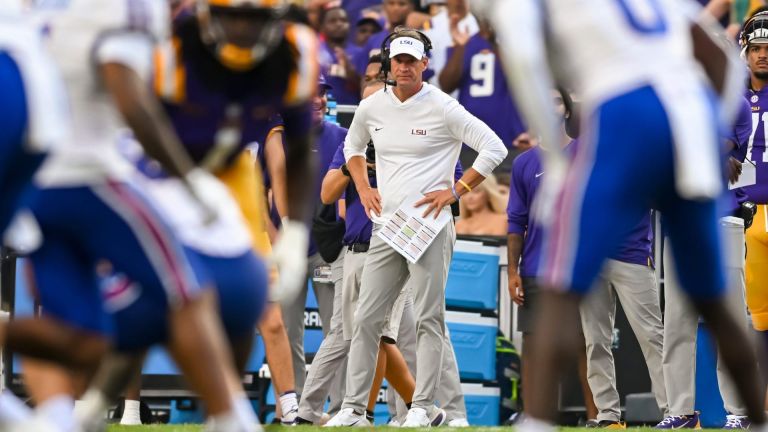
The “Lane Kiffin rule,” would prevent any head coach, offensive, defensive, or special teams coordinator from an FBS institution from performing head coaching duties for a different program during the same season. Coaches who violate this rule would be suspended for another season.
The bill also provides for certain academic protections, like prohibiting coaches from forcing players to take certain majors that would make them more available for practice. It also requires schools to implement and adhere to health and safety standards, as well as provide players with certain healthcare benefits. Finally, while the bill requires schools to maintain a certain number of women’s and Olympic sports roster spots (commensurate with the amount in the 2024–25 academic season), the provision only applies to Division I and FBS institutions that report more than $80 million in annual athletics revenue.
Rules Enforcement
The NCAA and College Sports Commission would receive antitrust exemptions to adjudicate the bill’s proposed rules. The bill would also supersede conflicting state laws (though it would leave intact state laws prohibiting transgender athletes from competing in women’s sports).
The bill would effectively eliminate most lawsuits, including those challenging eligibility rules—though this would not retroactively apply to any ongoing eligibility cases.
The bill does, however, allow players a private right of action if rules are violated. Schools have a 30-day “cure period” to fix the perceived problem before litigation can go forward. Lawsuits involving allegations of sexual misconduct, physical injury, or death are not subject to the “cure period” clause.
Future of College Sports
Schools would be allowed to pool and sell media rights as one package, with several limitations. At least 75% of FBS institutions have to agree to do so, and all Division I schools must be offered to join. In addition, conferences couldn’t attempt to unravel any current media rights contracts to do so, meaning this would not happen for at least several years, when current conference media deals expire. Any conference or school that refuses to participate couldn’t be sued.
The bill would severely limit expansion and conference realignment. The Power 4 conferences would be barred from merging with one another, and no power conference could exceed 19 members. Any power conference school looking to switch conferences would have to first spend three years as an independent (a provision that would sunset six years after the bill goes into effect).
As for athlete employee status, the bill explicitly remains neutral. But critics argue that despite the neutrality clause, it would effectively prohibit players from collective bargaining in the future, given that the bill would have to be repealed by Congress before any of the aforementioned provisions could be negotiated through a CBA.