Want more from Front Office Sports
in your search results?
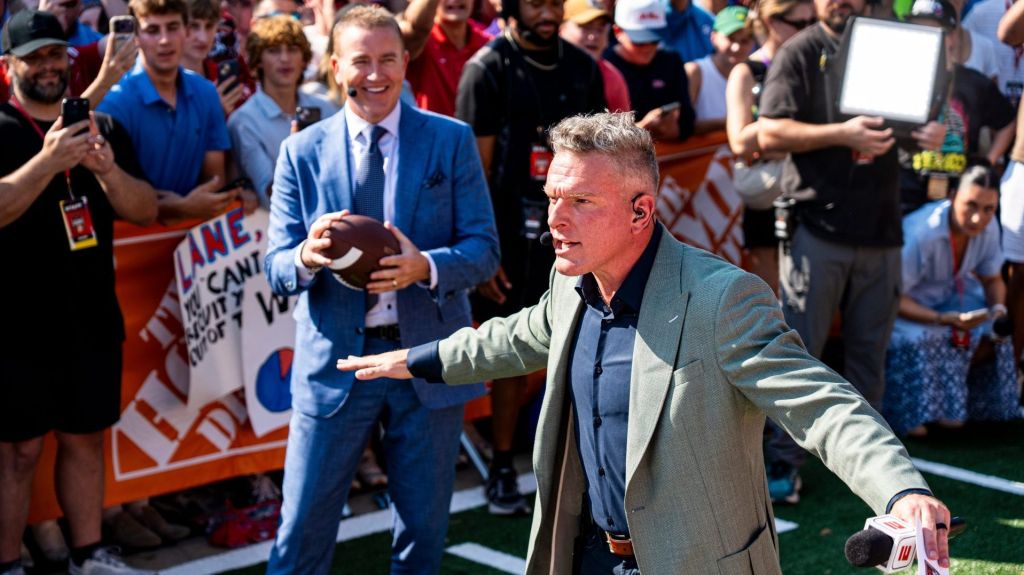
In 2023, ESPN analyst and former NFL kicker and punter Pat McAfee launched his ESPN College GameDay kicking challenge, where students attempt a 33-yard kick to earn five- or six-figure sums. It returned for a fourth season this fall, and early on, it’s shaping up to be students’ most lucrative season yet.
Through the first eight weeks of the season, the contest has awarded $8.5 million to students and charities, after giving out $2.7 million last season.
At Week 8’s Utah–Houston matchup in Salt Lake City, Utah junior Morgan Boring missed three $1 million attempts, including two from shorter distances.
Last week, BYU freshman biology major Carter Smith won $3 million in Provo, Utah, after connecting on his second kick attempt. Smith missed his first attempt, but was given another chance to win the full amount, with $1 million each contributed by McAfee, Utah Jazz and Utah Mammoth owner Ryan Smith, and Ryan Sweeney.
The previous week, Mason Hill, a sophomore cybersecurity major from Talladega, Alabama, missed both attempts worth $1 million each Saturday in Tuscaloosa, but McAfee still donated $500,000 toward recovery efforts from Hurricane Isaias.
This season, contestants can win more than during previous years. During College Gameday’s first broadcast this season at LSU, McAfee announced a partnership with Home Depot in which the company would match his contributions throughout the season. According to an ESPN spokesperson, Home Depot is matching contributions up to a certain undisclosed amount, with the majority of the money donated directly from McAfee.
Each episode, the crew picks one fan from the crowd to kick a 33-yard field goal live on-air—the length of an extra point—in exchange for a monetary prize to help cover tuition costs; in some cases, there’s extra leftover for charity. Fans who are 18 or older and among the first 300 to show up to the broadcast are eligible—they just can’t be current or former college athletes, under the influence of alcohol, or wearing shoes other than sneakers or cleats. Fans enter their name through a raffle, which takes place about 30 minutes before the show begins. (The official rules are on ESPN’s website.)
The gimmick has become a fan favorite and show highlight. In December 2024, the GameDaycrew drove McAfee’s goalposts in a truck overnight from South Bend, Ind., to Columbus, Ohio, during a special two-episode, 24-hour expanded College Football Playoff edition of the show.
Here’s a tracker of all the students who have made and missed kicks this year—for the $5.5 million in prize and charitable money so far:
Week 1 in Baton Rouge for Clemson-LSU: Freshman Bruce Morello missed both of his attempts in the opening week of the season and was awarded $0.
Week 2 in Austin for Ohio State–Texas: Freshman Connor Kacena-Merrell connected on his second attempt to win $1.2 million. Actor Matthew McConaughey and show host Kirk Herbstreit each pledged $100,000, bringing his winnings to $1.2 million. He donated half to charity.
Week 3 in Oxford for LSU–Ole Miss: James Whitehead made his first attempt to claim the $1 million prize.
Week 4 in Knoxville for Texas-Tennessee: Colby Lamb made his second attempt, winning the $1 million award (and another $500,000 for charity).
Week 5 in Iowa City for Ohio State–Iowa: Finley Banfig missed her field goal attempt but won a consolation prize of $150,000 (and another $150,000 for charity). McAfee also donated $1 million to the University of Iowa Stead Family Children’s Hospital.
Week 6 in Tuscaloosa for Georgia-Alabama: Mason Hill from Talladega missed both attempts (each worth $1 million) indoors at Alabama’s Coleman Coliseum because of Hurricane Isaias. McAfee still donated $500,000 toward storm recovery efforts.
Week 7 in Provo, Utah, for Notre Dame–BYU: BYU freshman biology major Carter Smith missed his first attempt but connected on his second to win $3 million, with $1 million each contributed by Pat McAfee, Utah Jazz and Utah Mammoth owner Ryan Smith, and Ryan Sweeney.
Week 8 in Salt Lake City, Utah, for Utah-Houston: Utah junior Morgan Boring—a chemical engineering major—was unable to connect on three attempts (each worth $1 million), including two attempts from a shorter distance of about 20 yards away.
Download the FOS App
The business of sports, in your pocket.



Scan the QR code to get the app now.