Prediction markets look a lot like traditional sports betting, but the way trades actually work is different. Market makers like Susquehanna compete to provide liquidity rather than a single sportsbook setting the price.
The job of a market maker is simple: make sure there’s a price when a customer wants to trade. Companies like Susquehanna, Jump Trading, and the market-making arms of Kalshi, Polymarket, DraftKings, and FanDuel provide liquidity by posting bid and ask prices for contracts, allowing customers to buy or sell even when another trader isn’t immediately available to take the opposite side. The platforms themselves create the markets—such as “NBA Rookie of the Year Winner?”—and then traders and market makers can post prices on the markets.
This is different from traditional sportsbooks, which act as “the house” by setting the price for a bet, serving as the counterparty to the customer, and determining the price if that customer wants to exit a wager before it has settled.
From a consumer’s perspective, betting on an online sportsbook looks and feels very similar to trading on a prediction market.
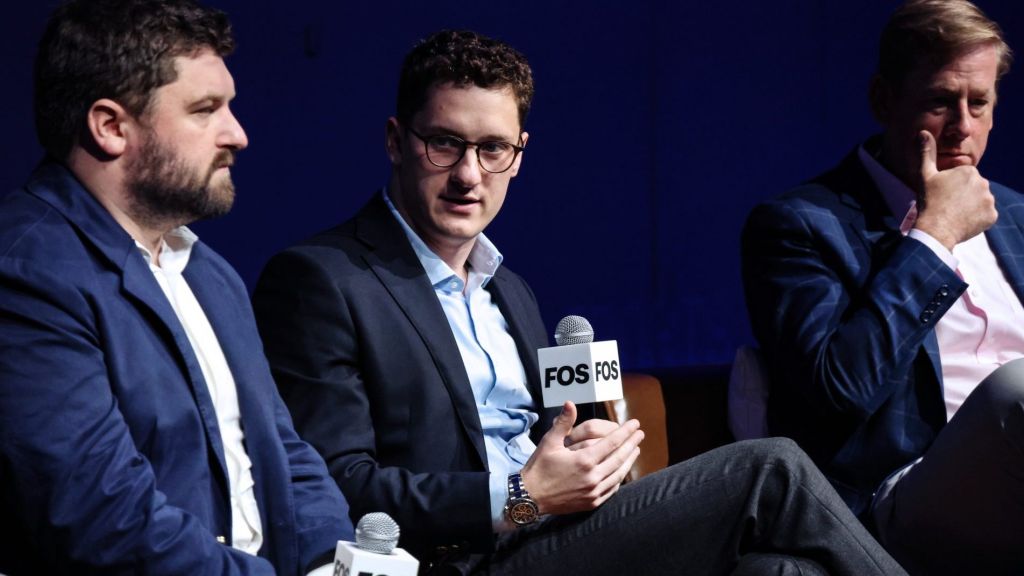
“But when you start digging even a little beneath the surface, it’s actually a much different mechanism,” Susquehanna’s head of prediction markets Ric Best told Front Office Sports during last week’s Asset Class event.
“Essentially, our role is to help bridge demand across time and space,” Best said.
One trader may want to buy a contract on the Chicago Bears while another wants to sell it, but they may not be on the market at the same time, Best explained. On a prediction market, each could transact with a market maker at different times, allowing the market to keep moving.
That’s a key difference from the traditional sportsbook model, Best said. For instance, if a customer places a futures bet on the Houston Texans to win the Super Bowl on DraftKings’ traditional sportsbook, the company sets the price and takes the other side of the wager. If that customer later wants to get out of the position, the only option may be to accept a cash-out offer from DraftKings.
On a prediction market, the customer is trading into a live market. If they buy a contract and later want to sell it, they can sell at the best available bid from market makers and other traders.
“You’re no longer held hostage to a single dealer price,” Best said.
He described market makers as the “framework, the scaffolding” that helps companies ensure there is “always a price that you can transact at, which is important.”
Critics say market makers are just prediction markets’ version of “the house.” But JB Mackenzie, VP and GM of futures and prediction markets at Robinhood, said that market making may be what “people misunderstand” the most about the industry. Market makers compete with one another to provide liquidity, he said (Robinhood does not operate a market-making business.)
He said “a healthy market is one in which you have participation from all” market makers, as well as retail traders and other institutional participants.
According to Mackenzie, a “singular, one-stop shop” with one market maker taking the opposite side on all trades is “actually illegal in the United States.” That’s called a contract for difference, or CFD.
Novig founder and CEO Jacob Fortinsky sees plenty of room for more institutional participation in prediction markets. He said during the Asset Class event that the amount of market-making firms, prop-trading firms, and other institutional investors “that are still sitting on the sidelines is massive.”
“It’s two orders of magnitude more than the participants in the market now,” he said. “So I think you will have increased institutionalization of this space, and it’ll start to look and feel more like traditional financial markets.”
Best welcomes the prospect of increased competition.
“Competition is great for the industry, it’s great for consumers,” he told FOS. “This industry will never succeed if it’s not a great experience, the best experience possible, for customers. Market maker competition is integral to that.”