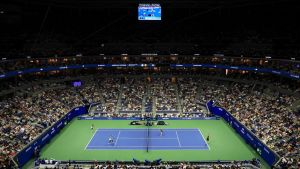
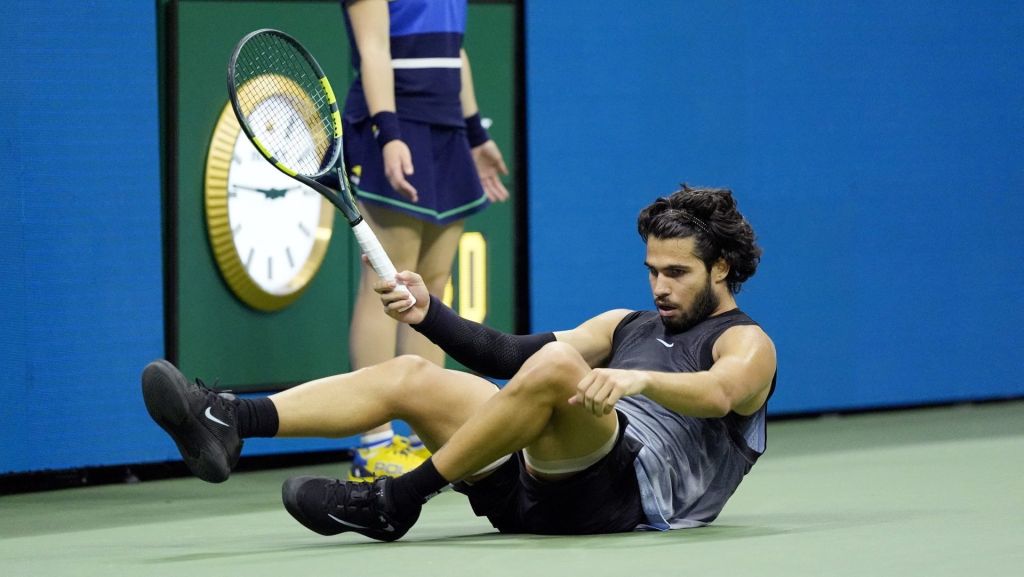
This U.S. Open has had its share of controversies, from misbehaving influencers to marijuana smoke wafting over the courts.
No incident sparked conversation within the sport quite like the 3:33 a.m. finish time of Ben Shelton’s epic five set win against defending champion Carlos Alcaraz.
But anyone who thinks the powers that be in tennis might be moved by the vocal criticisms of having that match—featuring the American male star who’d go on to make it to the final—begin at such an ungodly hour, you haven’t been paying attention to this business.
In conversations with a slew of tennis sources in the days since the dramatic 3:33 a.m. finish, none expect any quick fix for the late-night (or more accurately early-morning) issue that crops up annually at the U.S. Open and Australian Open.
Insiders point to the solution the French Open has implemented of one match per evening session, and to the ensuing controversy after scheduling nearly only men’s matches in that slot, as evidence that tournaments may feel ‘damned if they do, damned if they don’t.’
There is no one in the sport right now officially pushing any agenda item for the Slams to converge and “solve” the late night fiascos.
One slam, Wimbledon, follows an 11 p.m. curfew due to the rules of the tournament’s residential neighborhood. Unless the other three adopt such a curfew, which isn’t in consideration (certainly not in New York, “the city that never sleeps”), putting a deadline on late night matches is out of the question.
Ben Rothenberg is a longtime tennis journalist who has advocated for best-of-three sets, instead of the best-of-five at the Slams for men. He has taken criticism for that take from purists in the sport who view best-of-five sets as sacrosanct. But he told Front Office Sports that in the wee hours of the Shelton-Alcaraz match he was receiving DMs from previous critics that maybe he has a point.
“I have had enough of waiting on subway platforms in the middle of the night,” Rothenberg said, noting that he finished his column for his Substack newsletter “Bounces” at 7 a.m., then slept for a few hours before returning to the USTA Billie Jean King National Tennis Center.
When the day session went long, the USTA could have moved either the night session women’s or men’s match to Louis Armstrong Stadium. But doing so would have risked the same criticism the French Open faces, if a women’s match were bumped from the main New York show court. And bumping the top American against the defending champion wouldn’t have been an option.
One source pointed out this is the first tournament under the new stewardship of U.S. Open tournament director Eric Butorac, and he might not have wanted to make such a weighty decision without a full tournament under his belt.
Some other proposals are routinely floated. Playing best-of-three for the men through the quarterfinals, leaving best-of-five to the last two rounds when scheduling opens up. Tennis broadcaster Mark Knowles tweeted in favor of keeping best of five sets but moving to no-ad scoring and starting the night and day sessions earlier on the main show court. Novak Djokovic, too, advocated for “possibly no ad” scoring in a quick comment in July to a social media creator. Andy Roddick has suggested moving one or two of the quarterfinals to the second court (though this wouldn’t solve the problem in the first four rounds).
The Slams have come together on a handful of competitive changes, the most notable being a 10-point tiebreak in the deciding set. For years, only the U.S. Open had a deciding-set tiebreak (and that was first to seven). Even the monstrous 70-68 final set of the 2010 Wimbledon first-round match played over three days between John Isner and Nicolas Mahut did not sway the other three Slams—at least not right away—to adopt a deciding set tie break.
The late-night problem only afflicts two of the four, and both sometimes celebrate the absurd late-night finishes. In the wake of the Shelton-Alcaraz finish, the U.S. Open account tweeted out a faux “permission note” for people to give their employers the next morning.
New Tennis Australia chief executive Andrew Abdo made waves by suggesting a switch to best of three for men, before the Australian Open quickly cleaned that up and reiterated its support for best-of-five matches.
There is no one solution that will satisfy everyone. The Alcaraz-Shelton match timing resulted from a rare confluence of events: four matches scheduled on Ashe starting at 11:30 a.m. and ending at 3:33 a.m. the next day. In fact, Ashe used to have three matches during the day session, and due to overflow into the night session, the third match was excised. Now there are day sessions that last just a few hours, which leads to a whole different set of complaints.
One thing all can agree on: pity the poor scheduler.