Want more from Front Office Sports
in your search results?
The new executive director of the NBA’s union says the players have an issue with NBA Europe.
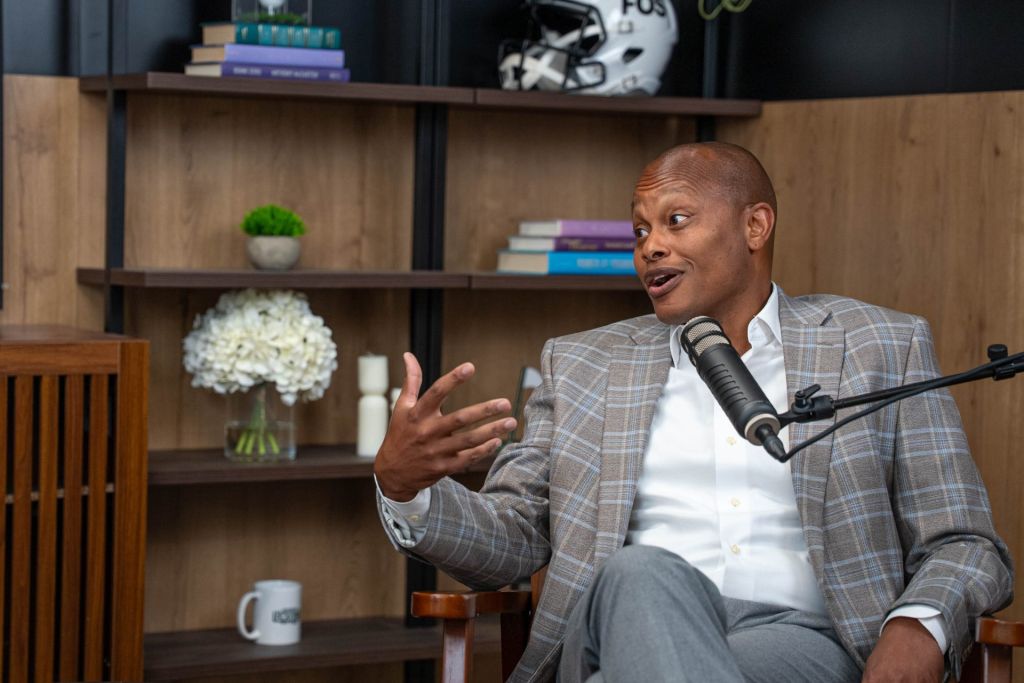
In an interview with Front Office Sports, NBPA executive director David Kelly said that NBA players deserve a piece of the revenue generated by the incoming expansion league in Europe.
“It’s clearly being built on the backs of current NBA players, and prior NBA players, on the whole cachet that they brought to this league. And then to start a rival league that they do not participate in, participate in the economics of, we have a very serious problem with that,” Kelly told FOS’s Baker Machado.
Kelly is a lawyer and former Warriors executive who replaced Andre Iguodala in the union role at the beginning of August.
He argued that NBA Europe will still generate “basketball-related income,” which is why NBA players should receive a piece of the pie. He said it shouldn’t be 51%—the amount the players receive from the league’s current revenue—but believes there should be a “good faith” amount.
NBA Europe is set to launch in the fall of 2027. Kelly said the league does not need to provide revenue from the Europe league to NBA players under the current collective bargaining agreement, but the union will aim to change that in the next deal.
The current CBA expires on June 30, 2030, but either side can declare its intention to opt out in October 2028, which would end the agreement after the 2028–29 season. Kelly said there have been no formal talks with the league or commissioner Adam Silver.
“There’s just pleasant conversations at this point in time laying out some of what our issues are,” Kelly said. “But when it comes time to actually negotiate the CBA, we are very firm on some of the things that are important and that need to change.”
The NBA did not immediately respond to a request for comment.
‘We Are No Fan Of The Second Apron’
One of the major issues the union has with the current CBA is the second apron—which the union itself agreed to in the last set of labor negotiations. The apron is an upper threshold of the salary cap that many NBA teams have begun to view as a hard cap. It has caused several championship contending teams like the Nuggets and Thunder to make personnel moves to avoid the apron’s penalties, while some players have apparently taken pay cuts to allow their teams to sign additional talent.
“We are no fan of the second apron,” Kelly said. “I would say there is no fan of the second apron. Maybe there’s 30 or 31, if you include Adam,” he said, referring to the owners and commissioner.
Kelly added that it’s “pretty clear” the second apron has made it “harder to keep teams together.”
“The league will say that’s part of the reason why they put it in place—they think that it’s necessary for parity. I would point to the fact that there was parity before the second apron was put into existence,” Kelly said.
The NBA has had eight different champions in the last eight seasons, a feat Silver has proudly promoted. Kelly said he is a fan of parity, but said the league’s previous system already allowed for parity before the second apron was instituted during the 2024 offseason.
“We had a very good system that was working. The league was able to negotiate the NBA TV deal under the prior system. I think parity was the excuse that was used to put in something that’s really about cost control,” Kelly said.
Asked about how the second apron has led players to take paycuts, Kelly said players have the right to make their own decisions on their contract. However, he said the players are feeling the brunt of the impact of the second apron.
“The system puts all of that weight on the player because the ownership has made clear that they’re not going past the second apron because of all of these parade of horribles that happen if you go past the second apron,” Kelly said.
Some of the penalties of breaching the second apron include the inability to aggregate two or more players’ salaries in a single trade and the loss of signing and trade exceptions. The Nuggets are the only team in the NBA currently above the second apron, which appeared to influence their trade of Peyton Watson to the Cavaliers last week that did not include a player in return.
Silver has defended the second apron numerous times in the past, often citing parity as the primary reason.
“The goal, in essence, is that every team, regardless of market size, has a roughly equal chance to compete, and to run a rational business,” Silver said in October 2024. “It seems to be working so far.”
Last month, Silver said the system is meant to “create competition.”
“I think the system is working incredibly well,” Silver said. “The goal isn’t necessarily to have a different champion every year, but we’ve had eight different champions over the last eight years. As I’ve said previously, one of the things we were hoping to accomplish in this latest collective bargaining agreement was to dispel this notion that only certain markets were in a position to truly compete. We just saw a Finals between, essentially, the largest market in the league in New York and one of the smallest markets in San Antonio.”
‘I Give Adam Credit’
Tanking has been an issue in the NBA for years, and the league addressed it starting next offseason by introducing a “3–2–1” system that flattens lottery odds and punishes the league’s very worst teams with inferior lottery odds.
Kelly said Silver deserves “credit” for making a significant change to try to address the issue. However, he said the jury is still out on whether the system actually creates change.
“Glad to see the league address it,” Kelly said. “We had some other measures that we think the league could have looked at in order to address tanking. If this works, great, no pride in authorship. If this doesn’t, we’ll be retabling some of the ideas that we had.”
Kelly said tanking is an “integrity” issue, but also a “revenue” issue for the league as players resting leads to fewer fans coming to games. However, he said that in many instances of load management, teams are making the decision to rest players.
“Guys want to play,” Kelly said.
PLYRS UNTD
Kelly also lauded one of the union’s new initiatives, a new lifestyle brand launched in June, about a month before he joined. The brand will leverage NBA players’ name, image, and likeness into merchandise, content, fan experiences, and other additional business opportunities.
“We saw that no one was really representing the players from an authentic standpoint, like who they really are, and we as the union have the ability to, or the mandate, to represent the players,” Kelly said.
Download the FOS App
The business of sports, in your pocket.



Scan the QR code to get the app now.