Want more from Front Office Sports
in your search results?
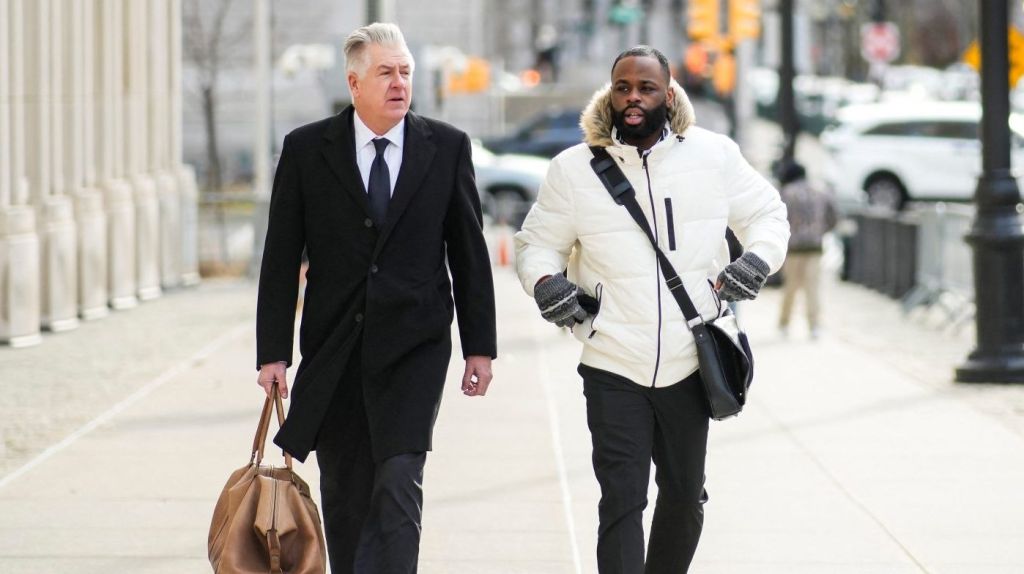
Federal prosecutors want to put Terry Rozier’s childhood friend and alleged co-conspirator back in jail over claims he has tried to influence witnesses, including through threats. Rozier’s attorney says this is a “desperate attempt” by the government to portray the former NBA guard and his associates in a negative light.
De’Niro Laster was first charged in the government’s sprawling sports betting case last October. According to the indictment, Rozier—while he was still on the Hornets—informed Laster he would pretend to be hurt and prematurely take himself out of a March 2023 game. Laster then allegedly sold that information to multiple co-conspirators, who bet the under on multiple Rozier lines for about $100,000.
Laster, who has been free on bond, has violated the conditions of his release, according to the government, which has accused him of obstructing justice and tampering with witnesses by attempting to influence their testimony and intimidating them, including through social media posts.
“The government must prepare for trial and should not be put in the untenable position of having to instead direct its efforts towards constantly re-investigating a defendant on bond who is repeatedly attempting to tamper with the judicial process,” prosecutors said in a significantly redacted 13-page letter filed with the Eastern District of New York on Wednesday.
The letter says that Laster has been attempting to interfere with the investigation as far back as 2024, more than a year before he was arrested. First, sometime after September 2024, Laster and other co-conspirators allegedly expressed suspicions that someone whose identity was redacted was cooperating with the government.
Social media accounts belonging to Laster have made posts featuring a rat emoji, which the government explained in its filing “generally refers to a person who is perceived as a snitch, informant, or someone who cooperates with law enforcement or provides information about others to the authorities.”
The government also has concerns about a “crew” called “GMB” that includes Laster, Rozier, and other friends. Prosecutors say that group has shown they have “access to guns” through photos on social media posted prior to the charges that were brought in this case. The “online flaunting of gun access” has contributed to the government’s concerns about potential threats.
Rozier’s attorney, David Markus, tells Front Office Sports that “GMB” stands for “Get More Blessings.” That’s the motto of Rozier’s nonprofit foundation, 12 Blessings, he says, which “raises money to empower disadvantaged kids.”
“The nickname started with Terry’s high school basketball team,” Markus says. “The government’s attempt to imply that it was some sort of criminal organization is absurd. Terry has never been charged with any firearms offense or with intimidating a witness, and nothing in this filing alleges that he did either. It is nothing more than a dog whistle and a desperate attempt by the government to taint Terry because it sees its case is falling apart.”
“In this case, GMB stands for ‘government’s massive blunder,’” Markus adds.
The government has previously expressed concern about a potential conflict of interest in the case because Rozier is paying for the legal fees of Laster, who is represented by a different attorney, Matthew Evan Corcoran.
Rozier is set to go to trial on February 8, 2027 for his alleged role in the federal gambling probe. He has been charged with conspiracy to commit wire fraud, conspiracy to commit money laundering, bribery in sporting contests, and honest services wire fraud conspiracy. Laster was originally charged with conspiracy to commit wire fraud and conspiracy to commit money laundering, each of which could carry up to 20 years in prison. Two additional charges were brought against Laster in a superseding indictment made public in May.
A week ago, Rozier’s attorneys asked the judge to drop two counts against him, according to the docket, claiming Rozier never agreed to manipulate his performance or knew that gamblers were betting on him. Rozier’s lawyers cited a text thread between Laster and another gambler not to tell Rozier about the wagers.
“This should end the case,” Rozier’s lawyers wrote in the filing. “One does not hide a bet from the person who supposedly sold it.”
In response, federal prosecutors wrote to the judge asking to deny Rozier’s request and said they’ve “developed evidence from multiple sources that this text chain does not relate to sports gambling.”
Laster’s attorney did not respond to a request for comment, nor did representatives for the other defendants in the case.
Download the FOS App
The business of sports, in your pocket.



Scan the QR code to get the app now.