Record levels of compensation continue to proliferate around the NFL, particularly on the defensive side of the ball, further showcasing the league’s vast wealth.
This week’s beginning of training camps has marked a series of contract extensions and restructurings, and NFL teams are taking additional advantage of a $301.2 million salary cap that rose 8% from 2025 and set a new league record. Among the latest deals:
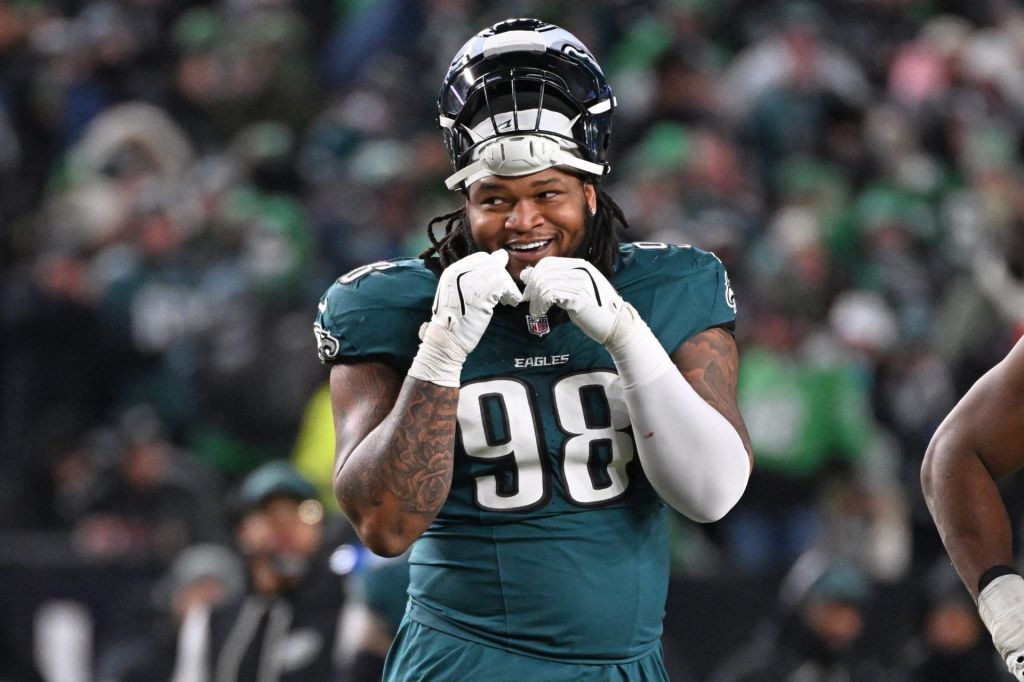
- The Eagles signed two-time Pro Bowl defensive tackle Jalen Carter to a four-year, $152 million contract extension. The agreement, worth up to $160 million overall and containing $106 million in guaranteed money, is the richest ever for a defensive tackle, in both average annual value and total guaranteed money. Carter is now under contract through the 2031 season.
- The Browns signed defensive back Denzel Ward to a two-year, $62.2 million contract extension. That deal includes $52.3 million in guaranteed money, and makes Ward the highest-paid player at this position in league history for the second time. With an AAV of $31.1 million, the Browns’ deal also shows a further retooling for Cleveland after June’s trade of star defensive end Myles Garrett, and it moves just past the Rams’ deal with cornerback Trent McDuffie signed less than five months ago.
These agreements also follow a recent spurt of rookie signings as camps opened, including the four-year, $57.27 million deal for Raiders quarterback Fernando Mendoza, the No. 1 pick in the NFL Draft in April. Last month, Chiefs quarterback Patrick Mahomes also restructured his deal once again to bring him more than $63 million in AAV beginning next year, setting another NFL record.
Since the beginning of the new league year in March, other position compensation milestones have been set at wide receiver (Jaxon Smith-Njigba, Seahawks), offensive tackle (Laremy Tunsil, Commanders), center (Tyler Linderbaum, Raiders), edge rusher (Will Anderson Jr., Texans), and kicker (Chris Boswell, Steelers).
These record-breaking contracts further reflect the league’s unmatched financial success, as it brought in $14.5 billion in national revenue in the last fiscal year. Much of the league’s already-soaring income comes from domestic media deals that are about to be renegotiated.
Even with the increased financial latitude for NFL teams, the current situation still has some constraints. In addition to the salary cap itself, the Packers recently posted their first non-pandemic operating loss since 1990 and stressed the need for further revenue generation.