Congress is increasingly waking up to the rapidly growing prediction-market industry.
Some of the most well-known names in national politics have recently criticized prediction-market platforms like Kalshi and Polymarket, from California Gov. Gavin Newsom and Florida Gov. Ron DeSantis to Rep. Alexandria Ocasio-Cortez (D., N.Y.) and Mick Mulvaney—the former White House chief of staff under President Donald Trump during his first term who now leads an organization that opposes sports event contracts.
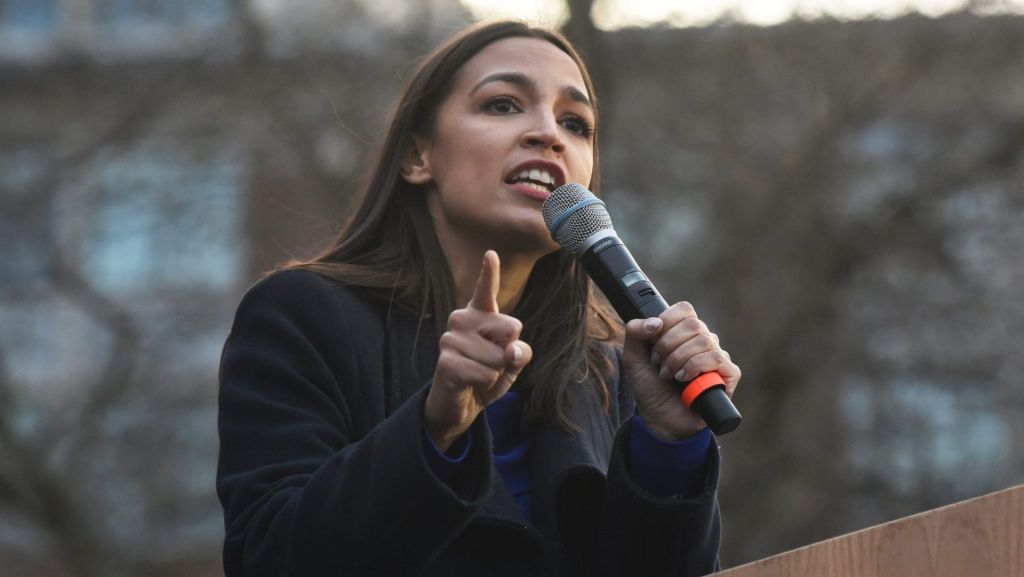
“Pervasive gambling is not good for society,” Ocasio-Cortez said when Polymarket announced its nine-figure deal with Major League Baseball.
Following the MLB-Polymarket deal, Sen. Chris Murphy (D., Conn.) said on Pablo Torre’s podcast that “if the NBA and the NFL get in bed with these prediction markets, they are knowingly corrupting the sport.” Murphy is involved in a bill introduced earlier this month focused on insider trading on war-related markets.
There has been a flurry of proposed legislation this week aimed at banning sports event contracts and installing safeguards against insider trading and market manipulation.
The latest and perhaps most sweeping, announced Thursday, is called the STOP Corrupt Bets Act. It will be introduced by Sen. Jeff Merkley (D., Ore.) and is being co-sponsored by Sen. Elizabeth Warren (D., Mass.). A House version of the bill will be introduced by Rep. Jamie Raskin (D., Md.).
The legislation would prohibit event contracts on elections, sports, and government and military actions.
There have been at least six other bills introduced, including a few bipartisan efforts:
- The Preventing Real-time Exploitation and Deceptive Insider Congressional Trading Act—or PREDICT Act—from Rep. Adrian Smith (R., Neb.) and Rep. Nikki Budzinski (D., Ill.) would ban government officials and their families from trading on platforms.
- The Prediction Markets Are Gambling Act from Sens. Adam Schiff (D., Calif.) and John Curtis (R., Utah) would block platforms regulated by the Commodity Futures Trading Commission from offering sports event contracts.
- Sen. Amy Klobuchar (D., Minn.) put forth a bill targeting insider trading by government officials.
- Rep. Ritchie Torres (D., N.Y.) introduced a bill in January focused on insider trading and backed by more than 30 Democratic lawmakers, including former House speaker Nancy Pelosi.
- A February bill from Rep. Dina Titus (D., Nev.) would prohibit sports event contracts and casino-style games from prediction-market platforms.
- Reps. Blake Moore (R., Utah) and Salud Carbajal (D., Calif.) earlier this month introduced a bill that would prohibit a number of event contract types, including sports.
Lawmakers have yet to comment on whether they might look to consolidate any of these bills into one larger piece of legislation.
What Kalshi and Polymarket Say
The platforms maintain that sports event contracts fall under the exclusive jurisdiction of the CFTC, whose chairman is supportive of the industry.
Kalshi spokesperson Elisabeth Diana has pointed out that insider trading by government officials is already banned on the platform. In response to the bill from Schiff and Curtis, she said sports event contracts “offer a fairer choice to consumers, with no house that restricts winners and hooks people the more they lose,” and warned that banning those markets would “push this behavior offshore, where no regulation exists.” (Kalshi regularly refers to Polymarket, its hated rival, as an offshore company.)
There have been several high-profile allegations of insider trading as the U.S. has attacked Iran and Venezuela. Israel arrested several people over suspicions they put money on Polymarket’s international platform using classified information related to military operations.
Kalshi has been attempting to show it is serious about policing illicit activity. Last month, it banned and fined two traders who were caught betting on inside information. Earlier this week, it announced an expansion of its policies against insider trading and market manipulation, highlighting “new technological guardrails that preemptively block politicians, athletes, and other relevant people from trading in certain politics and sports markets.”
Polymarket also announced updated market integrity rules and policies this week that “amplify” existing requirements governing insider trading and market manipulation on both its U.S. and international platforms.
“These rule enhancements make our expectations abundantly clear for every participant across both platforms and highlight the compliance infrastructure we have already built,” Polymarket chief legal officer Neal Kumar said in the press release.
What Comes Next?
In addition to all of the proposed bills, there are more than 20 lawsuits winding through the U.S. court system against Kalshi, Polymarket, Robinhood, Crypto.com, and more. Legal experts expect the issue of sports event contracts to eventually reach the Supreme Court.
When it comes to the legislation, there’s still a long road for any of the bills to be passed into actual law. And there’s no guarantee that any given bill would become law even if it gets to the president’s desk.
President Trump, who would have to sign any bill, has significant ties to the industry. His son Donald Trump Jr. is an investor in Polymarket and advisor to Kalshi, and his social media platform, Truth Social, plans to launch a prediction-market platform of its own.
Trump recently told The Washington Post that prediction-market platforms are better than the “fake polls” and that they “predicted me pretty right” in 2024. He also said he doesn’t pay much attention to prediction markets because he’s “focused on winning battles of every way, shape, and form,” but that he’ll look at platforms “some day in the future—maybe.”