Want more from Front Office Sports
in your search results?
The NCAA is facing another legal challenge to its eligibility rules.
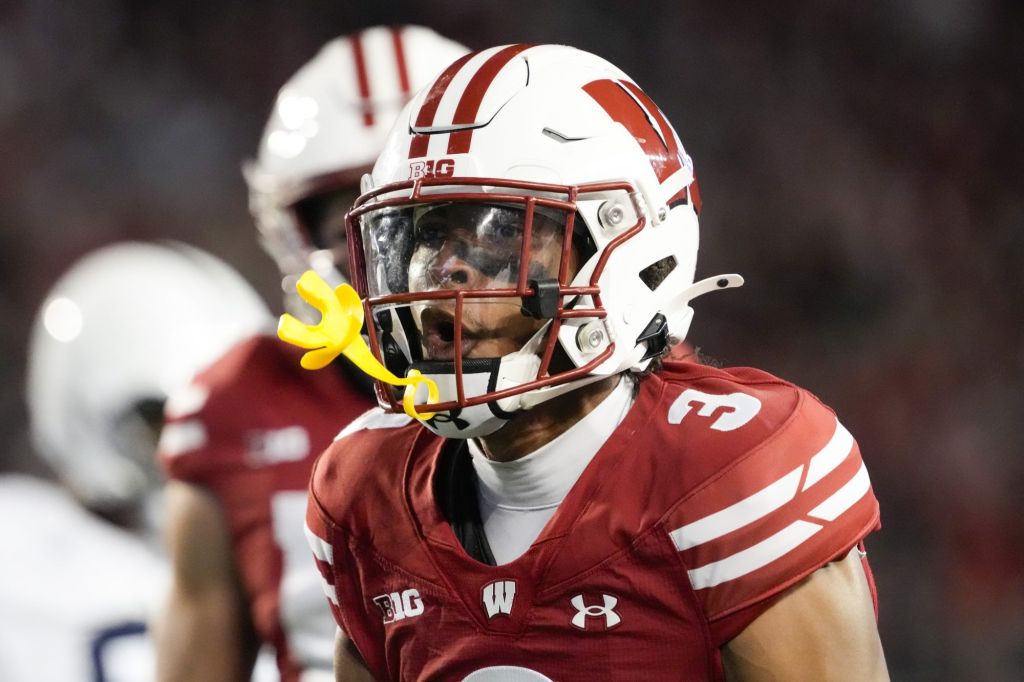
Wisconsin cornerback Nyzier Fourqurean filed a lawsuit Wednesday in the state’s Western District Court against the NCAA alleging the two years he played at Division II Grand Valley State shouldn’t have counted toward his five-year eligibility clock. He also accuses the NCAA of denying him an opportunity to monetize his name, image, and likeness by not allowing him another year of eligibility.
Fourqurean’s attorneys asked the court for a temporary restraining order and preliminary injunction that would stop the NCAA from enforcing its bylaws for its five-year eligibility clock and three-year limits for transfers. His suit also says his first year at Grand Valley State should not count toward his eligibility because his father died in 2021, leading him to miss time training with the team.
The lawsuit alleges the NCAA violated the Sherman Antitrust Act in addition to other federal laws. Fourqurean’s attorneys sought the injunction because of the Feb. 7 deadline to declare for the NFL Draft. On Jan. 9, he played in the Hula Bowl, an all-star game for possible NFL draft prospects. He told The Athletic he is operating as if his eligibility has expired, which is why he played in the Hula Bowl and has been training for the pros.
According to the complaint, the NCAA is limiting Division II and III athletes’ “economic opportunities to participate in the NIL marketplace” by not letting them compete in a third and fourth year in Division I football.
Fourqurean’s lawsuit comes two months after Vanderbilt quarterback Diego Pavia sued the NCAA in Tennessee court over similar eligibility standards, alleging it violated antitrust laws by counting a player’s junior college seasons toward their five-year eligibility period. A month after Pavia’s lawsuit, the NCAA issued a blanket waiver granting former junior college transfers an additional year of eligibility.
The NCAA said in a memo announcing the waiver that it applied to athletes who “competed at a non-NCAA school for one or more years,” which is where Fourqurean’s lawsuit differs from Pavia’s. Division II and III institutions are still NCAA schools, which is why the waiver didn’t apply to players such as Fourqurean.
Fourqurean told The Athletic on Wednesday that Wisconsin staffers approached him with the idea for the lawsuit after he was denied a hardship waiver for the 2021 season at Grand Valley State and that Pavia’s lawsuit influenced his decision. He said even if he was granted two more years of eligibility, he would use only one.
Fourqurean’s attorneys did not immediately respond to a request for comment.
“From what I heard, we have a very strong case,” Fourqurean said. “Obviously, it’s not the exact same as [Pavia’s]. But we didn’t get compensated at the Division II level and Division III levels. It’s pretty similar to the juco situation when it comes to economically.”
Fourqurean signed with Grand Valley State, which is in Michigan, out of high school, but didn’t play in 2020 because the season was canceled due to the COVID-19 pandemic. His father died the following summer, causing him to miss weeks of offseason training, the complaint said.
After his father died, Fourqurean played in 11 games at Grand Valley State in 2021. In 2022, he had four interceptions in 13 games and was named a Division II All-American by the Associated Press. He transferred to Wisconsin for the 2023 season, where he started five games before emerging as a starter in 2024, tallying 51 tackles and one interception.
According to the National Junior College Athletic Association, roughly 335 football players transfer to Division I programs annually. The same amount wind up at Division II or III schools. The transfer portal has paved the way for more players who start their careers at the lower college levels to get the opportunity to play at a higher level. Former Missouri running back Cody Schrader started his career at Truman State, a Division II school, before becoming one of the nation’s leading rushers. He spent the past season in the NFL with the Los Angeles Rams.
Fourqurean’s lawsuit could be trying to get him another year to help make the same leap.