Want more from Front Office Sports
in your search results?
The NFL is closing in on a labor deal with its referees and could avoid a potential disaster to start the 2026 season.
The league is nearing a formal agreement with the NFL Referees Association, according to industry sources and multiple reports, that would avoid a work stoppage. The pact, if completed, would end months of rancor between the two sides. The union has a ratification vote scheduled for Thursday evening, more than three weeks before the May 31 expiration of the current pact.
While economics have been part of the labor negotiations throughout this nearly two-year-old saga, the league has also been eager to achieve other gains, including elevating standards used to measure referee performance and increasing the length of the probationary period for new officials.
“This is an opportunity for us to improve the state of our officiating,” NFL EVP Jeff Miller said in March. “The owners were consistent in saying, ‘We’re more than happy to pay for performance.’ This was consistent through the course of the discussions over the last couple of days. But what they are insistent upon—insistent upon—is that performance of the officials and the accountability for their performance has to improve. And that’s where we are in these negotiations and that’s exactly where we’re going to stay.”
Both sides declined to comment on the latest status of the talks. ESPN initially reported the advancing negotiations.
Notably, the public vitriol between the two sides has quieted considerably over the last month. In an on-air interview with ESPN preceding the recent NFL Draft in Pittsburgh, league commissioner Roger Goodell similarly toned down the rhetoric and said, “I think we all want to reach an agreement. It’s important for us to reach an agreement. … The conversations have been productive recently, and we’re pleased with that, and we hope that continues.”
If a new labor deal is ratified, it would negate a provisional rule approved at the NFL’s recent annual meeting in Arizona. There, team owners approved a measure in which the league’s officiating department in New York could consult in real time with replacement officials and use replay to correct clear and obvious calls missed by those alternates.
That additional rule was designed to act as something of a safety net should replacement officials be needed.
What Might Have Been
Even with that rule in place, however, the NFL faced a possible repeat of the start of the 2012 season. That year featured a similar, 110-day lockout of the referees, with replacements pulled primarily from lower-level colleges and minor pro leagues.
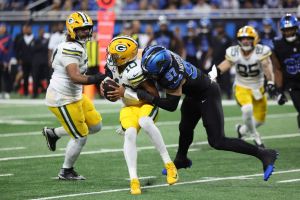
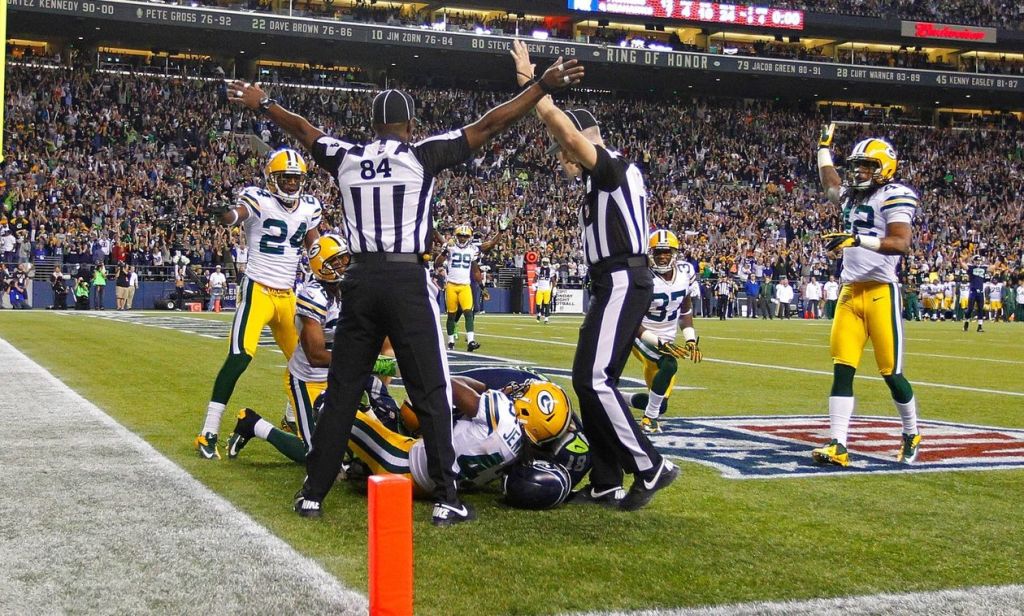
Most notably, that period included the infamous “Fail Mary” game in which a Week 3 contest on Monday Night Football between the Packers and Seahawks ended in a Seattle game-winning touchdown that the league later conceded involved an uncalled offensive pass interference penalty. Had that penalty been called, it would have ended the contest in a Green Bay victory. Instead, the Seahawks’ touchdown also included two referees standing right next to each other, making opposing calls on the play.
Two days after that game, the NFL and NFLPA reached a deal, and Goodell acknowledged the widespread attention “may have pushed the parties further along” toward the agreement. The Packers’ loss also helped lead the team to being the No. 3 seed in the 2012 playoffs instead of the No. 2 seed with a first-round bye. Green Bay then lost on the road to San Francisco in the divisional playoffs.
Replay technology has improved considerably since then, but there is still a sizable gap in the speed of play in the NFL and the lower levels of football where replacements ordinarily work. That difference would almost inevitably lead to game-altering calls by replacements.
Download the FOS App
The business of sports, in your pocket.



Scan the QR code to get the app now.