Want more from Front Office Sports
in your search results?
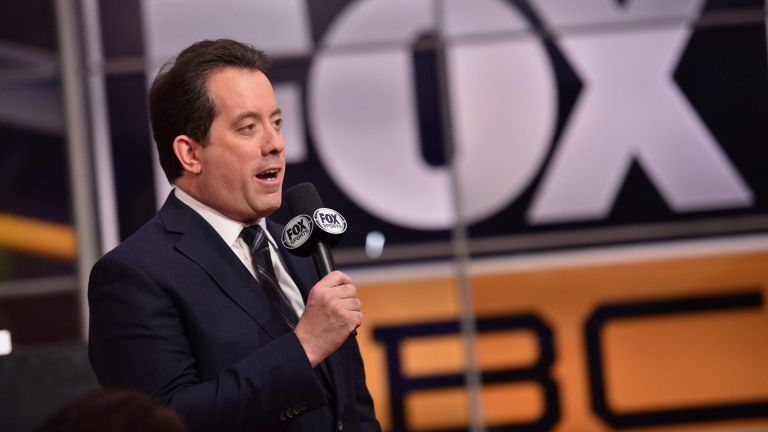
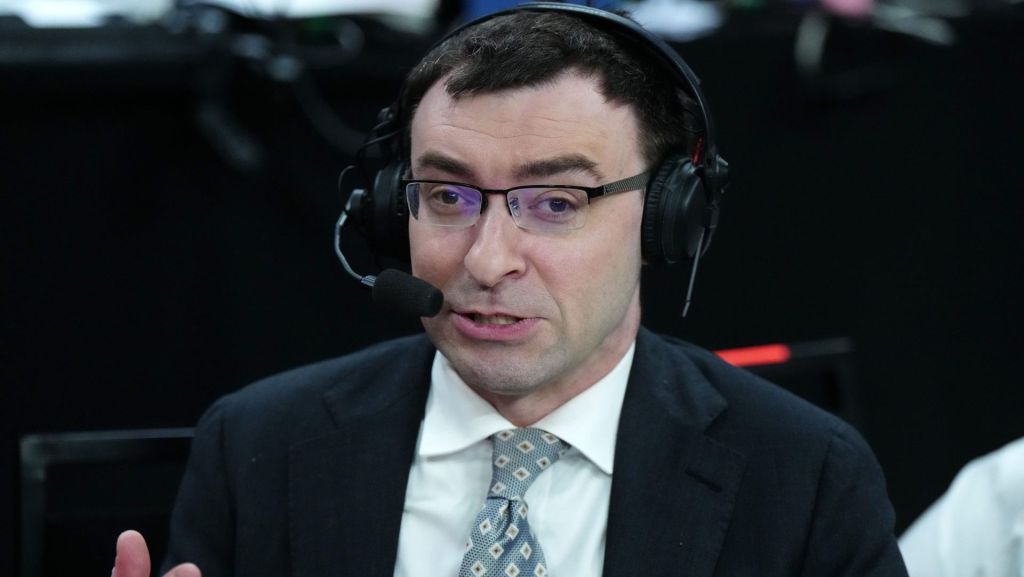
CHICAGO—Prior to calling this past week’s Sunday Night Baseball matchup between the Cubs and Giants at Wrigley Field, NBC play-by-play broadcaster Jason Benetti spoke with Front Office Sports..
We discussed what it means to become the voice of a national marquee property, how he developed the confidence to tell jokes with a dry sense of humor during games, and what he learned from working with Bill Walton. He also reflected on the recent passing of Stacey King, the late Bulls color commentator who won three championships with the team as a player.
Front Office Sports: You’re now the signature voice of a marquee national property for the first time. What has it been like to consummate that journey?
Jason Benetti: It’s a total honor to do a package that I grew up watching, albeit on another network. The confluence of NBC Sports, where I watched the Bulls all the time growing up, and then Sunday Night Baseball, which was always on TV [on ESPN], we all want to do things people care about in life. We want to do things that make an impact.
When you have an opportunity to be in that sort of chair, it’s a total honor. You see the resources that NBC puts into it, and you see the great people that we have around, drumming around flashbacks from who-knows-where, and the analysts that we have that are spectacular on the whole—I grew up wanting to do radio, because I love words, and I love describing things. But the teamwork that TV can provide when you have a high-level group is just different.
FOS: You have a very dry wit, more-so than any other working announcer of your stature. What gave you the confidence to be yourself and trust your comedic timing that the jokes are going to land?
JB: I watched a lot of SNL growing up—a lot of it. It’s a piece of me to care about timing. But I would also say baseball is the best sport that affords you the chance to do “asides” while also honoring the big moments of the game.
I think timing comes in a lot of different containers. There’s comedic timing, but also timing with broadcast partners and the production truck and the right number of words for a play that’s working pretty rapidly.
I’ve never wanted to do anything but be myself, because I really had no choice—I had no choice of blending in. That was never really an option for me on television. So I guess that’s what leads me down the road less traveled, if you put it that way. It just has to be what’s in my heart because that’s the only way to do work or art or whatever you want to call it that is the truest to yourself.
We all have one shot at this, in anything we do. You might as well do the thing that’s closest to your heart.
FOS: Has there ever been a boss that told you to knock it off [with the dry jokes]?
JB: Probably. I remember the first game I ever did with Bill Walton, in Maui. I had somebody on the crew—and he was right—who said, “We need you to be an ally to the game too. You can’t just play with what Bill’s doing. You’re there in part because you have to do all of it.”
That’s great advice, because I love Bill. I love him to this day, and he’s not walking this mortal coil. He was that kind of guy who made me always curious about that next thing he was going to say, but you also need to honor the moment. We’re going to have big moments over the course of this season and into the playoffs [on NBC], and you have to do right by the moment.
There are also people who are going to be playing these highlights for their family forever. If you’re talking about something else, you haven’t honored that moment in the middle of all that. So it’s also about timing.
But yeah, I’m sure there have been people who are like, “Yeah, that’s not funny.” But—people go to comedy clubs to heckle all the time. It’s part of the deal. Not that I’m ever going to do standup. The point being—I think my career changed when I realized that some people aren’t going to like it. Be true to yourself.
FOS: What Olympic sport would you most like to call for NBC if they gave you the option?
JB: Baseball would be the one off the top of everybody’s head because I’m doing baseball there. But one of the sports that I’ve gotten into in the past is team handball. It’s a ridiculously fast sport. It’s got sort of hockey-ish and lacrosse-ish tendencies. But it also seems to have a lull every once in a while that you can do something with. I like the pace of it.
I had some friends play water polo in high school, and they told me how absolutely rugged it is as a sport. I think that kind of competition is interesting too.
FOS: What’s your favorite announce booth of all time to watch?
JB: ESPN Big Monday. Sean McDonough, Jay Bilas, Bill Raftery. Sean is one of the best to ever be on this Earth in big moments. College basketball, growing up, they were the crew. They had one of everything. They had Jay, who at that point was the buttoned-up one. And then Raf, who was the guy you want to have a drink with. And then McDonough, who’s an extraordinary pro.
But all three of them have electric senses of humor, and the ability to snipe at a moment’s notice, and then pick the game back up. To me, I revere Sean, but I’ve gotten to work with Raf and Jay, and they’re geniuses too. It was an All-Star team, and they did it every week for years.
FOS: What’s your favorite memory or best story about Stacey King [the legendary Bulls color commentator who passed over the weekend]?
JB: I just remember, and there’s not a specific memory to go along with this, because we riffed on Otto Porter’s name pretty much right after he got traded into the Bulls’ locker room. We had a great time with Are you down with OP?
He was always the guy who was looking to build camaraderie. He wanted to talk to you, and about the game. I swear to you, it was like three games in, I called a friend of mine and said, “He gets all the attention for the catchphrases, but he’s a damn good analyst.” Everything I asked him, he had a good answer to.
I think he’ll be known for how generous he was to fans, and how boisterous he was on the air, and all the catchphrases—hot sauce and beep beep and be like Zach [LaVine]. But he was everything you’d want in a partner. He knew the game extraordinarily well, but he also wanted to be a partner. That just doesn’t go for everybody who’s doing that job.
That year, he was dealing with five fill-ins [on play-by-play], and then it was maybe a couple of us after that, but he wanted to be a good partner to everybody. He said not a bad word about any of us to anyone. He just wanted us to build us from jump street, and I think that’s a rare trait. I love that guy.