Want more from Front Office Sports
in your search results?
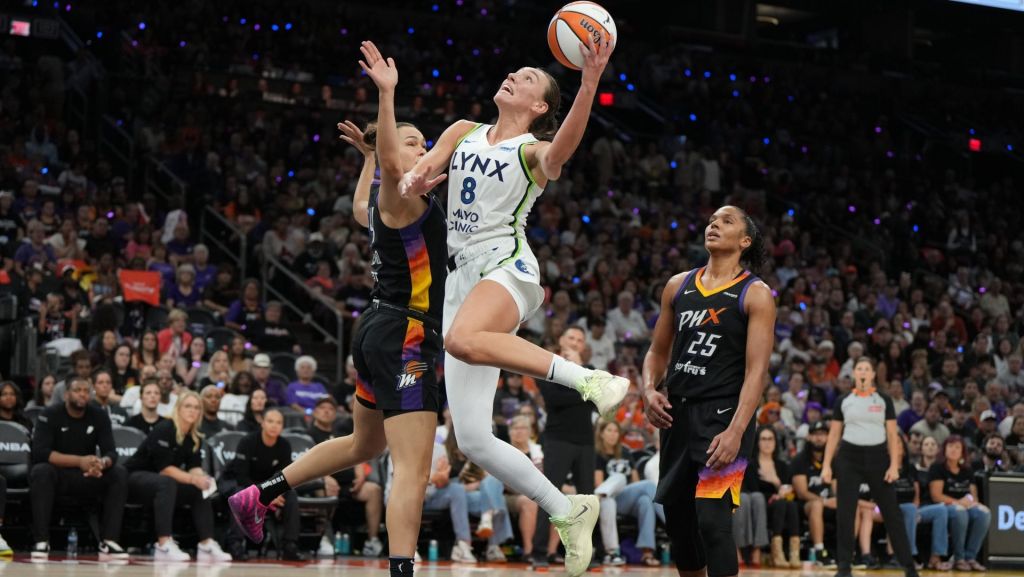
As negotiations between the WNBA and WNBPA for a new collective bargaining agreement inch forward, the league’s finances remain the biggest point of contention.
The WNBA’s financial records—like those of many sports leagues—are private, contributing to an obscure picture of the extent of its losses in the first three decades of existence. However, over the years the WNBA has taken opportunities to share some numbers publicly, and it has opened a portion of its books to players amid negotiations.
In 2018, NBA commissioner Adam Silver said the WNBA lost on average over $10 million per year. By this measure, the league would have lost roughly $210 million up until that point. In 2024, the league was expected to lose about $50 million according to a report from The Washington Post. Now, the league is claiming it is at risk of losing “hundreds of millions of dollars” as a result of the WNBPA’s latest proposal.
In other ways, though, the league’s stock is soaring, with billionaires paying nine-figure fees to join it.
The WNBA has amassed nearly $1 billion in expansion fees since Golden State was awarded a team in late 2023. Joe Lacob and Peter Guber, who own the Valkyries and the NBA’s Warriors, paid a $50 million expansion fee.
In 2024, Larry Tanenbaum and his Kilmer Sports Ventures were awarded the 14th WNBA franchise in Toronto for a price tag of $50 million. Later that same year, Lisa Bhathal Merage and Alex Bhathal via their RAJ Sports venture paid $75 million for the league’s 15th franchise in Portland.
The WNBA teams in San Francisco, Toronto, and Portland have turned out to be three of the biggest bargains in recent sports history.
In June of last year, the WNBA announced three new teams—Cleveland, Detroit, and Philadelphia—all owned and operated by the NBA team in those markets and coming at a cost of $250 million each.
“This historic expansion is a powerful reflection of our league’s extraordinary momentum, the depth of talent across the game, and the surging demand for investment in women’s professional basketball,” WNBA commissioner Cathy Engelbert said when the league’s three latest expansion teams were announced.
But the WNBA does not count those fees as part of league revenue. The league has not responded to numerous requests from Front Office Sports for clarification on how these funds are distributed to stakeholders.
Unlike leagues such as the NBA or NFL, the WNBA is not solely owned by its individual team owners. The league’s stakeholders are broken down into three buckets: 42% is controlled by the NBA’s owners, 42% is controlled by WNBA owners, and the remaining 16% is controlled by an outside group of investors as a result of a $75 million capital raise in 2022. Every time a new team is added, the 42% controlled by WNBA owners gets diluted.
The investors who control 16% of the league do not incur any of the operating costs, according to sources familiar with how the WNBA works. Some of these investors—like Herb Simon, Ted Leonsis, and Joe and Clara Wu Tsai—are also NBA and WNBA owners, giving them three different stakes in the league. According to multiple sources, the WNBA is exploring buying back that 16% stake. However, these same sources said because there is no call provision it would come at a substantial cost—if the group is even willing to sell it back.
A closer look at the books
The biggest factor in the league’s annual revenue is its new media rights deal—negotiated alongside the NBA—worth $200 million annually over the next 11 years. Among the other ways the league makes money are ticket sales, merchandise, and sponsorships.
Multiple league sources told FOS there is a lack of clarity around how money from the media rights deal is being split up among WNBA stakeholders. Details surrounding the distribution of all league revenues, including national and local, are also murky because of the three groups of stakeholders.
Requests from FOS to the WNBA about how league revenue—including the $2.2 billion from the 11-year media rights deal—is shared between its three groups of stakeholders also went unanswered.
If the entire $200 million were divided equally between the 15 WNBA franchises without paying 42% to the bucket controlled by NBA owners and 16% to the new investors, each WNBA franchise would get roughly $13.3 million per year from the media rights deal alone. If the WNBA owners were to receive just 42% of the media rights money, that would be $84 million per year or $5.6 million to each of the 15 teams.
Roger G. Noll, a Stanford economics professor who has long studied accounting in professional sports, told FOS earlier this year that the WNBA’s opaque setup meant that the losses of one team or another was almost entirely irrelevant.
“Because of this convoluted ownership structure and because of the way the revenues are divided the income statements of the teams are meaningless,” Noll said.
In the league’s latest proposal, which it said would result “in a huge win for current players and generations to come,” the salary cap being proposed is $5.65 million per team—nearly the exact amount each team would get from the media rights deal if 58% of it is taken off the top for the other stakeholders. (One league source said this is just a coincidence.)
The union’s most recent proposal is seeking a salary cap just below $9.5 million and a 27.5% share of total league revenue over the lifetime of the deal. A source familiar with the league’s way of thinking claims this would result in $460 million in losses over the lifetime of the deal.
Multiple sources have estimated the proposed deal is on a six-year term, which would mean, per this claim, the league believes it would lose roughly $77,000,000 per year or about $5 million per team. However, there is only a $3.9 million divide between the union’s proposed salary cap and the league’s per team, per year.
When asked about the accuracy of the claimed $460 million in losses and the calculation used to reach this figure, the league did not respond.
There are a number of ways to claim losses as a privately owned company. One big one, according to Noll, is by finessing general and administrative costs.
“You can do this in a closely held corporation,” Noll said. “You couldn’t play that game if you were the CEO of a company that’s traded on Wall Street because it would break a million rules. But a family owned corporation, this is perfectly legitimate.” Owners could, as one example Noll suggests, pay themselves a bonus “that absorbs all the profits.”
Every WNBA team has vastly different operational costs based on fixed expenses—such as analytics, team staffing, and travel—and how much they’re willing to spend.
For example, the Las Vegas Aces, Phoenix Mercury, and Toronto Tempo are all paying their coaches at least $1 million salaries, and untold more on assistants. Additionally, some teams operate out of NBA arenas while others like the Chicago Sky, Atlanta Dream, Dallas Wings, Connecticut Sun, and Washington Mystics play in smaller venues. Those arenas can be less expensive to operate, but also generate less ticket and concession revenue. Wintrust Arena, where the Sky plays, has a capacity of just over 10,000 while CareFirst Arena, where the Mystics play, has a capacity of 4,200.
Many WNBA teams are not even standalone businesses, instead operating under an umbrella that includes a multi-billion dollar NBA team—making a $5 million loss a drop in the bucket.
The league and union have found alignment on a number of non-economic proposal items, including facility standards. But the economic value of facilities is subject to interpretation—one owner’s eight-figure expense is another’s investment that boosts a team’s valuation. The Mercury’s facility, which opened in 2024, cost $100 million while the Sky’s, being built in partnership with the village of Bedford Park, invested $38 million into the project.
And there is the question of why owners want to own a sports team in the first place, which is not solely to earn a profit.
If the players and owners can reach a new CBA, this will be the 30th WNBA season. By 1983, more than 30 years after the NBA was founded, the league was operating at a loss between $15 and $20 million. Just 7 of the league’s 23 teams were profitable. In April of that year, the NBA and its players’ union reached a four-year CBA that included a revenue-sharing plan giving players 53% of the league’s gross revenues, according to reports at the time.
There are creative ways to bridge the financial gap between rich and poor teams, although it may widen the gap on the court. In the NBA and MLB, for example, every dollar teams spend over a certain amount on player salaries is penalized with a “luxury tax,” and both leagues have extensive revenue-sharing systems that subsidize its smallest markets. Baseball pays its revenue-sharing recipients up to $100 million a year, while the NBA’s teams that receive revenue sharing earn between $20 and $40 million.
The WNBA and the WNBPA have discussed implementing salary cap exceptions related to those that already exist regarding player injury and pregnancy. The union has proposed additional exceptions that would soften the cap further, but the league has not engaged.
Multiple sources have told FOS there have been profitable teams throughout the WNBA’s history, including right now. The degree and sustainability of those profits is less clear.
Download the FOS App
The business of sports, in your pocket.



Scan the QR code to get the app now.