Want more from Front Office Sports
in your search results?
“U.S., European Economies Slow Sharply as Recession Risks Grow”: That was Thursday’s headline in the Wall Street Journal’s Economy section.
U.S. equities and bond markets have unequivocally sunk into bear-market territories, while in March the Consumer Price Index (“CPI”) was reported at 8.6%, the highest such figure since 1981.
Retail companies such as Revlon are filing for bankruptcy, media companies are preparing for significant pullbacks in advertising spending, and crypto markets…well I won’t even go there.
Yet, despite the month-long indicators of a looming recession, sports-related deals have been flourishing.
As recently as last week, Front Office Sports covered a $2.5 billion deal between Apple and Major League Soccer. Additionally, on June 15, the Indian Premier League and Viacom18 — backed by Indian billionaire Mukesh Ambani — came to a five-year, $6.02 billion agreement to sell their aggregate streaming and television rights. They secured streaming rights alone for $3.05 billion.
Media rights are largely insulated from the overall macroeconomic environment due to their long terms and tendency to balloon in value over time. While it’s not a hard-and-fast rule — see the EPL’s reduced rights deal in 2018 — the two most recent media rights deals support it.
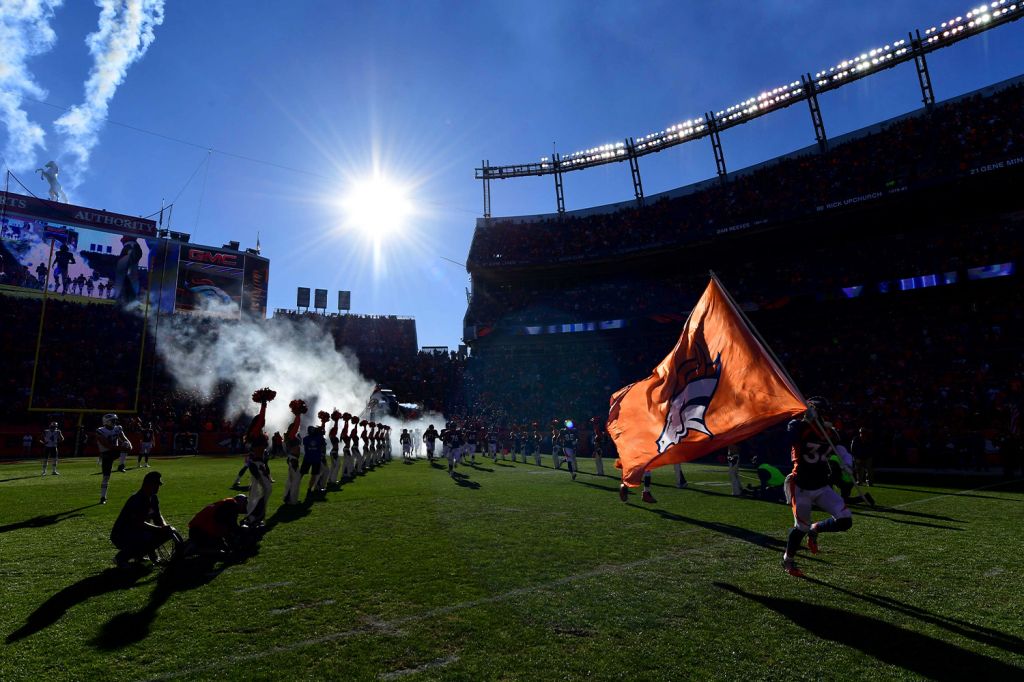
Then there are team deals. In 2022 alone, franchises like Chelsea, AC Milan, and the Denver Broncos all sold for record sums.
- Denver Broncos: $4.6 billion
- Chelsea FC: $3.2 billion
- AC Milan: $1.3 billion
Team valuations and media rights are something of a “chicken or the egg” situation. Some team valuations couldn’t be achieved without the growing value of media rights and vice versa.
Regardless, the two tend to move in tandem, and more importantly, continue to increase despite difficult (at best) market conditions.
What’s Driving Valuations
Aside from media rights deals, a multitude of factors contributes to increased valuations.
Scarcity, for one, plays an important role. The value of the top teams comes from their illiquidity and the fact that a globally recognizable brand, like Chelsea, just doesn’t become available very often — recession or not.
Furthermore, the legalization of live sports betting in key U.S. markets, and continued growth in streaming platforms have also unlocked revenue-generating opportunities for prospective owners.
In an interview with the Financial Times, Goldman Sachs head of sports finance Greg Carey stated, “These assets are unlike anything else in the world. Live sports are ingrained in people’s lives. That doesn’t mean if we go into a recession that things won’t slow…but when you’re a monopoly with live content, you have a lot of ways to withstand storms.”
One huge caveat regarding franchise valuations: The individuals who put up the capital to buy these assets aren’t necessarily moved by markets. Interest rates and inflation are unlikely to deter one of these investors, whose time horizons stretch far beyond the duration of an impending recession.
What 2008 Can Teach Us
In an interview with the FT, media rights expert Tim Crow stated, “Sports rode 2008 out really well… It’s difficult to call anything recession-proof, but the fact is there were long-term contracts, and they had to be honored.”
The long-term contracts help insulate those assets.
Additionally, sports assets are largely uncorrelated to markets. When it comes to major indices like the S&P 500 or the NASDAQ, interest rates play a large role in determining the value of each individual company. And sports teams have diversified revenue streams that allow them to weather the market storm.
In 2009, the Premier League actually saw clubs retain their fan attendance numbers — and in some cases even increase them. Plus, clubs continued to draw significant sponsorship revenue and fees for participating in the Champions League.
- Liverpool and Manchester United signed new $32 million-per-year jersey sponsorship deals with Standard Chartered Bank and Aon, respectively.
- Clubs participating in UCL could also receive $40-$80 million from UEFA’s broadcasting and revenue pool, depending on performance.
The concept here is a flight to quality. When times look bad, people tend to gravitate toward safe-haven assets — and the best of the best rise to the top.
That’s not to say some teams and leagues won’t feel the crunch. From ticket sales and attendance to sponsorships, there will always be ripple effects.
- The NFL saw a 1% dip in attendance in 2009, even though most of those tickets were purchased well in advance of the financial crisis.
- The NFL lowered its prices by 10% for January 2009 playoff games and scaled back Super Bowl tickets to $500 from $800.
- GM, a partner of the Daytona 500, cut back on a majority of NASCAR-related spending.
- The NBA league office reduced its staff by about 80 (9%), as did the NFL, which shed about 170 jobs, (15%).
No one is truly immune to a recession. But ultimately, sports assets have the ability to operate outside the purview of economic machinations.
Contextualizing A Market Downturn
There are many reasons to look at markets through a negative lens.
After the longest bull-market cycle, we are currently experiencing the highest inflation in 40 years, rising interest rates, technology stocks trading down 50%+, a war in Ukraine, broken supply chains, and continued lockdowns in China.
Venture capitalist Morgan Housel touts a concept called the Policy Uncertainty Index, which attempts to quantify economic uncertainty by tracking any mention of it in the media.
According to his article, uncertainty bottomed out — and certainty about the future peaked — twice over the last two decades: In the year before the September 11 attacks, and in the year before the 2008 financial crisis.
Markets are unpredictable and will remain unpredictable, which is why assets that force you to “take the long view” tend to decouple themselves from the market.
Count on the flurry of team and media rights deals continuing for the time being.
Download the FOS App
The business of sports, in your pocket.



Scan the QR code to get the app now.




![[Subscription Customers Only] Jul 13, 2025; East Rutherford, New Jersey, USA; Chelsea FC midfielder Cole Palmer (10) celebrates winning the final of the 2025 FIFA Club World Cup at MetLife Stadium](https://frontofficesports.com/wp-content/uploads/2026/02/USATSI_26636703-scaled-e1770932227605.jpg?quality=80&w=300)