Want more from Front Office Sports
in your search results?
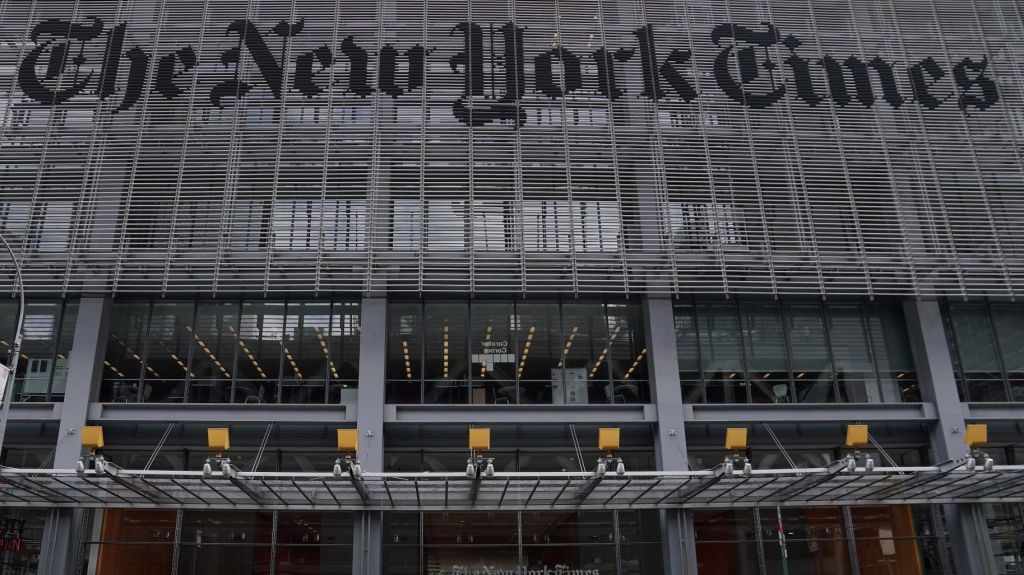
Unionized New York Times staffers are speaking out against a potential partnership between The Athletic and Kalshi.
The NewsGuild of New York—the labor union that represents more than 2,000 Times workers across three different units—sent a letter Wednesday to Times owner and publisher A.G. Sulzberger, Athletic publisher David Perpich, and senior editors at The Athletic and its parent company demanding that the prospective sponsorship agreement not go through.
The letter was unanimously approved by the Times Guild Unit Council and The Athletic’s contract action team.
Following publication of this story, a source familiar with the matter told FOS that The Athletic is not moving forward with Kalshi on a sports betting or prediction-market partnership. Conversations between The Athletic and Kalshi “evolved over time,” the source says. The Athletic is still in talks about potential advertising or “other commercial opportunities” with Kalshi.
Additionally, the source says the decision not to move forward with a sports betting or prediction-market partnership was independent of Wednesday’s letter from the union. “The letter did not prompt or play any role in it,” and several members of The Athletic’s staff were informed “a few days ago,” the source says.
“We don’t comment on rumored deals,” a Kalshi spokesperson tells Front Office Sports.
“Millions of people use prediction markets like Kalshi to view the forecasts on what’s happening in the world. They’re a great complement to news sites like The Athletic and The New York Times,” the spokesperson added.
FOS reported last month that the prediction-market platform and The Athletic were in advanced talks. Kalshi and its rival Polymarket have been in an arms race for customer acquisition even as lawsuits in states including Nevada and New York have threatened their ability to offer sports event contracts. Last week, the 9th Circuit, an appeals court, ruled Nevada can enforce its gambling laws against Kalshi—a decision that sets up an anticipated U.S. Supreme Court showdown. The Trump Administration’s Commodity Futures Trading Commission (CFTC) has been adamant that prediction markets are legal and has sued nine states that have attempted to block sports event contracts.
In the letter, obtained by FOS, unionized workers at the Times say they are “deeply concerned” by the potential Kalshi deal. They note the event contracts offered by Kalshi “have been described by New York Officials in our reporting as an ‘illegal operation.’”
“Any partnership between Kalshi and The Athletic would threaten our journalistic independence across the company,” the letter says. “Despite management’s claim that The Athletic and The New York Times are separate business entities, the journalism and the work are intertwined, as any reader can see.”
Any agreement that involves more than Kalshi buying advertising space, especially one which “might integrate this product into The Athletic’s journalism,” could make readers question the outlet’s independence with regard to prediction-market reporting, the letter says.
“New York Times publisher A.G. Sulzberger has said that journalistic independence is the ‘core value’ that “answers the question of why we’re deserving of the public trust,” the letter says. “We call on the company to live up to that commitment and abandon this deal.”
Times reporters and other editorial staff have been unionized for more than 80 years. The New York Times Company bought The Athletic in 2022 for $550 million, and in January 2025, a group of roughly 200 editorial workers at the sports subscription site said they planned to unionize and asked the Times to recognize them as part of the Times Guild. A few days later, leadership at The Athletic responded, saying “the best approach” is to have a separate bargaining unit, not to have the Times Guild absorb editorial workers from The Athletic. As of this March, the Times Guild was still trying to get The Athletic’s employees into the union. In May, Times senior editor Jim Luttrell told Fox News “there is no reason they shouldn’t be in the union.”
The Athletic’s sponsorship deal with BetMGM expired earlier this year. FOS asked Austin Meek, a senior writer who covers college sports and is on The Athletic’s bargaining committee, whether the union opposes traditional sportsbook partnerships as well as prediction-market integrations.
“The BetMGM deal preceded NYT’s ownership of The Athletic,” Meek said. “The Times runs ads from a large range of companies, but any deal that integrates an advertiser’s marketing and products directly into our news coverage and journalistic content is concerning to us. We’re also mindful that our own New York Times reporting, by Times journalists, has shown that legal experts and government officials have significant concerns about the legality of Kalshi’s operations.”
In addition to its bevy of sponsorships across sports—most recently with the US Open—Kalshi has news-network integrations with CNN and CNBC. Under those agreements, the news networks incorporate Kalshi data into broadcasts, among other forms of collaboration.
Download the FOS App
The business of sports, in your pocket.



Scan the QR code to get the app now.