ESPN Warns Talent About Insider Betting on Prediction Markets
Want more from Front Office Sports
in your search results?
Michael Johnson’s Grand Slam Track is halfway through its inaugural season, with its third edition set to start Saturday in Philadelphia.
The new league is unique in track in that it signed a group of athletes, dubbed “Racers,” to offer base salaries in a sport where athletes are primarily chasing prize and endorsement money. Then there’s a prize pot of $12.6 million across the four Slams, with $100,000 for each event group winner, funded by $30 million of investment led by Winners Alliance. For each of its four events in Kingston, Miami, Philadelphia, and Los Angeles, unsigned runners called “Challengers” claim half the field.
The legendary sprinter’s gambit has hit occasional bumps. Its oft-repeated promise to eliminate paper bibs faceplanted immediately in front of a largely empty stadium in Kingston, Jamaica. Star sprinter Fred Kerley was arrested at the meet hotel after an altercation with Alaysha Johnson, who was also competing that weekend. Grand Slam Track later announced Kerley will be suspended “pending the completion of legal proceedings.”
But the Miami Slam, held in a smaller stadium, looked far better on TV than the first Slam. And Challengers have had breakthrough performances, including Walmart employee Dylan Beard winning $65,000.
Johnson, a four-time Olympic gold medalist, recently spoke with Front Office Sports about his upstart league.
This conversation has been edited and condensed for clarity.
Front Office Sports: What was your reaction to Challengers being so successful at the first two Slams?
Michael Johnson: It’s validating. We thought this whole Challenger model would be a good idea. We thought that it would create some very compelling narratives and storylines and some very compelling and competitive races, which it has.
If you’re one of the fastest people in the world, whether that’s because you became Olympic champion last year or whether that’s because you didn’t even make the Olympic team last year—but just last week, you ran the fastest time in the world, we’re open.
FOS: Is there a pay level you’re aiming for to say, “We’re finally able to offer what these racers deserve?”
MJ: No, not a specific number. I think that what we’re doing right now is exponentially larger than what athletes have been used to being paid in this sport. For us to be at $100,000 for first place, versus $10,000 was the previous ceiling, is significant on its own.
This sport is really weird in that, most sports pay people to be the athlete, and then sponsorship is sort of secondary. In our sport, it’s inverted. You have to go get a sponsorship, and you aren’t paid very much at all to actually be a racer and to compete in the sport. That’s a weird and structurally flawed issue with the sport. So the fact that we can actually pay athletes based on the fact that you’re one of the best in the world … that’s significant.
FOS: What did you learn from the first two Slams when it comes to stadiums, and what you might want to do for future ones?
MJ: We’re going into Philadelphia next. It’s a huge stadium. We have no illusions that we’re going to fill up that stadium, that’s 50,000 plus. And the same thing with Kingston, we knew we weren’t going to—that’s a 35,000-seat stadium.
Miami was a much smaller, intimate stadium. We did fill it up and sold it out, and it’s a great atmosphere when that’s the case. So the better atmosphere is when it’s a smaller, more intimate stadium right now. We feel like ultimately we will be able to fill up larger stadiums, and we look forward to that day…There are a lot of different factors that go into locations, but for this year we’re happy with the locations that we’ve chosen.
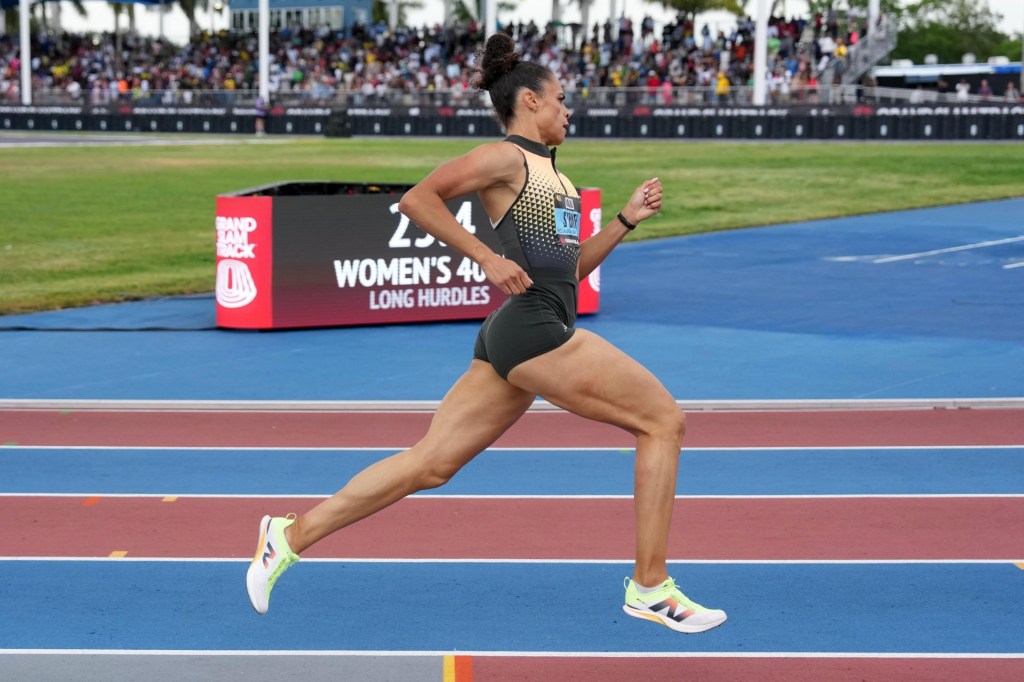
Different stadiums have different layouts as well. Kingston was a bowl. Miami was stands on both sides of the straights. Philadelphia will be a bowl. UCLA…it’s all one big grandstand on one side straight. Kingston has a big velodrome that actually separates the track and the field from the stadium…which is very difficult to create the type of environment that you want. Franklin Field [in Philadelphia], the fans are right up on—if you’re running in lane eight, a fan is right there, which creates a much better, intimate experience for fans.
This has to be a compelling product for fans, and we have to draw more fans in order to ultimately be able to expand the league, in order to be able to continue to grow the prize money, the pay, the compensation, and all of those things.
FOS: I have to ask you about the business of the league. How is that going?
MJ: Like any startup, breaking even at year one is typically not the goal, and it certainly isn’t for this. I mean, that’s pretty unrealistic. We feel good about where we are, we feel like we’re on track with where we need to be. It’s always tough at the beginning; we’re under no illusions that this is going to be easy.
Our television viewing numbers are good. They’ve exceeded our expectations and those of our partners as well. Our television viewership grew from Kingston to Miami, and we’re hoping that it’ll continue to grow. In terms of ticket sales, it’s trending in the right direction.
After this season is over, we’ll look at things that we might change or things that we need to adjust in order to try to get to profitability. What are things that have been positive surprises for us that we’ll double down on? And things that we learn and go, “Eh, that didn’t work quite as well as we thought it would,” we will pivot.
(Editors’ note: The first two Slams each totaled between 241,000 and 250,000 viewers per day, the CW told FOS, strong numbers for a first-year sports property. Peacock declined to share its data.)
FOS: What have been some of the surprises?
MJ: I think one of the things on the negative side, Kingston. We thought more people would turn out. We sold 24,000 tickets over the three days. That many people didn’t show up. So that was a bit surprising. It’s great that we sold the tickets, but we’d like the people to actually show up.
On the positive side, our television viewership has been much more robust for a first-year property than we would have expected. I always knew that there was some latent demand here, and it’s just validated it for us, but I don’t think many people expected us to be where we were in terms of our viewership. While a lot of first-year properties will come out in a first event and decline in viewership, we actually grew, which is great.
But I think that most importantly, it’s been the product on the track and the races, how compelling they’ve been, which is validating for us that our format actually works with the two-race format and the scoring system…And then of course our social media and branding. I think the response to that has just been overwhelmingly positive. And without us having to spend a lot of money in that area. We don’t spend a lot on marketing relative to what you would think, because we can’t afford to spend that much on marketing.
(After our interview, GST announced it was switching from three days per meet to two.)
FOS: For some leagues like the NBA and NFL it’s standard to have a conduct policy, but other tours, like the ATP, don’t have that. When a racer at a meet hotel gets involved in a situation like Fred Kerley did, does that make you consider establishing a conduct policy?
MJ: We do have a conduct policy for our Racers, and it’s always a process in determining whether a Racer has violated that policy or not. We’re in that process now, but what we’re committed to is making sure that we do the right things for the league and for our Racers, and we’re going through that process as we speak.
(A GST spokesman later clarified that the conduct clause is in athletes’ contracts, which he declined to make public. Parts of the contracts had earlier leaked in a dispute with Athlos founder Alexis Ohanian.)
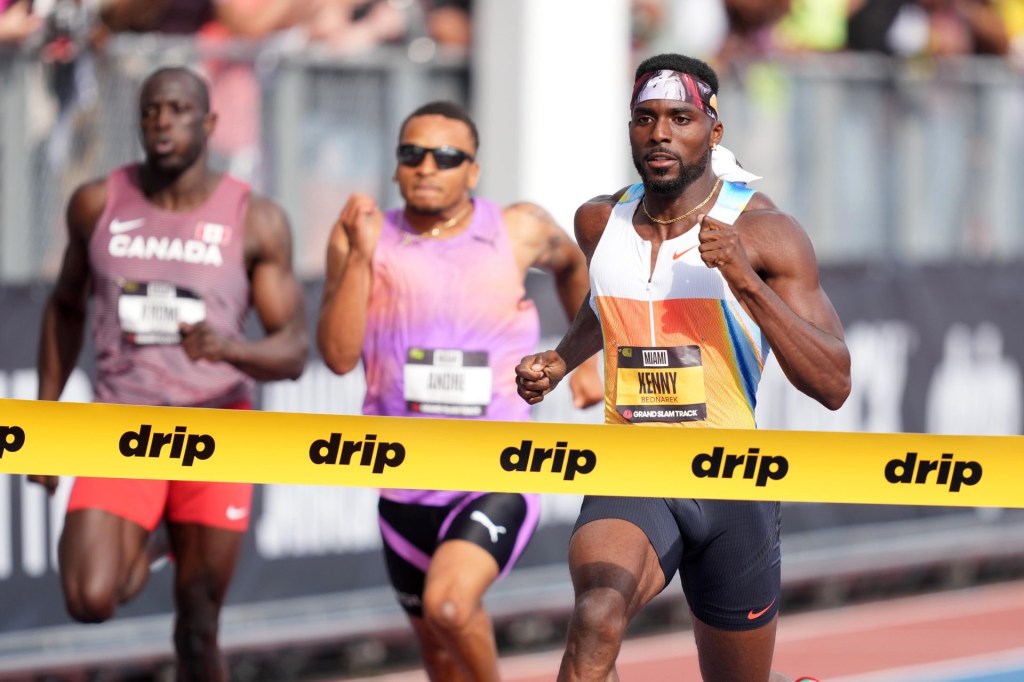
FOS: The bibs: It seems like they’re working for some people and not sticking for others. What’s the status there?
MJ: We are committed to it, to trying to get rid of this sideways safety pin dangling off the athlete bib situation. Kingston was a shitshow with the bibs. I was not happy at all. We improved it a bit in Miami, and we’re continuing to try to improve on that.
What we’re committed to is making sure that this sport—where you have the fastest people in the world, and you do want fans to be able to identify them—that we have a solution that is modern and that is fit for purpose, as opposed to what we’ve been seeing for the last 30 years and more, which is the safety-pinned paper annoyances for the athlete…It looks horrible, and it doesn’t present the fastest people in the world the way they should. We’re the only sport that has to deal with this.
So it is important….it’s not as easy as I would have hoped, but we’re trying to get there.
Download the FOS App
The business of sports, in your pocket.



Scan the QR code to get the app now.