NBA Insider Chris Haynes Joins Big3’s Business Side
Want more from Front Office Sports
in your search results?
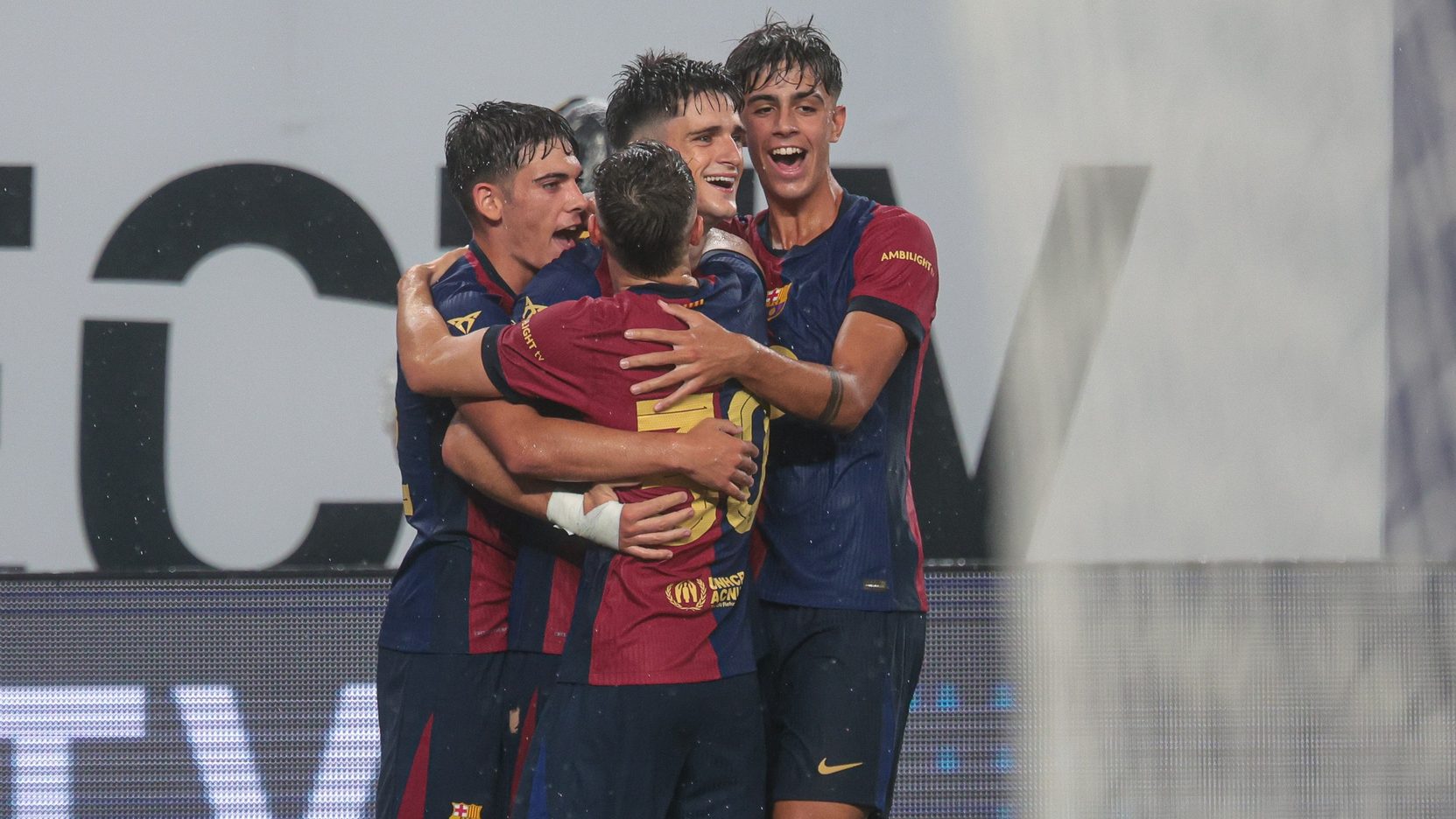
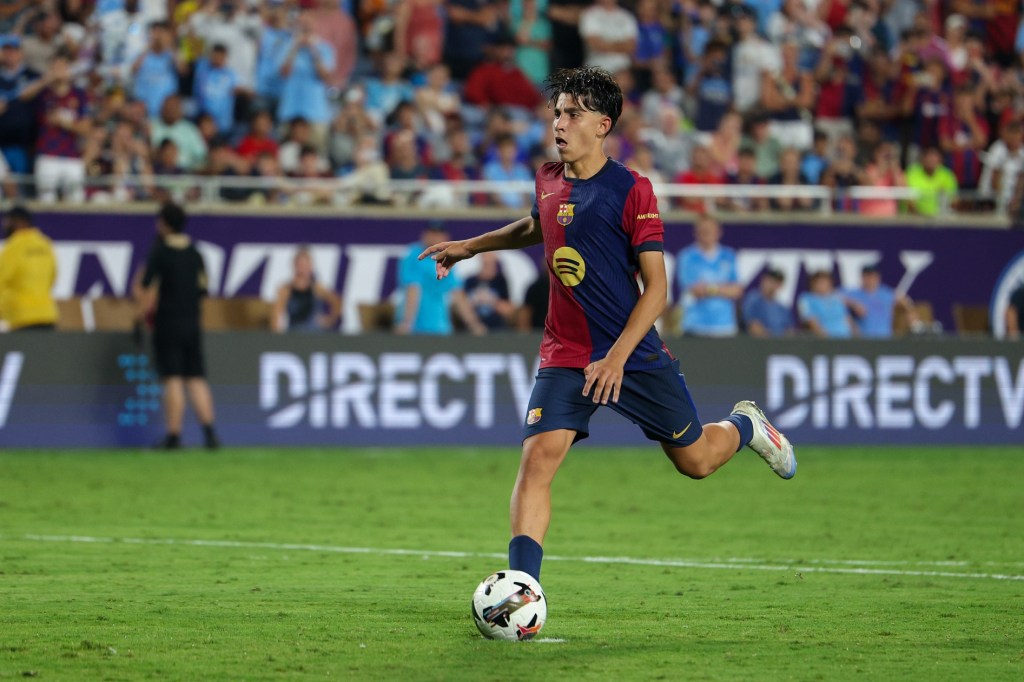
For the first time in years, there are good vibes coming from FC Barcelona. The team has won all seven of its matches in LaLiga this season. Teenage forward Lamine Yamal is on his way to superstardom. Its new German coach, Hansi Flick, is immersing himself in Catalonian culture, and Barca fans love him for it.
Barcelona is where it hopes to be—at least culturally. It is the club of Johan Cruyff, Pep Guardiola, and Lionel Messi, a club that thinks of football as art. It has a lofty sense of its ideals. When other teams cashed in on shirt sponsorship in the 1980s, Barcelona left its own kit unsullied. It eventually relented in the mid-2000s, but only to advertise UNICEF, for which it paid the charity €1.5 million a year ($1.67 million).
Barcelona has been one of soccer’s biggest clubs throughout the time when the sport has been awash in corporate money. For every home game, its legendary Camp Nou brought in more cash than any other club ground.
Yet during a short but highly damaging period in the 2010s, its management succeeded in wearing away these advantages. Since then, the club has been scrabbling for every euro. This summer, it could not afford its main summer transfer target, and it was grateful that last season’s big signing, İlkay Gündoğan, walked away from his contract.
Barcelona’s front office has taken up a middle-of-the-road strategy it hopes will enable it to avert financial ruin. It’s a calculated leap of faith—and an incredible high-wire balancing act. It’ll have to get it perfectly right to fatten its accounts and keep the momentum going. The club thinks it can.
Europe’s largest football clubs tend to be owned by consortia of wealthy individuals, such as Fenway Sports Group, which owns Liverpool, or by funds linked to nation states, like Qatar Sports Investments, which bought Paris Saint-Germain (PSG) in 2011.
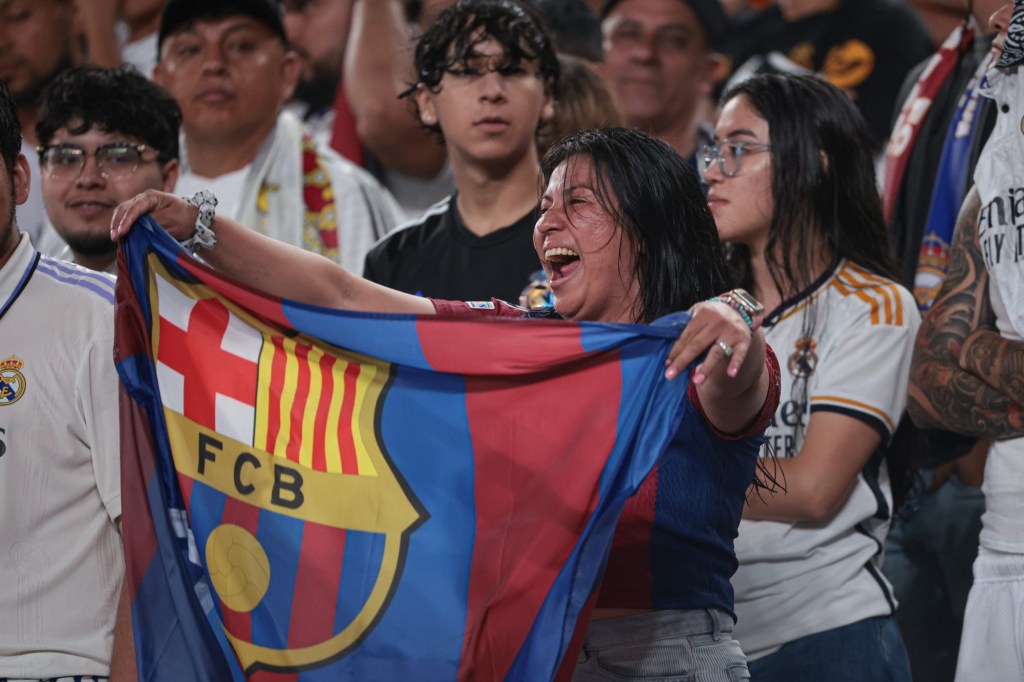
Barcelona is different. It is entirely owned by a group of around 150,000 members, known as “socis,” who pay an annual fee of €200 or so in exchange for voting rights on club decisions. For decades, becoming a soci required a family connection to an existing member, and, until broadcast revenue took off, it was these dues that provided the majority of Barca’s revenue. These days, socis can register from anywhere and their memberships are a fraction of the club’s total income.
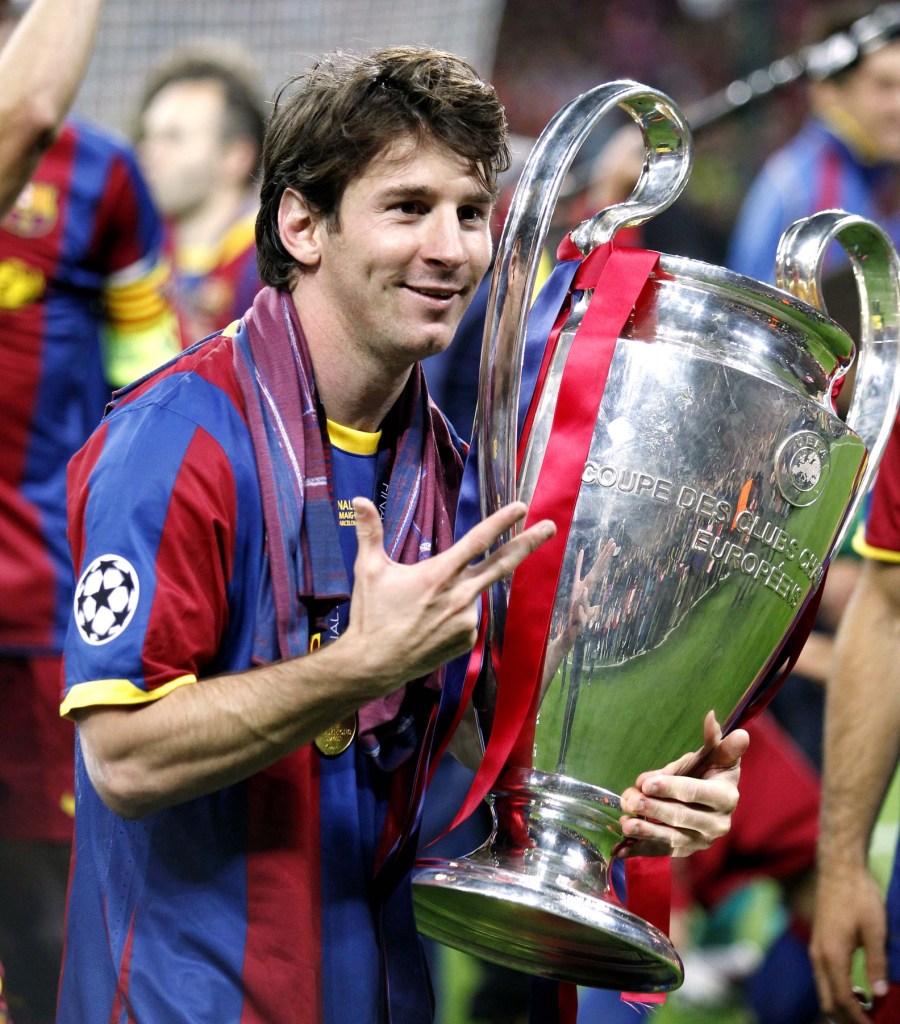
Nevertheless, the socis still have power. It is this group that elects the club’s 15 directors and its president. A board seat is a high-status position within Catalan society and is not for the faint-hearted, as the directors themselves are on the hook for the club’s financial losses if they cannot be refinanced.
For all of its peculiarities, Barcelona’s ownership structure has worked well. In 2017, it was ranked as the third-largest club in Europe by revenue, which was split in a healthy manner among match-day, commercial, and broadcasting income.
Then came the windfall that precipitated its crisis.
In August of that year, Barca accepted an offer of €222 million from PSG for its talismanic Brazilian forward, Neymar. (This remains soccer’s record transfer fee.) Barcelona’s powerful president, Josep Bartomeu, settled on a French teenager, Ousmane Dembélé, as Neymar’s replacement. The club decided it was prepared to spend up to €90 million to buy him from his German club, Borussia Dortmund.
But Dortmund proved unexpectedly trenchant. Knowing Barcelona was flush with cash, it demanded twice as much, and said there would be no negotiation. Bartomeu capitulated. Weeks later, Barcelona handed over €150 million to Liverpool for Philippe Coutinho, its Brazilian playmaker. Dembélé and Coutinho were talented, but the club had little idea of how to play them alongside Messi.
“Barcelona were lazy,” argues Kieran Maguire, a professor of accountancy at the University of Liverpool and an expert in soccer finance. “They didn’t make the extra effort to find the right players.”
Then, the COVID-19 pandemic arrived. Players continued to draw their salaries, but matches were suspended. Even when LaLiga restarted, games were played behind closed doors, depriving clubs of match-day income. In 2020, Barca’s total revenue fell by 14% to €729 million. Throughout 2018, 2019, and 2020, the club had a total net loss of more than €430 million, compared with a net profit of €29 million in the preceding four years.
More damaging than the excessive fees for the wrong players, Bartomeu also presided over a relaxation of the club’s wage structure. Existing players were given big salary bumps. The total wage bill rose from €340 million in 2017 to €487 million in 2018. This meant wages as a proportion of total revenue rose from a relatively contained 52% to a perilous 70% in a single year, according to figures compiled by a respected soccer finance blog, The Swiss Ramble. Over the same period, the ratio at Real Madrid, its major domestic rival, fell from 56% to 53%. At Manchester United, then the largest club in Europe, the ratio rose from 45% to 50%.
Compounding Barcelona’s problems was the fact that the Spanish league has separate, tighter financial rules than the English Premier League or Italy’s Serie A.
Regardless of a club’s position with its balance sheet, LaLiga sets twice-yearly spending limits for its teams, which are calculated as a proportion of each club’s revenue. Clubs with larger revenue bases, such as Real Madrid and Barcelona, are therefore allowed to spend more than smaller teams, such as Villarreal or Getafe. But any club that exceeds its mandated limit is subject to controls to force it back into line. With its wage bill spiraling and its revenue crimped by the pandemic, from the start of the 2021–2022 season, Barcelona found itself in contravention of the league’s rules.
Clubs that exceed their limits are subject to controls to force them back into line. In the past three years, Barcelona has been restricted to using just 25% of the money that it has raised through selling players and cutting salaries to hire new faces.
In 2020, Bartomeu resigned. The socis reelected one of his predecessors, Joan Laporta to straighten out the mess. His options fitted neatly onto a spectrum.
At one end was the hairshirt approach. This involved selling its star players in order to ensure rapid compliance with LaLiga rules, and accepting a likely decline in team performance. The risk here was that a callow team could miss out on the income earned through qualifying for the lucrative Champions League, while an absence of recognizable stars would imperil the club’s appeal to sponsors. Barca could have become stuck in mid-table mediocrity for years.
At the other end was the cavalier strategy. This involved playing chicken with LaLiga by continuing to spend heavily, looking to win every trophy and by doing so, hoping that revenue would grow so quickly that the higher costs were eventually absorbed. This idea was risky in a different way. It is extremely hard to win the biggest trophies even with the best squad going—there is lots of randomness in soccer—and the league could have escalated measures against the club for non-compliance with its rules, such as forced relegation. That would have made the situation exponentially worse, potentially jeopardizing Barcelona’s very existence.
“The club has taken a middle road,” Jon Sindreu, who covers Barcelona at The Wall Street Journal, told Front Office Sports. “They are neither trying to completely retrench nor go completely insane.”
Throughout the past four years, the club has ushered out a long list of very high earners, including Messi, Gerard Piqué, Sergio Busquets, and Antoine Griezmann. Barcelona has signed its replacements for more modest fees and on more manageable wages. From 2018 to 2020, the club’s average net spend on transfers was €132 million a year. In the next three years, it was half that. Between 2019 and 2022, it cut its wage bill by 20%. In the first game of the new 2024–2025 season, the team included five players ages 20 or younger.
These moves have signaled to LaLiga—and its pugnacious chair, Javier Tebas—that Barcelona is serious about complying with its rules.
But Sindreu is right that the club could have gone further. It could have earned a nine-figure sum by selling a couple of its young stars. And each season it has spent as much as (or even more than) LaLiga permitted, it has had to delay registering its new players until Tebas was satisfied that they met the rules.
To enable even this much-reduced level of spending, the club has been selling off some of its future income—an unprecedented move that has given its accounts a glow-up, but at the cost of reducing its spending power in the future.
In 2021 and 2022, it sold a combined 25% of its next 25 years of broadcasting revenue from its LaLiga matches in two tranches to U.S. investment firm Sixth Street, which has taken a big long position on sports across the world. The enormous sum: €665 million. The deal meant that the club made a very large profit, of €304 million, in 2023. However, such a windfall will not be repeated. In fact, the arrangement will crimp revenue in the future. In the first year of the deal, the club’s broadcasting income fell by 14% to €216 million.
By opting for what Maguire describes as “a short-term solution,” he believes this gamble means “Barcelona will have to work a lot harder than its rivals to generate revenue in the future.”
There are reasons to be optimistic for Barcelona’s future, even if its finances are still fiendishly complicated.
Thus far, Barcelona’s middle-road approach has achieved the club’s aims. Selling the broadcast rights has helped it to continue to invest in the playing squad, to the extent that the club unexpectedly won LaLiga in 2022–2023 and has remained an ever-present in the Champions League. This level of performance has helped to keep revenue recovering from the pandemic period. In 2023 total income rose to €806 million, back within striking distance of its 2019 record of €852 million.
A new kit deal with Nike is in the works, too, which is likely to at least match the current level of €120 million a year, plus a hefty renewal bonus. A complete renovation of Camp Nou is ongoing and will lead to a major increase in match-day revenue. Yamal is on track to become one of the most marketable athletes in the world.
Sindreu estimates that if the club is prepared to endure one more summer of conservative spending—a task that would be made more palatable if the team sustains its strong start to the season—then it is likely to be able to escape LaLiga’s restrictions thereafter. At this point, with revenue growing healthily and the squad cost brought down, the amount that the club will be permitted to spend by the league will rise again. The club ought to be able to close the book on a very difficult decade.
Barcelona’s 125th anniversary falls on Nov. 29. Throughout the past decade, the club’s reputation has taken a battering. But somewhat improbably, its executives will be ready to party. At least for right now.
Download the FOS App
The business of sports, in your pocket.



Scan the QR code to get the app now.