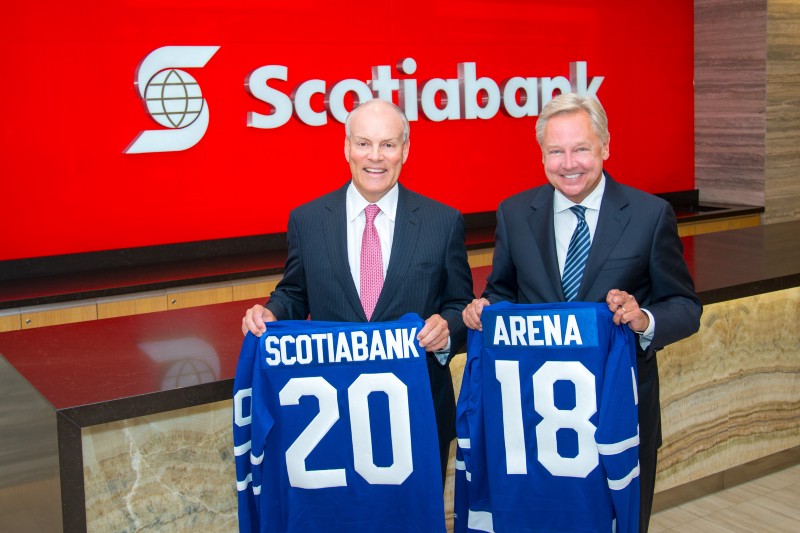
The $800 million dollar deal is one of the largest in professional sports history.

This past fall, Scotiabank entered into a 20-year sponsorship agreement with Maple Leafs Sports and Entertainment (MLSE) for naming rights to the Air Canada Centre.
This was a landmark deal for several reasons. For one, the dollar value of $800M was a groundbreaking sum for such an agreement. In addition, it also cemented Scotiabank’s place as Canada’s “Hockey Bank”.
But this deal begins long ago — from when Scotiabank was still a lowly number 5 amongst the large Canadian banks, and when sponsorship was still only thought of as an opportunity to paste logos onto events.
In setting a strategy in any industry, examining the marketplace and identifying “whitespace” opportunities are a standard. Sponsorship is now no different — but many years ago, when sponsorship was still in its nascent stages, Scotiabank was among one of the first brands in Canada to execute upon such a strategy.
With their agency, MKTG Canada (formerly known as S&E Sponsorship Group before being acquired in 2017), Scotiabank would set the groundwork for what would become one of the most extensive niche sponsorship strategies in North America, aided by the successful relationships that had been developed over two decades.
The Hockey Strategy (i.e.: Why Do Niche Strategies Work?)
At its core, the growth in sponsorship spending over the past decade has been due to a perceived arbitrage opportunity, where opportunistic brands have identified the medium as being a cost-effective way of reaching their customers.
In 2007, when Scotiabank first partnered with the NHL, the market was still fractured — and while many brands had a presence in hockey, their commitments were surface-level at best. In other words:
“Everyone had just started dipping their toes in… We wrote a strategy, built a cross-Canada grassroots program. We took as many teams as possible, the NHL and players.” — Brian Cooper, President and CEO of MKTG Canada
If all strategies can be classified as either niche or mass-market, Scotiabank’s strategy was decidedly niche — and in its execution, they made certain that their presence was felt at all levels of hockey, whether you were an athlete, a fan, or a house league player.
Like advertising, sponsorship sits at the top of the marketing funnel, where it drives awareness and interest:
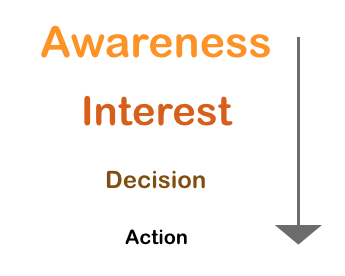
Meaning that expecting direct sales as a result of sponsorship is a fool’s errand. Rather, sponsorship provides value via iterative and accrued branding and engagement. Advertising (including television, print, and now digital) has historically been successful because it can be scaled infinitely, in places where many will see it. In other words, advertising is an effective mass market strategy. It’s one reason why, among many, print advertising met its demise.
Sponsorship is unique to mediums such as advertising because by nature, it cannot be a mass market strategy (save for a few outliers). When brands sponsor specific events or sports, they are reaching a specific segment of the population — for example, football fans are unlikely to also be esports fans.
In reality, sponsorship’s comparative advantage is that it reaches targeted markets in a way that advertising cannot. Through repeated brand association, sponsors can develop meaningful connections with relevant demographics. The iterative nature of sponsorship is precisely the reason why, historically, the largest sponsorship spenders have been those that rely on repeated purchases — such as PepsiCo, Adidas, Anheuser-Busch, and AT&T.
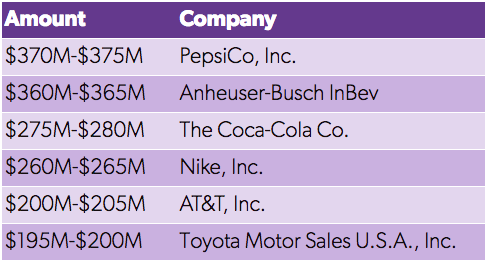
You may also notice many auto brands on this list. Unlike the aforementioned brands, whose revenue stream relies on top-of-mind awareness, cars are a durable good whose value maintains over years of use.
Auto companies, similar to the many CPG, banking, and telecom companies that dominate lists of top sponsorship spenders, largely sell undifferentiated goods — and sponsorship serves as an effective way to differentiate brands. This is especially valuable for any company that houses multiple brands, for which the auto companies are a good example.
It follows, therefore, that the effective way to leverage sponsorship’s unique advantages is to reach deeply into specific categories. If you plotted number of sponsorships by accrued value, it’s likely that you would see some kind of S-curve, where early slow growth leads to seemingly exponential growth, which eventually tails off.
Indeed, the most successful sponsors to date have been those who have been able to become dominant within specific categories and, like Scotiabank, have developed integrated campaigns that reach from the grassroots to the highest levels of their categories.
In Cooper’s words, “We’re going to see more integrated messaging. It’s deeper, and more brands are going in that direction. Scotiabank isn’t trying to build better programs, they’re building more prosperous communities. We’re working with people in their passion points. Managers and employees are integrating into community.”
Relationships in the Sponsorship Industry
“Thirteen years ago I was at the table with John Bitove Jr. and Isiah Thomas, negotiating with Air Canada… so I had a good sense of the terms.” — Brian Cooper, President and CEO of MKTG Canada
The sponsorship industry is also disproportionately reliant on networks and relationships. As such, this deal was the final result of a long negotiation process — one that first began eight years ago, when Scotiabank first set on their path towards placing their imprint on hockey.
While the value of a network is crucial in any industry, it is especially valuable in sports, where the small size of the industry causes a steeper slope and more quickly-rising marginal value of a relationship.
Relationships serve an important purpose, particularly in sponsorship. Though Cooper, and by proxy, Scotiabank, were clear beneficiaries of these attributes (the small size of the industry means that an individual is much more likely to encounter similar situations with the same collective parties), it is important to note why these relationships are so valuable. There are two key reasons why relationships are valuable in sponsorship:
1. Status Quo Relationships
Defaults, or “status quo” relationships act as a social lubricant — an extremely important variable in determining the success of a partnership. This pre-existing social capital means that both parties are less likely to experience any sort of adjustment friction, where both parties must spend valuable resources in learning how they can efficiently work together.
In addition, status quo relationships provide value to risk-averse individuals: a new partner may provide a greater return, but given the uncertainty surrounding an unfamiliar relationship, they may be unwilling to enter into a new one. In sponsorship, where marginal improvements in ROI are hard to measure, an old partner that provides certain return will be much more appealing than a new one.
2. Maintaining Connections
If we treat partnerships as a binary variable, with 1 being parties enter the partnership, and 0 being parties don’t enter the partnership, we can observe distinct probabilities of outcomes in either scenario. When both parties enter into the partnership, there is a good chance that the relationship between both parties improve. When the parties do not enter into the partnership, there is a risk of a slow depreciation of the overall relationship.
When one party is perceived to have a stronger network in a relationship industry relative to all his/her other competitors, they are much more desirable to prospective partners. This means that as a player in sponsorship, there is a virtuous cycle — one that MKTG enjoys. And these relationships need not be direct. Rather, third-degree connections can be excruciatingly valuable in opening up doors, creating profitable relationships, and eventually closing deals.
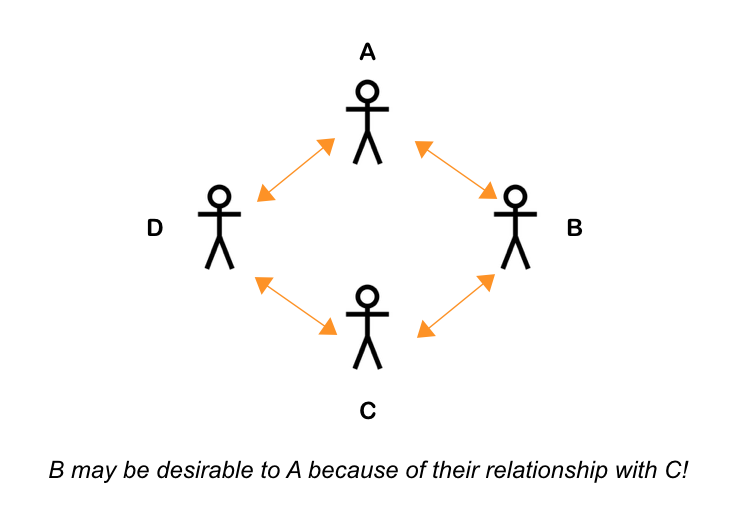
Cooper is truthful about this advantage: “This is our fifth venue deal… You can have all the technology, but it’s still about the relationships. We’ve stayed close to MLSE — we have 6–7 clients there. We have that much knowledge and intel… and an operational working relationship. Most agencies only have 1 client.”
This advantage was hugely beneficial to Scotiabank when it came time to negotiate for the naming rights for what will eventually be named the Scotiabank Arena.
When it became clear that there was a chance that Air Canada would not renew their deal with MLSE, Scotiabank and MKTG negotiated a right of first purchase, giving them the exclusive first rights to negotiate for the entitlement of their arena.
For Scotiabank, winning the naming rights for the Air Canada Centre was both offensive and defensive — where losing to a competitive bank would risk losing their image as Canada’s Hockey Bank, and winning guaranteed national exposure for two of the country’s marquee teams (the Leafs and the Raptors).
For now, Scotiabank and MKTG are preparing for July 2018, when the arena will officially be named the Scotiabank Arena. There are large plans in place — including Scotiabank’s Digital Factory and Scene (Canada’s largest loyalty program). Though there are still some unknowns, the culmination of Scotiabank’s effort in creating a foothold in hockey has been successful to date, and the arena is only the latest chapter in this story.
This piece has been presented to you by SMU’s Master of Science in Sport Management.
MKTG is a proud partner of Front Office Sports.
Front Office Sports is a leading multi-platform publication and industry resource that covers the intersection of business and sports.
Want to learn more, or have a story featured about you or your organization? Contact us today.