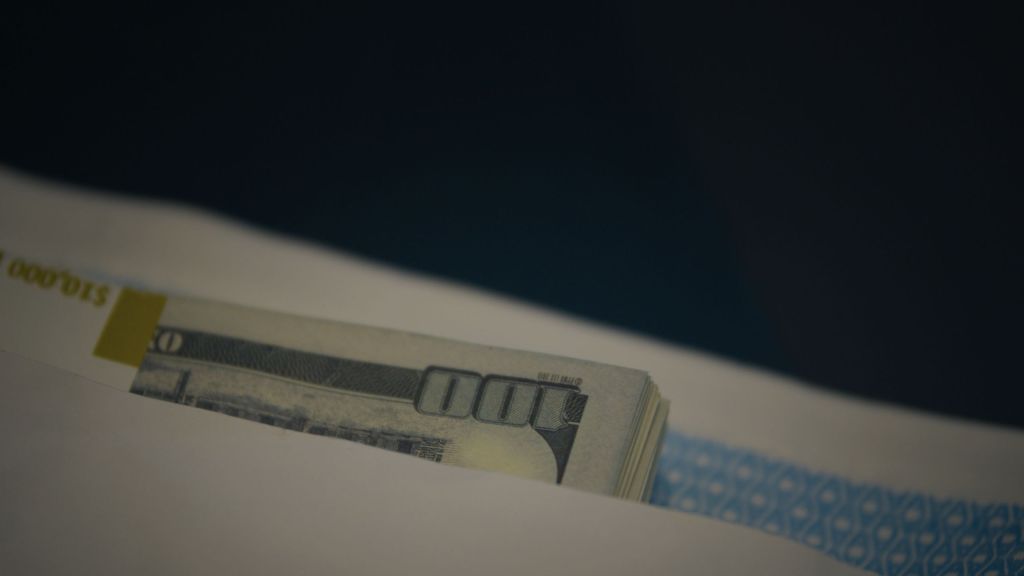
HBO’s new documentary, ‘The Scheme’ tells the behind-the-scenes story of how 25-year-old Christian Dawkins ended up at the center of the biggest criminal case in collegiate sports history – with Dawkins himself serving as the film’s first-hand narrator.
The film, which will debut on HBO on March 31, chronicles the two-year undercover FBI investigation into college basketball corruption that came to a head in 2017 when Adidas executives and assistant coaches at major college programs were arrested in a pay-for-play scheme in which Dawkins served as the facilitator for dozens – if not hundreds – of deals.
FOS REPORT: 54.5% of industry executives believe that it would be at least 60 days before leagues resume play.
In his first interview about the scandal, Dawkins details the ins and outs of the scheme in a raw, corroborated and, candidly, compelling narrative that showcases just how much money was moving around in the seedy underbelly of college basketball.
Front Office Sports spoke with the film’s Emmy-winning director – Pat Kondelis – about what he learned about the scandal and its central figure during the making of the movie.
This interview has been condensed for clarity.
Front Office Sports: How long did this whole project take from starting research to finally finishing production?
Pat Kondelis: Right at a year, which I think it’s the fastest that we’ve ever done a project. And that’s because when we started this project, Christian was right in between his first and second trial. I wanted to start as this was real, [as] everything was unfolding so you can get a clear opinion, and clear answers before verdicts have come in so you can get an honest reaction as opposed to waiting until afterward and then going back and looking at it. If Christian had been completely acquitted, his whole opinion would have been completely different. Or if he had been found guilty on everything, it would have tainted his honest feelings in the moment. So it was really important that we started right away with that.
FOS: When you were talking to him, what were your takeaways from how he looked back on everything that transpired?
Kondelis: He didn’t hold back, which was surprising to me. I pressed him on a lot of things, and there were certain things he didn’t want to say, but the things that he did say, I mean, he didn’t absolve himself of anything. He could say, ‘No, I did this, but I don’t think it was wrong because of these reasons.’ That’s a very interesting person to get a chance to interview. I hadn’t come across that before Christian. And I found him to be very, very credible. We could corroborate just about everything that he said.
FOS: Were there any particular things that you pressed him on that you heard from him in response that surprised you?
READ MORE: Without Live Events, Social Media Takes Center Stage For College Athletes
Kondelis: I don’t know if [any of] it surprised me. I mean, Christian thinks that the players should get paid. He said that unequivocally multiple times in the doc, and it’s a hard position to argue with. The one thing that did surprise me was how much money is going around for these kids. I’m a basketball fan. I know the stories and follow it and was not delusional to think that these players weren’t getting paid money, but I had no idea the sums that were going around to some of these players – players that I had never heard of, that I would not necessarily have considered as being top recruits – getting crazy sums of cash. Multiple hundreds of thousands of dollars to play basketball for one year, maybe two years.
And it also surprised me, to be quite frank, that [Christian] continually claimed that he didn’t think that Rick Pitino knew anything. I struggled with that for a long time.
FOS: That’s interesting because that’s not the narrative that’s out there.
Kondelis: That was probably one of the more contentious moments between him and I when we did the interview. I said that was bullshit. How can you tell me that he didn’t know? And we would go back and forth to the point where we were almost kind of yelling at each other [but] every time I was around him, Christian’s story on Pitino never changed. He said, ‘Look, he didn’t know.’ or ‘I don’t think he knew.’ And I talked to other people that have said the same thing that were involved in the case. And that was surprising to me because you just kind of assume that he knew what was going on.
FOS: Louisville was the first big domino to fall in this whole scheme, but several other schools were implicated. Did you try to get an understanding of how much money across all of those schools was funneled into these payments to athletes?
Kondelis: We did as much as we could – and that’s the problem is all of this is done kind of under the table, and it’s all secretive, and nobody wants to rat somebody out. So it’s really difficult to try to get an accurate number on it. The best resource on that really was the people that testified in both trials. They walk into a federal courtroom and they get under oath and they start saying these numbers like Brian Bowen Sr., in the first trial. I wasn’t there for it, but reading the transcripts and talking with people that were there. It’s unbelievable how much these schools were offering his son. The one that shocked me the most was what Oklahoma State offered. I think it was $100,000, an $80,000 car, and a house. That’s unbelievable. Other schools they said were astronomical numbers, like $200,000 and over for some of these guys.
It’s really difficult though to find out which schools exactly offered which kids how much money and there’s not one way they do this. Some of it goes through shoe companies to the AAU coaches, some of it goes from financial advisors to the players, some of it goes from agents to the players, some of it the schools are doing directly. So there are a million different ways that they were getting this done. So it was very difficult to kind of track it all accurately.
FOS: I can imagine there were some roadblocks there. Once you finished putting this together, would you say finding those numbers and trying to get a grasp on the actual process was the most challenging part?
Kondelis: The most challenging part I think was filling the story in a way that it could be comprehensible for an audience that has never heard of the story that might watch it and be able to follow it because it is such a spiderweb and it’s crazy. It is so complicated – putting the pieces of the puzzle together in a way that the audience could experience a picture that made sense to them.
The second part was that nobody would talk to us. Christian is the person at the center of this, but I don’t think I’ve ever done a documentary that had this few interviews before. We reached out to everybody and nobody would talk. That’s always a challenge on every project, but that was a very big challenge on this project in particular.
READ MORE: Spring Sport Athletes Face Complicated Decisions as NCAA Extends Eligibility
FOS: Something that’s always fascinated me about this whole story is how young Christian was and how caught up in some pretty high-level stuff he got.
Kondelis: What Christian was able to do at such a young age is pretty astonishing. But he did some really stupid shit as well. He’s an incredibly impressive guy, and he was very, very different from the person that was being described in all of these articles that were being written about him. I was very surprised, to your point, how mature he is for being such a young guy. He’s highly intelligent – pretty much a walking encyclopedia of basketball information. He really is.
FOS: You mentioned earlier, trying to convey him and this to the audience. What audience were you targeting?
Kondelis: I wanted this to be watched by people that were not just sports fans because I don’t think this is just solely a sports story. This is such a big story that’s so much bigger than just college basketball. There are lots of themes within this that apply to lots of other areas in life right now that are not just sport. I mean with the criminal justice element, the FBI, the selective prosecution, the corruption that’s involved in this case – it’s far bigger than just a sports story. So we definitely intended this to be for an audience that was not just a sports audience. And I hope that’s the case.
Whether they agree with certain things that happened in it, that doesn’t matter to me. Ultimately when people get a chance to see, they can make up their minds, but ultimately I hope they enjoy spending two hours watching it.
FOS: And I’m curious, have there been conversations with people now stuck at home about expecting more people to tune into this than maybe you were a few months ago?
Kondelis: I hope so because all of this obviously is unprecedented and crazy, and nobody saw this coming. So I hope so. But God, I don’t know. I mean, it’s not the rollout that we were hoping for or expecting. At the end of the day, as long as people see it, we want people to make up their own minds after they see it.