
Want more from Front Office Sports
in your search results?
Men and women will get equal prize money for all combined ATP/WTA 1000 events, the WTA said Thursday in a press release outlining a series of structural changes to the tour in 2027.
The announcement marks the successful conclusion of a “pathway” the WTA launched in 2023, in which it committed to equal pay at all combined 1000s by 2027. This year, four of the seven combined 1000s divvied out equal prize money; the three that did not—the Italian Open, Canadian Open, and Cincinnati Open—will all do so next season.
“Achieving equal prize money across all combined WTA 1000 tournaments is a major milestone for tennis,” WTA chair Valerie Camillo said in the release. “It demonstrates the WTA’s continued commitment to leading the sports industry in delivering our athletes competitive and financial equality, and is a testament to the enduring nature of the founding vision of the WTA.”
Equal pay at the 1000 level has long been a goal of gender equality advocates in the sport. While all four Grand Slams implemented equal pay by 2007, pay gaps at the next most prestigious tournaments often remained vast.
As recently as 2023, the total purse at the Italian Open in Rome was $8.5 million for the ATP, compared to just $3.9 million for the WTA.
The WTA’s move comes in the wake of uncertainty over its financial sustainability, with The Telegraph reporting last month that the tour “is in danger of running out of money next year if the current rate of losses continues.”
According to the report, the WTA is on track to declare an operating loss of $23 million for 2026, which would leave it with only $11 million in cash on hand at the end of the year. Next season is also set to be the last year the tour earns an annual $30 million from selling 20% of its commercial operations to private equity firm CVC Capital Partners.
To help reverse these losses, the WTA is turning further to the U.S. market. Last month, it announced that the WTA Finals will be held in Charlotte, North Carolina, between 2027 and 2029 after it prematurely ended an agreement to hold its centerpiece event in Saudi Arabia. This year’s edition will take place in Indian Wells, California, and the tour’s headquarters will also move to Charlotte.
In pledging to close the pay gap, the WTA also announced the creation of a new Tournament Investment Fund, which it said will “assist select tournaments by directing financial support to markets where it will have the greatest impact.”
“This reflects an approach common to other leading professional sports leagues, while continuing to enable our long-term strategy to achieve equal prize money,” Camillo said in a video explaining the announcement.
The ATP currently allocates funding from tournament revenue to players based on their performance in Masters 1000 events, doling out $12.1 million to players in 2025 as part of that initiative.
Fewer Tournaments Required
The WTA also announced it will reduce the number of required 500 events for top-50 players from six to four. Top players will now be committed to 18 tournaments every year.
Players will also be allowed to replace their result from one WTA 1000 tournament with a WTA 500 or 250 event in which they scored more points. Players are scored on a rolling 12-month basis based on their results at 18 events: four Grand Slams, six combined 1000s, one non-combined 1000, and their next best seven results.
Front Office Sports reported in August that a vote was scheduled around the US Open that would cut the number of required WTA 500 events for top players. WTA board member Bob Moran, who is also the president of Beemok Sports and Entertainment that runs the Cincinnati Open, told FOS that organizers had several “hearty discussions” to reach the decision to reduce the number.
Players have consistently complained about the tight and lengthy tennis calendar, which came to a head in February when nearly two dozen players dropped out of the Dubai Tennis Championships, a 1000 event.
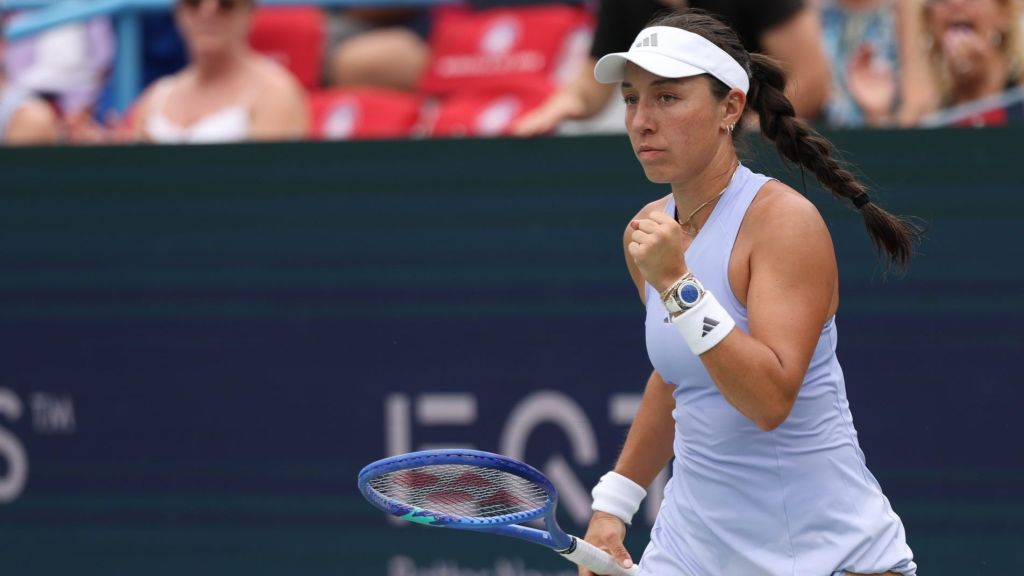
Around the same time, Camillo launched a Tour Architecture Council led by star Jessica Pegula whose primary goal was to improve the tennis calendar.
“The calendar shapes so much of our lives as players: when we train, when we compete, when we recover, and all the time we can spend at home with our families,” Pegula said in a video accompanying the announcement. “These changes give us more choice from a scheduling and ranking standpoint, which I think is important for the players at the end of the year.”