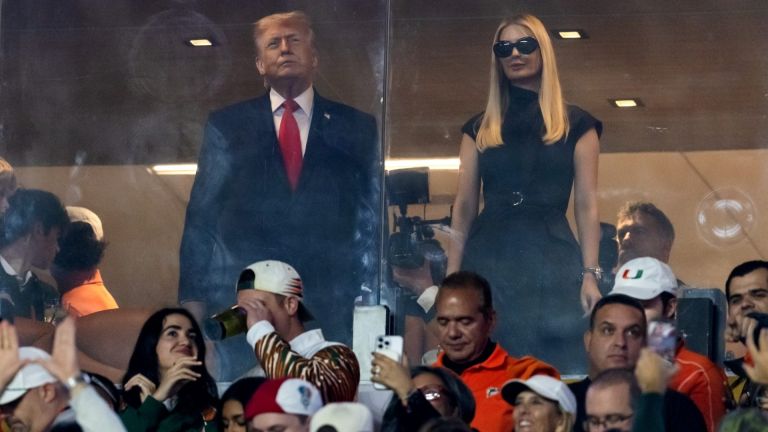
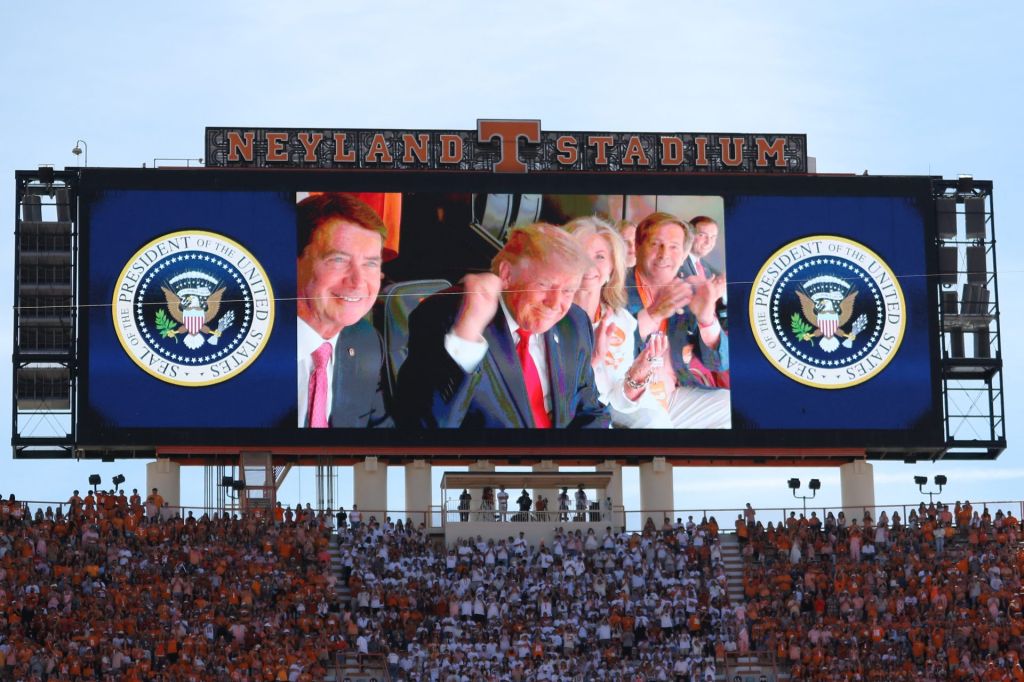
President Donald Trump attended Saturday’s Texas-Tennessee game, a 20–17 win for the top-ranked Longhorns, sparking a pregame conversation about whether his presence would impact communications between coaches and players. While that didn’t appear to be an issue on the field, the broadcast booth was a different story.
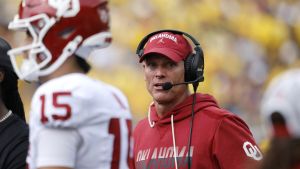
On Thursday, Texas coach Steve Sarkisian said that whenever the president moves inside the stadium, coach communication via headset is shut off. Sarkisian coached in a 2019 game Trump attended between Alabama and LSU when he was offensive coordinator for the Crimson Tide. He also suggested that Miami coach Mario Cristobal had told him comms went out during the Hurricanes’ final drive of last year’s national championship game. That assertion prompted controversy, with a denial from the President’s camp. His Rapid Response 47 account quote-tweeted an Axios reporter who compared the game play-by-play to a pool report detailing Trump’s movements and found that the President had left the game before the drive.
ESPN sideline reporter Laura Rutledge stated on the TV broadcast that the U.S. Secret Service and coaches from Tennessee and Texas worked toward a resolution ahead of the game.
“I have confirmation from both teams, Texas and Tennessee, that they’ve worked with the Secret Service to make sure that their radio frequencies are cleared with the Secret Service,” Rutledge said. “They think that the comms should be perfectly okay coach-to-coach. The one concern they have is coach-to-player, but they have worked on all kinds of signaling if that does go down, communication-wise.”
But immediately after Rutledge’s report, broadcast announcers Chris Fowler and Kirk Herbstreit had technical issues with their microphones that persisted through much of the first quarter. ESPN sources told Front Office Sports it was likely unrelated to the Secret Service.
President Trump first appeared on the broadcast at the 10:58 mark in the first quarter, where he was introduced over the Neyland Stadium speakers. According to the White House pool report, Trump’s motorcade left the game around 2:07 p.m. ET.
On the field, Texas held off a late Tennessee rally to preserve its win. The Volunteers scored a 30-yard touchdown with 1:22 remaining to cut their deficit to 20–17, then recovered the subsequent onside kick. But the Texas defense held up, preventing Tennessee from even attempting a game-tying field goal. The Longhorns swatted away a Hail Mary as time expired.
Neither Sarkisian nor Tennessee coach Josh Heupel commented on whether on-field communication was an issue on Saturday.
Helmet Comms History
Coach-to-coach headset communication has been common for decades, but coach-to-player communication is a newer trend. The NCAA approved it for use before the 2024 season, with each team designating one player on offense and defense to hear communication from coaches until the play clock reaches 15 seconds, at which point communication is cut off.
Teams can choose any player to communicate with but almost always default to quarterbacks and inside linebackers, two positions that require high volumes of player-to-player communication on the field. These players are identified on the field by a green sticker on the back of their helmets, commonly referred to as “the green dot.”
Before this trend, teams used hand signals and custom-made signs on the sidelines to communicate with their players. That practice is still common, and teams resort to it when communication is lost.