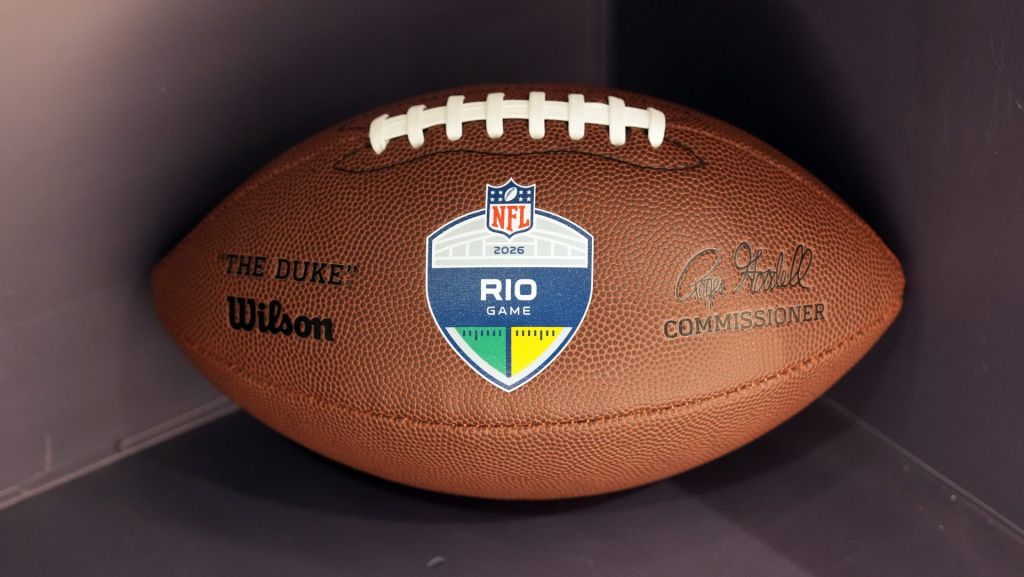
As the Cowboys and Ravens arrived in Brazil for their game there Sunday, the NFL Players Association said Friday it has representatives in Rio de Janeiro who have provided input about the field conditions and believe the issues at Maracanã Stadium are more about performance than player safety.
JC Tretter, the NFLPA’s executive director, said in a written statement that “growth alone cannot be the goal” as the NFL increases its number of international games in its bid to expand its global popularity.
“Our number one priority is the health and safety of our players,” Tretter wrote. “The concern heading into this week was that the field would be loose, patchy, and lead to excessive slipping. Those conditions are generally more of a playability and performance issue than a significant injury concern.”
Tretter’s lengthy statement marked the NFLPA’s first extensive comments this week on the field-condition issues in Brazil.
After soccer players for Flamengo raised concerns about the state of the field at their home stadium, the NFL told Front Office Sports on Sunday that it was looking forward to the game in Rio and had a plan in place to ensure a high-quality playing surface.
Nick Pappas, the NFL’s field director, told FOS on Monday from Brazil he had “full confidence” that he and his staff would have the playing surface ready for the game.
Pappas attributed the issues to heavy recent rainfall and told FOS: “Fully anticipate being able to prepare the field this week and get it ready for Sunday.”
Tretter wrote Friday that the NFLPA has “been in regular communication with the league about the field” and also has its field experts in Brazil.
“Based on our experts’ assessment, the field needed better traction and stability,” Tretter wrote. “They recommended reinforced stitching to help the surface hold together and brought in equipment to reinforce as much of the field as possible before the game. Our experts will remain engaged and continue evaluating conditions through kickoff.”
A social media account for the stadium posted a video on Thursday of what it called a GrassMaster Stitch Machine carrying out a procedure designed to provide “structural reinforcement for the pitch.”
Each team arrived in Brazil on Friday morning. This is the second of the NFL’s nine international games scheduled for this season.
“Our guys are exceptional at what they do, and I’m confident they’ll put on a terrific game in Rio this week,” Tretter wrote. “They always do. But we owe it to them to provide the best possible opportunity to succeed. Players can overcome a lot. But they shouldn’’t have to overcome the field.”
Under the terms of the collective bargaining agreement, the league can schedule up to 10 international games in a season but must negotiate with the NFLPA to go beyond that.
The league and the NFL’s team owners seem intent on eventually playing 16 international games per season—one for each team annually—perhaps in conjunction with a potential 18-game regular season. They also must negotiate with the NFLPA to extend the regular season beyond 17 games.
“The NFL has been clear they want to continue to grow the game internationally,” Tretter wrote. “However, growth alone cannot be the goal. The goal has to be growing the game while maintaining the standards our players deserve. If we can’t do both, then we need to make different decisions.”
Tretter mentioned that there have been field-condition issues in a previous game in Brazil. There were complaints about the playing surface when the Eagles and Packers played two years ago in São Paulo.
He also mentioned the hot conditions for the Eagles-Titans game last Sunday in Nashville.
“The NFL, NFLPA, and our field and engineering experts spend a lot of time working on these issues, and we’ve made progress,” Tretter wrote. “But we’re not where we need to be yet. We can’t have surfaces that melt players’ cleats, like we saw in Nashville last week. We can’t have frozen fields that create unnecessary risks. The best athletes in the world should be playing on surfaces that meet the same standard of excellence we expect from them every week.”