How House Republicans Could Make or Break College Sports Bill
In 2021, women’s sports bars did not exist. Today, at least 27 are in operation across the country, and roughly 12 more are in the planning or build-out stages.
The concept emerged in the Pacific Northwest in 2022 with the opening of The Sports Bra in Portland and Rough & Tumble Pub in Seattle just months apart. But last year was a watershed moment: The number of bars that prioritize or show only women’s sports quadrupled between the start and end of 2025.
Many establishments are now approaching or have exceeded the roughly 18-month average lifespan of a bar in the U.S. Only one such joint—the 1972 Women’s Sports Pub in Austin—has closed, reportedly due to the acquisition of its leased location through eminent domain for a city-backed light-rail project.
As women’s sports leagues proliferate and viewership reaches new heights, owners tell Front Office Sports their venues have evolved from novelty, event-specific destinations into fixtures of local life, and some are pursuing rapid expansion. Still, they face the same long-term roadblocks as all other hospitality businesses, and the existential threat never quite abates entirely.
Less Fragmentation, More Opportunity
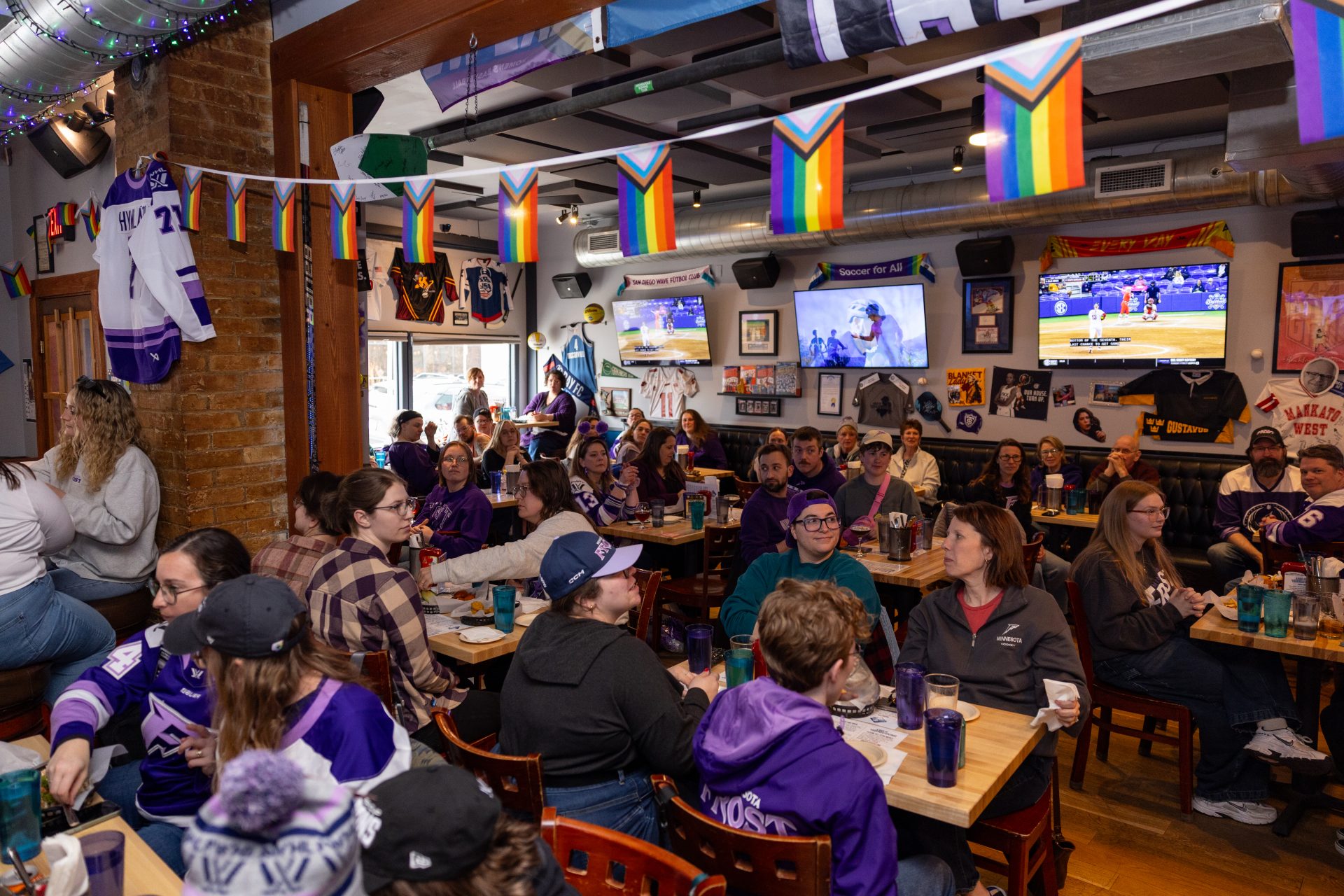
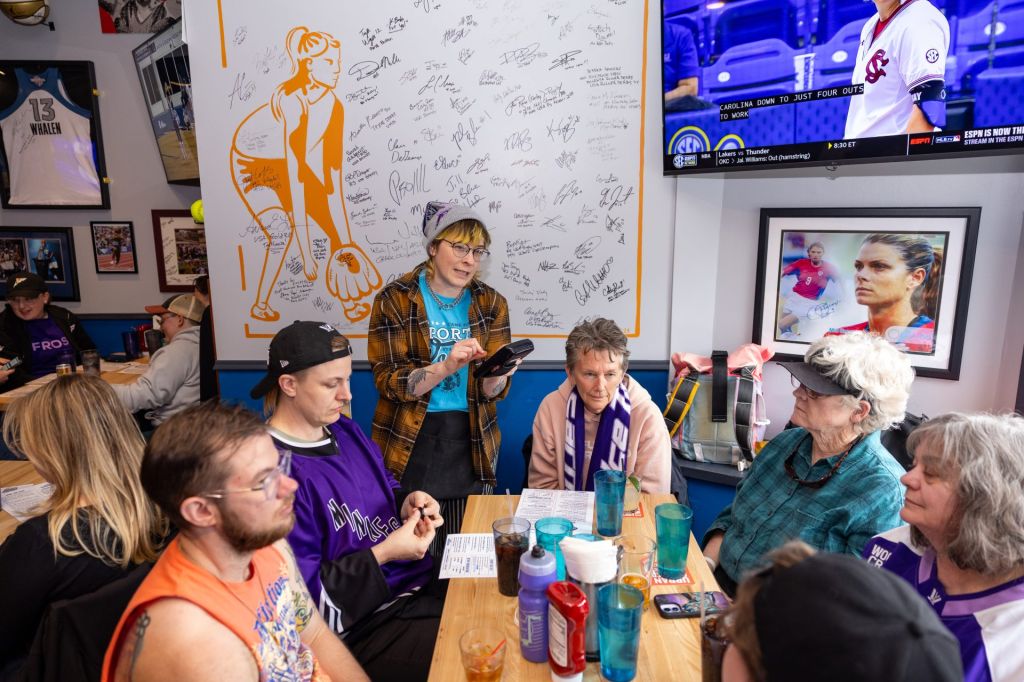
“We used to be almost 100% event-dependent. If there were really big games on, we were packed; if there weren’t, we were empty. That has certainly changed,” says Jillian Hiscock, owner of A Bar of Their Own in Minneapolis, which opened its doors in early 2024. “We’ve become much more of a mainstay instead … women’s sports are basically year-round at this point, so the novelty has worn off a bit, but that’s a good thing.”
Rough & Tumble owner Jen Barnes has seen a similar evolution at her Seattle pub. In 2026, she says, “Our community definitely sees [the bar] as their second home.”
More professional women’s athletic action than ever is driving this shift. Ten pro women’s leagues have started play since 2024, with the Women’s Professional Baseball League (2026), the Women’s Lacrosse League (2026), and League One Volleyball (2025) among the most recent. A women’s flag football league sponsored by the NFL is also slated for next year.
Several upstart leagues launched with mainstream media-rights deals already in tow, while a handful of longer-tenured properties, including the NWSL and PWHL, have beefed up existing agreements in the past year. These developments have largely eliminated an early headache: navigating a costly, fragmented web of niche streaming platform subscriptions just to access games.
Owners are taking different approaches to seizing this momentum. Hiscock—who opened A Bar of Their Own with the help of a 2023 crowdfunding effort that raised more than $200,000—says she is happy that her business’s finances have “stabilized” and has “zero desire” to open additional locations. Barnes, meanwhile, stood up a second Seattle location in December 2025 and has her sights set on even more.
She tells FOS that securing financing for Rough & Tumble’s new spot was easier than the first time around, when “there was no proof of concept” and most banks were “categorically uninterested” in offering her a loan. While the latter is still largely true, Barnes successfully courted a minority investor for the second location, and she is already fielding interest for additional ones.
Operational Hurdles
A focus on women’s sports doesn’t insulate these bars from standard hospitality-industry headwinds, like ping-ponging food costs.
“The margins for the restaurant industry are so narrow as it is, and tariffs have made things worse for everyone,” Barnes explains. “At a certain point, people aren’t going to want to pay $40 for a burger and fries, right? And realistically, if we wanted to hit our margins properly, that’s about what we should be selling for, but we just can’t do that.”
Locking in bulk or longer-term food and beverage distributor deals has proved somewhat helpful in mitigating costs, owners say. But with customers also feeling the pinch, they’re having to get creative.
“Folks are still coming in, but they may not be buying that second drink or just getting an appetizer instead of entree,” says The Sports Bra founder Jenny Nguyen. She tells FOS sales are down roughly 10% year over year at her Portland establishment. “So the conversations we’re having now are ‘How can we bulk out our happy hour?’ ‘Can we turn some items into half portions?’”
To further supplement revenue, women’s sports bars continue to lean in to special events and programming that appeals to their female- and queer-skewing clientele—a strategy that, as Hiscock puts it, big-name brands and athletes “increasingly want in on.”
A Bar of Their Own recently hosted a US Open women’s singles final watch party sponsored by Dove, and it is planning an event with Minnesota Lynx forward Natasha Howard to celebrate her new memoir. Five existing or in-the-works women’s sports bars also just received grants from the uber-popular tumbler brand, Stanley 1913, via its new partnership with women’s sports media company Togethxr.
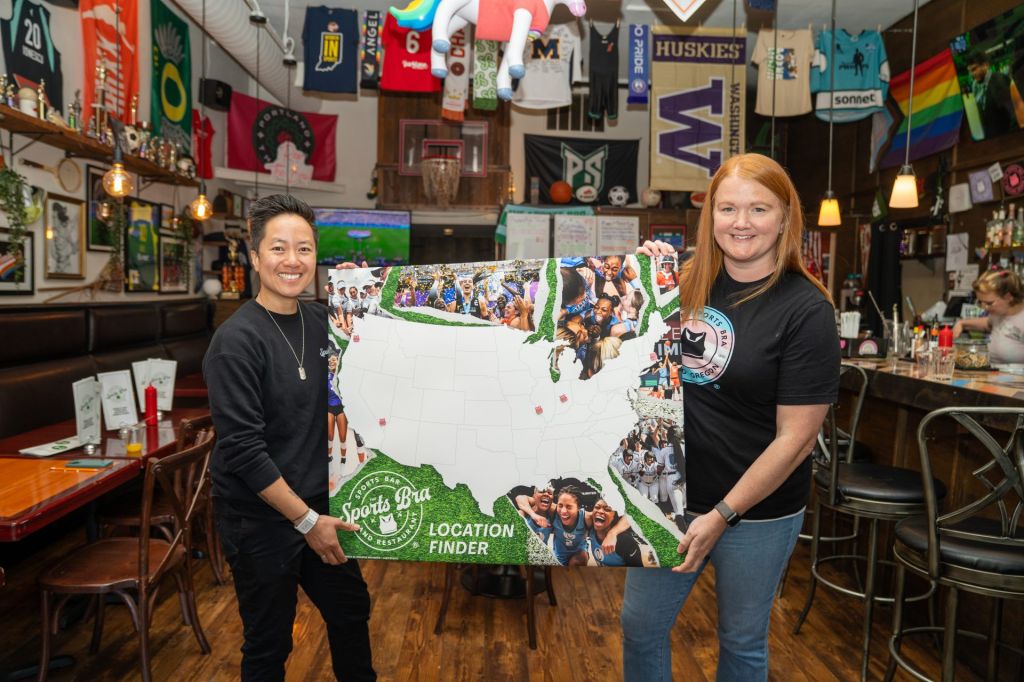
And at The Sports Bra, an annual Pride party has become an important source of both customer and sponsor revenue for The Sports Bra. The event has nearly doubled in size every year; what started in the bar’s parking lot now fills two city blocks. Its rapid growth reflects Nguyen’s broader goals for the bar, which, by and large, are the most ambitious in the category.
The Sports Bra’s Supersized Effort
With the 2024 capital infusion from Reddit cofounder Alexis Ohanian’s 776 Foundation, The Sports Bra announced four new franchised locations—in Boston, Indianapolis, St. Louis, and Las Vegas—in June 2025. In March 2026, a fifth franchise destination was announced in Portland, Maine. As of September, none have set a firm opening date, though Nguyen says four are tracking to launch by the end of the year. (The franchise fee is $55,000.)
Despite the slow-going, The Sports Bra ran a crowdfunding campaign over the summer to support the opening of yet another location—a “flagship headquarters” in Portland, Oregon, where future franchisees will train. The campaign reached its $1.25 million goal with more than three weeks to spare. All told, the company, which currently employs four full-time corporate staffers including Nguyen, wants to “open 40 locations nationwide by 2030 and generate $75 million in annual revenue” by 2030.
Nguyen also says The Sports Bra sees a “giant hole in the women’s sports-merchandise market” and “an opportunity to create content around [our] brand,” suggesting a formal media arm may be in the works. (The Sports Bra team led the creation of the International Women’s Sports Film Festival this year.)
These aggressive ambitions contrast with the reality of the bar’s finances. In addition to its declining sales this year, a July Oregonian report on recent disclosures filed by The Sports Bra showed an 18% drop in sales between 2024 and 2025, as well as “widening operating losses.”
Nguyen tells FOS the situation is temporary, reflecting the up-front expenses that come with its “transition from a single, 40-seat pilot location into a national hospitality organization,” including legal compliance, state registration fees, and site support. She also says they’ve already erased these deficits “through revenue and prior investment rounds.”
“I think with the business and with The Sports Bra, things are always uncomfortable,” Nguyen adds. “We’re just growing at a really fast clip. It is not natural. I don’t think that anything that The Sports Bra is doing right now is of a normal pace for a business, a small business or a restaurant business, or a franchise.”
That tension is likely to define the category as it matures. While women’s sports bars have largely moved beyond proving their initial proposition, the concept’s ability to scale is the next open question.
But the sports calendar is increasingly in their favor. The 2027 Women’s World Cup will be followed a year later by the Summer Olympics in Los Angeles—the first Games that will feature slightly more women athletes than men. And should the U.S. land the 2031 Women’s World Cup, an even bigger boost may await.