The first two teams to secure spots in MLB’s 2026 postseason are from its economic lower class, providing a fresh data point as the league and MLB Players Association continue a bitter labor fight centered in part around competitive balance.
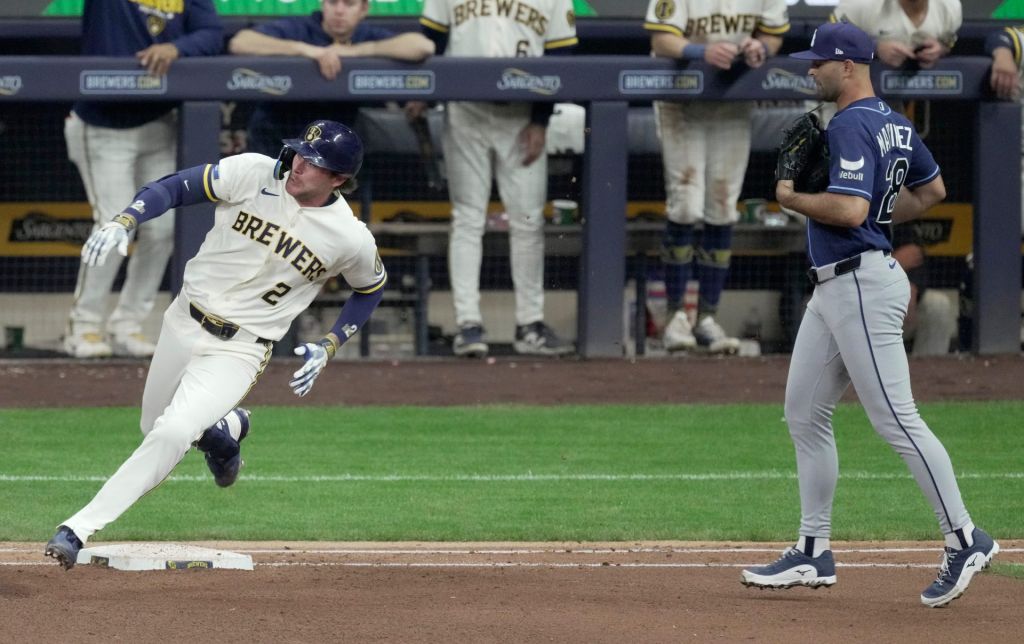
The Brewers and Rays each clinched playoff berths late Friday, further showcasing the upside-down nature of much of this season. Milwaukee is MLB’s smallest media market, and the Brewers’ run to the league’s best record extends a dominant stretch that also helped define the 2025 season. The Brewers have the league’s nineteenth-highest luxury-tax payroll at $153.6 million.
The Rays, meanwhile, will be back in the postseason for the first time since 2023, despite operating with MLB’s fourth-smallest payroll at $114.1 million and an uncertain long-term stadium situation only resolved late last month. Tampa Bay, holding the American League’s best record, also went into the season widely predicted to have a losing record and be well out of contention.
“We did have a genuine belief that this team was a lot tighter with the other four [AL East] teams than certainly the public had it,” said Rays president of baseball operations Erik Neander. “No matter what happens from here, they’ve proven that to be correct.”
Notably, both the Brewers and Rays also lost their traditional regional media rights deals this past offseason in the demise of Main Street Sports Group, and are working with the league’s in-house local media department for game production and distribution.
Despite those issues, and the corresponding turbulence in a critical revenue source, the two clubs have asserted themselves as consistent powers all season long. The only losing months that either Milwaukee or Tampa Bay have had in 2026 were the Rays’ 2–3 mark in March and the Brewers’ 12–13 record in April.
Competing Arguments
The accelerating rise of MLB’s lower class is giving the union more ammunition in its argument that management’s proposed hard salary cap not only suppresses wages, but is unnecessary to address perceived issues in competitive balance.
“We do not accept the premise that there’s some sort of existential crisis going on,” MLBPA interim executive director Bruce Meyer said earlier this year.
Conversely, part of the owners’ labor argument is based on teams not just making the playoffs, but advancing within them. More specifically, MLB has not had a small-market World Series winner since the 2015 Royals. Additionally, nearly 80% of League Championship Series participants and 85% of World Series teams over the past decade have come from a top-15 market. Neither the Rays nor the Brewers have a World Series title in their franchise histories.
“I believe that in order for this game to reach its full potential, we need to continue to address the concerns our fans have, particularly the concerns that go to the core of what we’re about, which is competitive balance,” MLB commissioner Rob Manfred said at the All-Star Game break. “It defies human experience to ask a fan to think that the bottom end of that [payroll] gap has the same opportunity to win as the top.”