Want more from Front Office Sports
in your search results?
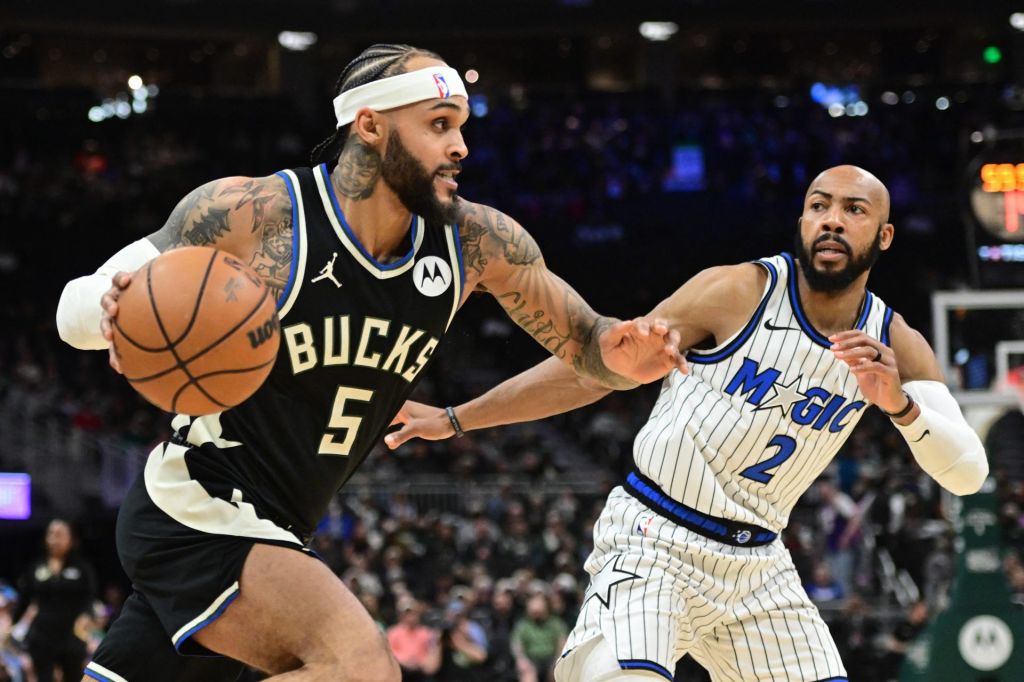
Gary Trent’s payday is under investigation.
On Thursday, ESPN reported that the NBA will probe Trent’s new four-year contract for $64 million, all of which was guaranteed. The deal raised eyebrows throughout the league when it was first reported on July 11.
While the NBA made no formal announcement of the probe, it could investigate the Bucks for cap circumvention, which is the same allegation in the Kawhi Leonard/Clippers/Aspiration probe.
“The NBA is continuing to look into it,” a league spokesman said to Front Office Sports about Trent’s contract.
Trent, 27, is coming off his worst statistical season in which he averaged 8.1 points per game on 38% shooting in 21.2 minutes per game. Trent’s scoring and minutes averages were the lowest since his rookie season.
He made $2.6 million—the veteran’s minimum—for the 2024–25 season. He made $3.7 million last season as part of a two-year deal worth $7.5 million. Trent opted out of the second year of that deal and will now see his salary spike to $15.2 million next year.
The Duke product is represented by Rich Paul of Klutch Sports, who also represents LeBron James, and got a contract that ranked among the top-10 in this summer’s free agency despite coming off a down year.
What’s more curious is that front office executives around the NBA weren’t surprised when Trent’s contract was announced. While Trent’s contract did not correlate to his recent play, NBA sources told FOS at this week’s NBA Summer League that they expected Trent would get a raise for months despite his lackluster season in Milwaukee.
There is speculation that Trent Jr. and the Bucks agreed to the contract a year ago to help build the roster around Giannis Antetokounmpo before Trent signed for the veteran minimum, which would be a form of cap circumvention. The Bucks used Trent’s Early Bird Rights for the deal in question, which allow teams to re-sign players to greater first-year salary up to the higher figure of either 175% the prior season’s salary or 105% of the league-average salary that same season.
A player needs to play two consecutive seasons with a team to establish Early Bird Rights. Trent signed with the Bucks in 2024, which means the team didn’t have the provision for him a year ago, which prevented them from signing him to the deal under scrutiny.
Proving the Bucks committed cap circumvention is easier said than done. The Timberwolves infamously circumvented the salary cap in 2000 by signing Joe Smith to three consecutive minimum contracts to establish Bird rights before giving him an $86 million deal. The paper trail that led then-commissioner David Stern to strip the team of three first-round picks came after one of Smith’s agents sued another, which led the illegal agreement to come out in case discovery.
A ruling could take awhile, too. The Clippers investigation has spanned 10 months and on Tuesday, NBA commissioner Adam Silver said his timeline for a verdict is “this summer.”
Download the FOS App
The business of sports, in your pocket.



Scan the QR code to get the app now.