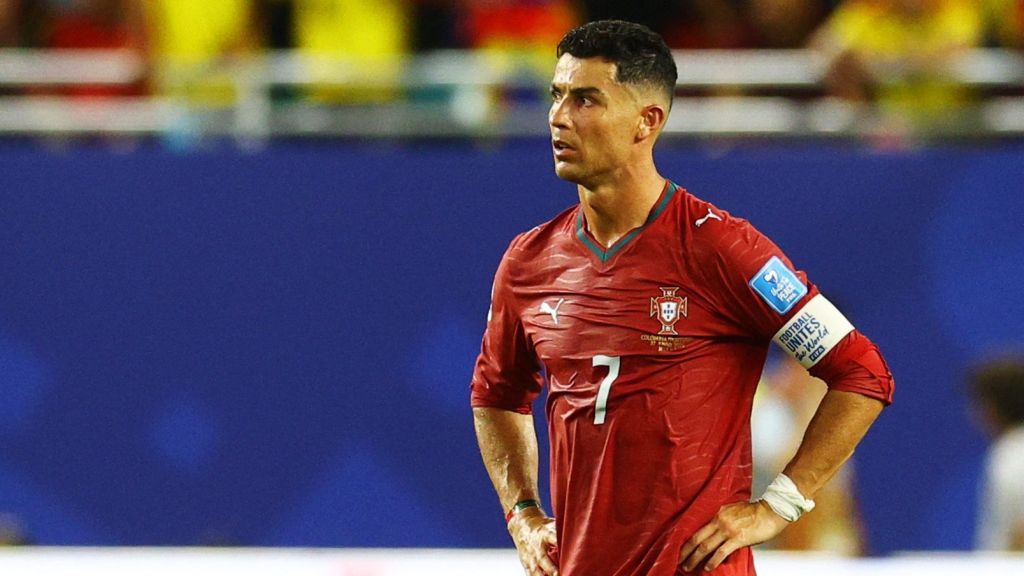
Portugal is conducting an unprecedented experiment.
When Cristiano Ronaldo scored twice against Uzbekistan in Portugal’s second group match, he became the first player in World Cup history to score in six different finals. He also overtook Eusébio’s tally of nine to become Portugal’s leading scorer at the tournament.
But Ronaldo is not in North America to beat up willing-but-limited opponents such as Uzbekistan. Portugal began the tournament as sixth favorite. And this is surely, (surely?) Ronaldo’s last chance to take home the biggest prize in soccer.
To do so, he needs to score more goals. The average age of the winner of the Golden Boot, the prize awarded to the tournament’s top goalscorer, is 24.5. Only once in history has the Golden Boot winner been over 30. Ronaldo is 41. He is old.
Still scoring, but a limited game
Ronaldo has already given a master class in how to wind down a career without losing a shred of main character energy or commercial appeal. He ended his imperial phase at Real Madrid in 2018 at age 33. Subsequent moves to Juventus in Italy and Al-Nassr in Saudi Arabia maintained his status as the highest-profile player in the league but in less physically intensive competitions. Neither team has been particularly successful with Ronaldo as its figurehead, but Ronaldo himself has continued to score. He is now within sight of 1,000 goals in professional soccer, which will be a ludicrous achievement.
In pursuit of this goal, he has also cut away large chunks of his game. The legendary acceleration and the mazy dribbles and multiple step-overs are long gone. He now operates almost entirely in the penalty area, his role now concentrated on getting shots away. When a player has such a limited role on a team, it lends itself to all-or-nothing analysis. He was pilloried for his performance against the Democratic Republic of the Congo and hailed for his goals against Uzbekistan. He was quiet in Portugal’s final group game against a very good Colombia side. Across three games, he has scored twice, relative to an xG of 2.5. In other words, he is performing a little below expectations. The issue for Portugal and its head coach, Roberto Martínez, is that Ronaldo is delivering a just-about-acceptable level of performance at the one job he has been assigned. He provides little to no value in link-up play or defensive work.
“Cristiano cannot be replaced”
It is also impossible to ignore the accompanying circus that comes with having the world’s highest-earning athlete (his Saudi team pays him more than $200 million a year, and he earns tens of millions more in endorsements) and the single most popular person on Instagram (he has 670 million followers) within the team. Two episodes from this World Cup have already demonstrated how Ronaldo the individual is larger than the Portugal team he represents.
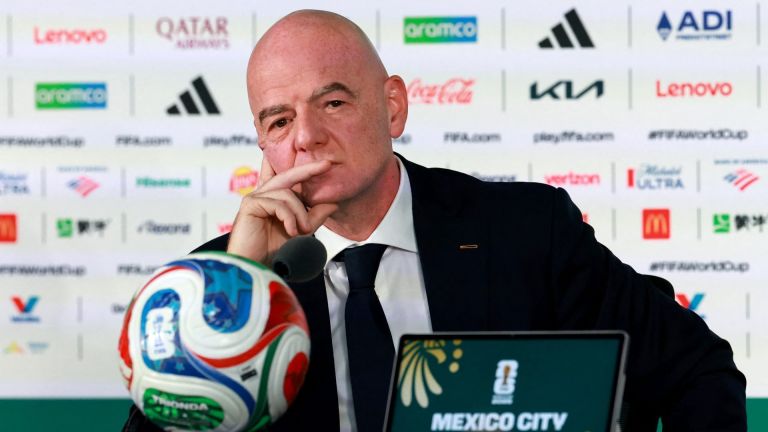
He was sent off for elbowing an opponent during Portugal’s penultimate World Cup qualifier. Red cards for violent conduct carry a three-match ban, which should have meant he was suspended for the final qualifier and Portugal’s first two group matches. But FIFA made a highly unusual intervention and commuted the suspension to one match.
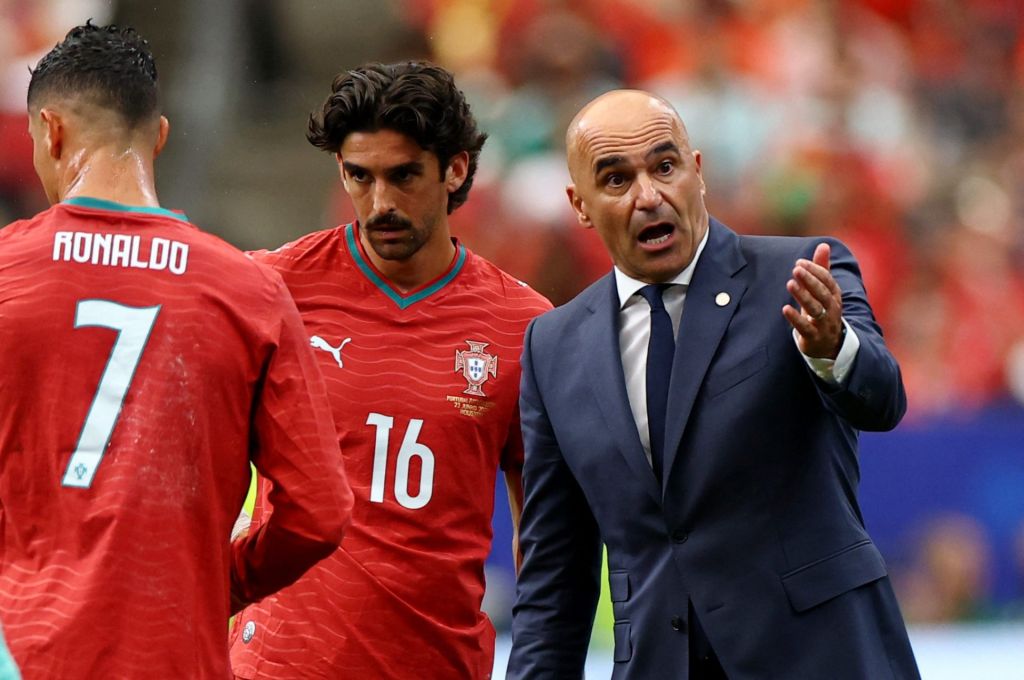
After Portugal’s draw with DR Congo, Ronaldo’s supporters turned on his teammate, Bruno Fernandes, demanding that he create better opportunities for Ronaldo to score. Fernandes’s innocuous Instagram post from the match attracted more than 200,000 comments. Thousands of other remarks turned up on the accounts of João Neves and Vitinha, all demanding that they do more to support Ronaldo.
Some commentators, even in Portugal where Ronaldo remains a national hero, believe his slimmed-down contribution on the field and the distractions that he brings off it mean that he should be consigned to the bench, or at least not play the full 90 minutes—which he did in all three group games. Martínez plainly does not agree. Speaking before the tournament he told The Athletic, “Cristiano cannot be replaced.”
“They seem compelled to work for him”
This tournament is Ronaldo’s last real opportunity to make an impression on the U.S. sports market. Although he remains highly recognizable within the soccer world, the sport’s relatively niche positioning in the U.S. means it’s one of the few places where Ronaldo is not among the top tier of athletes. Burns Entertainment CEO Doug Shabelman has worked with Ronaldo on product endorsements. He told Front Office Sports why Ronaldo’s tournament matters to his commercial prospects: “When you look at other athletes in the U.S. there’s always that aspect of, ‘Did you win, are you a winner, is your team winning?’”
But, he acknowledges, “Fans are very forgiving of aging athletes who wanted one last shot. If he took a huge penalty kick and flubbed it, the moment would be remembered, but even that is not going to erase 20 years of amazing soccer.”
Nonetheless, members of soccer’s analytics community are unconvinced of the wisdom of accommodating Ronaldo. Gillian Kasirye of Total Football Analysis described the latest (and last?) iteration of Ronaldo as a “serviceable” forward. Another who has worked with professional teams across Europe is concerned by “the psychological hold he seems to have over the Portuguese team, which means that not only does he not work for the team but they seem compelled to work for him.”
The “Uzbek feint”
There has been one piece of brilliance. Seventeen minutes into Portugal’s match against Uzbekistan, Pedro Neto won a free kick just outside of the penalty area. Ronaldo and the left back, Nuno Mendes, stood over the ball. The Uzbek goalkeeper, Abduvohid Nematov, arranged his defensive wall, anticipating a shot from Ronaldo into the top left-hand corner. We have all seen Ronaldo hit this free kick thousands of times. His eagerness to take them (and subsequently miss) has been a meme for years. This time he made a small movement forward before Mendes stroked the ball into the bottom right-hand corner. It subverted everything we thought we knew about soccer’s preeminent individualist.
The “Uzbek feint” was Ronaldo’s first great moment of this World Cup. Portugal cannot afford for it to be his last.