
Troy Aikman, Dolphins Have No Ongoing Consulting Agreement
Want more from Front Office Sports
in your search results?
Just 24 hours into its existence, Forta Cosmetics banked more than $10,000 in online sales of its sole product: a makeup-setting spray meant to withstand sweaty workouts.
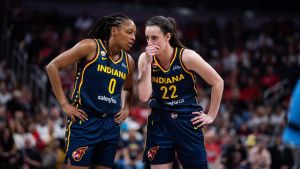
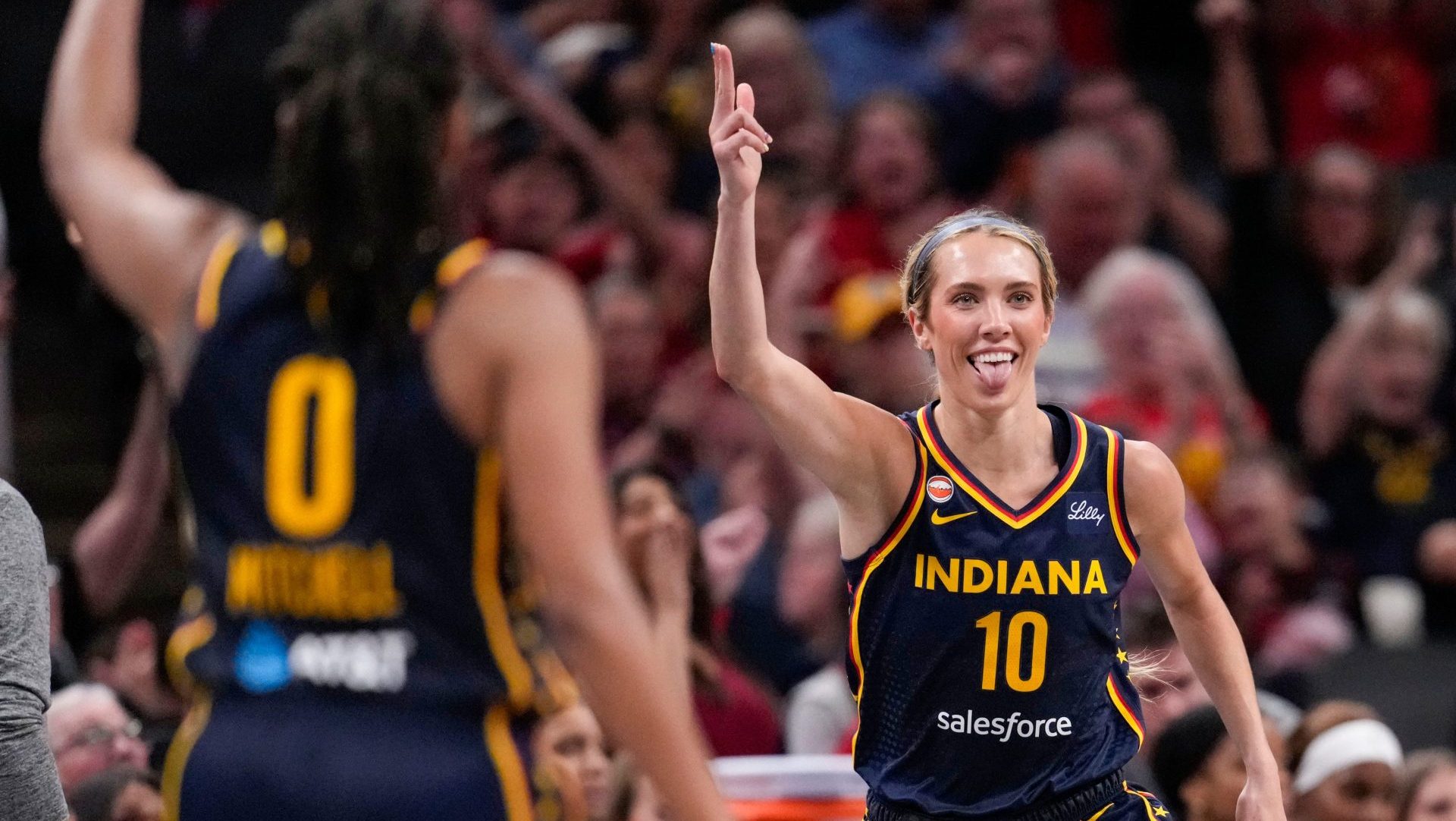
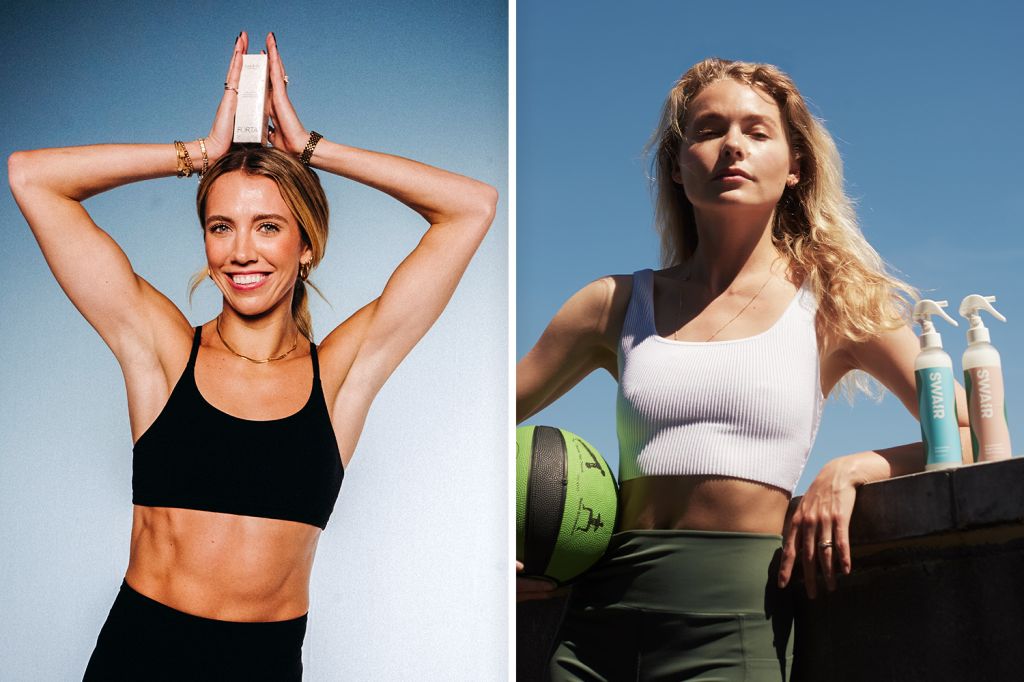
A play on the phrase “for the active,” Forta was launched March 31 by Indiana Fever guard Lexie Hull and her former Stanford roommate, Sarah Guller, after the duo spent years lamenting a lack of makeup that could last through their long days.
“None of the products out there are really built for the level of activity I’m doing as a professional athlete,” Hull tells Front Office Sports. “For a long time, I just accepted that I would spend 30 minutes getting ready for a game and then before warmups are even done, my makeup is all over my towel, or my jersey, or another person’s jersey.”
Forta is one of a growing group of skincare, haircare, and cosmetics companies created in recent years by female athletes—current and former, amateur and professional—amid the broader women’s sports boom. Their products vary, but they share a thesis: Sports is increasingly central to women’s lives, and the beauty industry isn’t keeping up. They share big ambitions, too.
Serial marathoner Carrie Sporer wants her showerless-shampoo brand, Swair, to become “the Lululemon of hair.” Former Division I swimmer AnnRagan Kearns wants her skincare brand, Medalist Skin, to be thought of as “Glossier meets Nike.” Guller, meanwhile, says she and Hull are striving to create an entirely new category with Forta: “the athleisure of beauty.”
These goals are lofty, but as women increasingly spend on both fitness and beauty each month, they aren’t unfounded. “There’s a broader shift happening where beauty routines are blending into wellness—think supplementation, nutrition,” says Joan Li, associate principal wellness analyst at market-research firm Mintel. “A performance or active cosmetics brand that leans in to this lifestyle convergence has real room to grow.”
If they can seize the moment, these brands stand to make a killing. But the competitive nature of the beauty industry, which is packed with massive conglomerates, means the road to carving out a new category—and getting coveted shelf space—is long and windy.
Game Face
Beauty has become a core commercial pillar for women’s sports teams and leagues as their relevance—and revenue—grows.
Sephora’s entrance into the sports space has been particularly impactful.
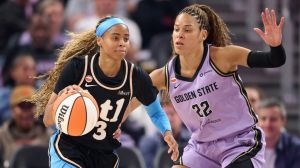
The major retailer is an official partner of Unrivaled, the 3-on-3 women’s basketball league, where players get ready for games in a dedicated “glam room” and have access to beauty services throughout the season. It also has a big footprint with the Golden State Valkyries. The WNBA expansion franchise trains at the Sephora Performance Center, and during home games, fans are occasionally treated to a special in-arena activation: black-and-white-striped goodie bags that descend from the rafters via miniature parachutes, stocked full of Sephora products.
Other notable alignments between beauty and women’s sports are Charlotte Tilbury’s 2024 sponsorship of F1 Academy, Formula One’s female-only junior racing series; Fenty Beauty’s 2025 backing of the New York Liberty; e.l.f. Cosmetics’s multiyear tie-up with the NWSL, which includes presenting rights to the league’s annual Challenge Cup through 2027; and Sol de Janeiro’s partnership with the Washington Mystics, announced mid-June.
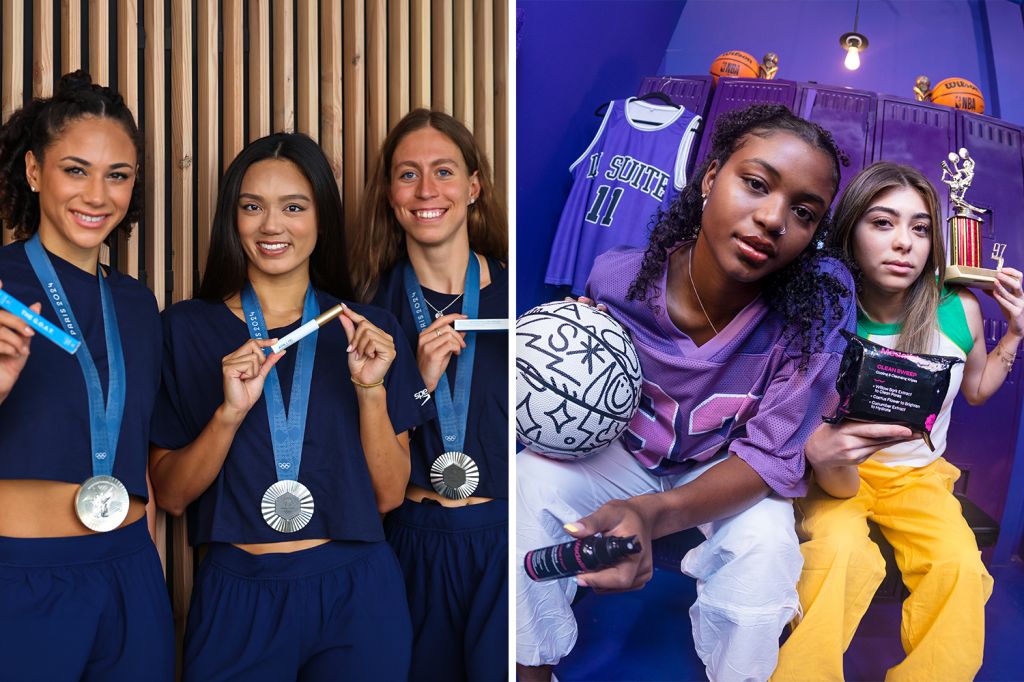
Dominique van Boekel has witnessed firsthand the correlation between the growth of women’s sports and the viability of the performance cosmetics category.
A former professional tennis player, van Boekel founded Athletic Cosmetic Company in early 2023, when the women’s sports boom was comparatively young—and buy-in from manufacturing and retail partners alike was hard to come by. Now, she says, “almost everyone involved” sees few opportunities that are bigger. For the first time in early June, three products from Athletic Cosmetic became available online at Ulta, the country’s largest beauty retailer.
Others are finding similar momentum. Kearns tells FOS Medalist Skin’s sales are up 59% over the past 12 months; Sporer, meanwhile, says Swair is on track for a 100% year-over-year sales increase, and recently launched online at Nordstrom and Aerie. Athletic Cosmetic Company is also in growth mode, eyeing additional product drops later this year. Forta says it has already been in talks with Sephora, even before its lucrative setting-spray launch.
“The Bar for Survival Is High”
Although these brands are gaining traction, beauty is a notoriously difficult business—no matter how innovative a product or its positioning is.
“The beauty industry is incredibly competitive … and only really producing a handful of breakout success stories right now,” Mintel’s Li tells FOS. “There is room for smaller brands, but the bar for survival is high.”
As a result, investor interest in emerging beauty startups is low; most founders FOS spoke with say they have bootstrapped their operations, at least in part, to date—a tall task in the capital- and time-intensive beauty space.
Hull and Guller, who herself spent part of her post-Stanford career in venture capital, took more than two years developing Forta’s debut setting spray before landing on a formula they felt was genuinely differentiated (it uses only 10 ingredients, including a “film-forming polymer”).
Kearns, too, took years to refine Medalist Skin’s earliest products with a market-research group of more than 500 athletes spanning different ages, sports, and skin tones. (“I wanted everyone represented,” she says, “from the eighth-grade softballer to WNBA players.”)
For Sporer and her brand Swair, launched in 2019, one of the biggest challenges was simply finding manufacturing partners who understood what she was trying to create. She tells FOS, “Most people came back to us and said, ‘Well, we have this dry shampoo formula that’s kind of similar and you can put your name on it.’”
Still, by virtue of being founded and tested by athletes, these brands have an advantage over corporate conglomerates with two intangibles: credibility and storytelling. A recent video posted to Forta’s TikTok account depicts Hull dripping in sweat on an exercise bike, makeup perfectly intact. It received hundreds of comments—many expressing an intent to purchase.
Going for Gold
To stand out long-term, these brands have to capitalize on existing infrastructure—resources both corporate and human.
Hull’s access to athletes is one strategy for Forta: She and Guller say they gifted “a bunch of product” to WNBA players, and that they plan to host events throughout the WNBA season. Forta also ran a gift-with-purchase program with Athleta in May—the first makeup brand to do so with the Gap-owned sportswear and athleisure retailer—and received approval for a pop-up event with luxury-gym chain Equinox next month.
Others, meanwhile, are hitting the amateur circuits, showing up with product booths at youth tournaments around the country and doing small-time partnerships with college athletes to build word-of-mouth. “We get a lot of DMs from college athletes who ask us for free products in exchange for a post and we say yes when we can,” says Kearns. “The upside is there; they all have their own followings these days.”
Athletes becoming influencers is an especially lucrative development in the beauty market, where consumers prefer to discover products through creators rather than traditional advertising. Hull alone has more than 700,000 followers across Instagram and TikTok to which she consistently pushes Forta. The reach can generate demand, build brand affinity, and open doors to broader distribution opportunities.
Founders tell FOS they are already exploring channels beyond traditional beauty retailers, including sporting goods stores and other outlets that cater to active consumers. Many are also looking ahead to the 2028 Summer Olympics in Los Angeles, where they hope to be “established enough” to run splashy activations and seed products to the next generation of breakout female athletes.
There is one cloud looming, however. Legacy brands that dominate the space largely haven’t tapped into the convergence of makeup and movement via actual products yet beyond sponsorship and marketing deals. But as the commercial opportunity gets bigger, this might not be the case for long. And with massive resources, any of these conglomerates could spin up their own performance cosmetics products with relative ease.
For now, that’s not the biggest thing on founders’ minds. For decades, sports have generated opportunities in obvious adjacent sectors: apparel, footwear, equipment, nutrition. The ascent of women’s sports is creating openings in places that might once have seemed less intuitive.
“We really want to create this seamless coexistence of beauty and performance,” says Guller, “and hopefully that creates an entirely new kind of consumer behavior.”
Download the FOS App
The business of sports, in your pocket.



Scan the QR code to get the app now.