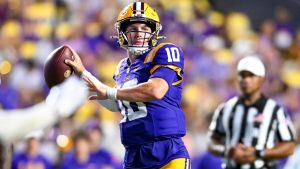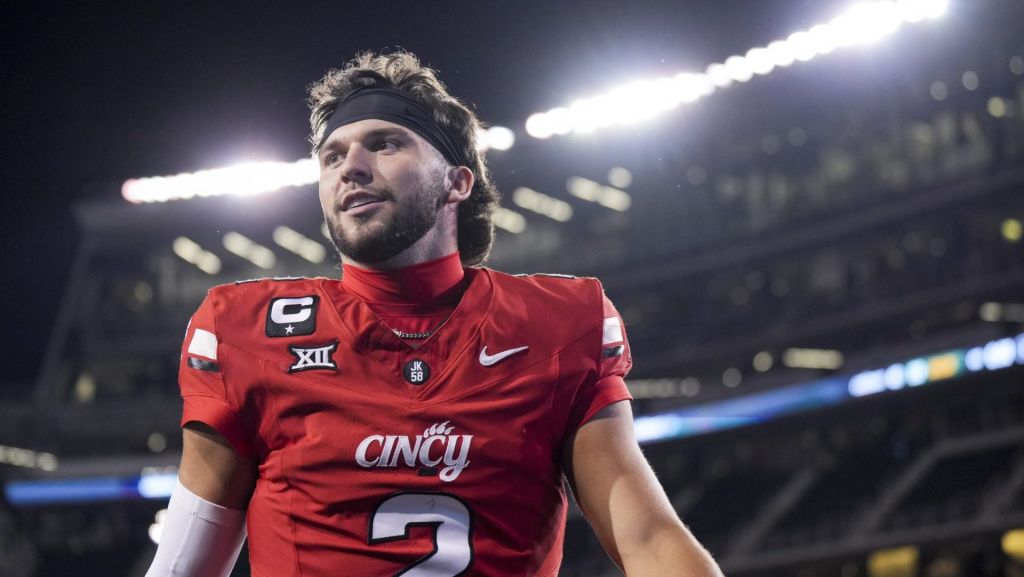
Last month, Texas Tech quarterback Brendan Sorsby announced he would seek residential treatment for gambling addiction. Now, Sorsby is requesting that a judge force the NCAA to allow him to play college football in 2026.
On Monday, Sorsby’s attorneys filed a lawsuit in Lubbock, Texas, district court, alleging the NCAA has not provided a swift enough decision regarding whether Sorsby‘s eligibility could be reinstated after his gambling activities—including betting on his own team while at Indiana—came to light. According to the suit, Sorsby is currently ineligible to play for the Red Raiders due to past violations of the NCAA’s gambling rules. The lawsuit added that Sorsby is further harmed by the lack of a decision because he may want to declare for the NFL Supplemental Draft, which he must do by June 22.
Sorsby has requested a hearing on the proposed injunction by June 15.
“Rather than support a student-athlete’s recovery from a gambling addiction—a clinically diagnosed disorder recognized by the Diagnostic and Statistical Manual of Mental Disorders (“DSM-5”)—the NCAA has weaponized his condition to shore up a facade of competitive integrity, while simultaneously profiting from the very gambling ecosystem it polices,” the lawsuit reads.
In a statement to Front Office Sports, the NCAA denied that it has received a reinstatement request regarding Sorsby.
“The NCAA generally doesn’t comment on pending reinstatement requests, but the Association’s sports betting rules are clear, as are the reinstatement conditions,” the governing body said. “When it comes to betting on one’s own team, these rules must be enforced in every case for the simple reason that the integrity of the game is at risk. Every sports league has these protections in place, and the NCAA will continue to apply them equally because every student-athlete competing deserves to know they’re playing a fair game.”
The Timeline
Sorsby began betting on sports in high school, according to the lawsuit, which included multiple details about his activity based on a sworn affidavit he submitted.
He placed small bets on Indiana football between $5 and $50 while he was on the Hoosiers’ scouting rosters—but added that he only placed bets in favor of Indiana, which the lawsuit argues absolves him of any sports betting integrity concerns.
Sorsby “never bet against his own team or players on his team, never used or shared inside information, and never manipulated a game,” the lawsuit says. “The NCAA’s own robust, real-time integrity-monitoring systems confirm this: there is no evidence that they ever generated a single alert or otherwise gave the NCAA any reason to question Mr. Sorsby’s betting activity before April 2026.”
Sorsby continued to engage in sports betting throughout his college football career, per the lawsuit, placing bets on everything from the Turkish basketball league to Romanian soccer. But the lawsuit states he “never bet on any of his teams, any games his teams participated in, or any players in those games” once he was made an official member of Indiana’s roster in October of 2022.
Texas Tech and Sorsby were notified of the NCAA investigation into his gambling activity on April 14, 2026, the lawsuit says. Sorsby—who transferred from Cincinnati this past offseason—“did not deny, deflect, or delay,” acknowledging some of his bets were against NCAA rules and checking into a rehabilitation facility two weeks later.
Then, in early May, Sorsby retained Jeffrey Kessler, one of the lead plaintiff attorneys for the House v. NCAA settlement, to represent him in the potential reinstatement process.
Sorsby admitted he has bet on his own team—an offense that could result in a permanent loss of eligibility, per NCAA rules. But the lawsuit insists he did not engage in activity that threatened the integrity of the game. Between these revelations and Sorsby’s swift actions taking accountability and entering treatment for gambling addiction, his representatives asked the NCAA to reinstate his eligibility. However, the NCAA never provided a legitimate timetable for when it might reach a decision on his reinstatement, the lawsuit alleges.
“The result is that the NCAA is running out the clock on Mr. Sorsby’s reinstatement request, with dire consequences for his eligibility, his football career, and his recovery,” the lawsuit says.
Next Steps
The lawsuit provides Sorsby a path forward regardless of its outcome.
If a judge sides with Sorsby, he will likely take one more year to play for the Red Raiders. If the judge rules against him, he could press forward with his NFL hopes, declaring for the NFL Supplemental Draft by June 22.
Either way, Sorsby could face additional legal liability, as he is currently under investigation by the Ohio Casino Control Commission, a spokesperson for the organization previously confirmed to FOS.