Vicious Infighting Is Jeopardizing the Future of Women’s Baseball
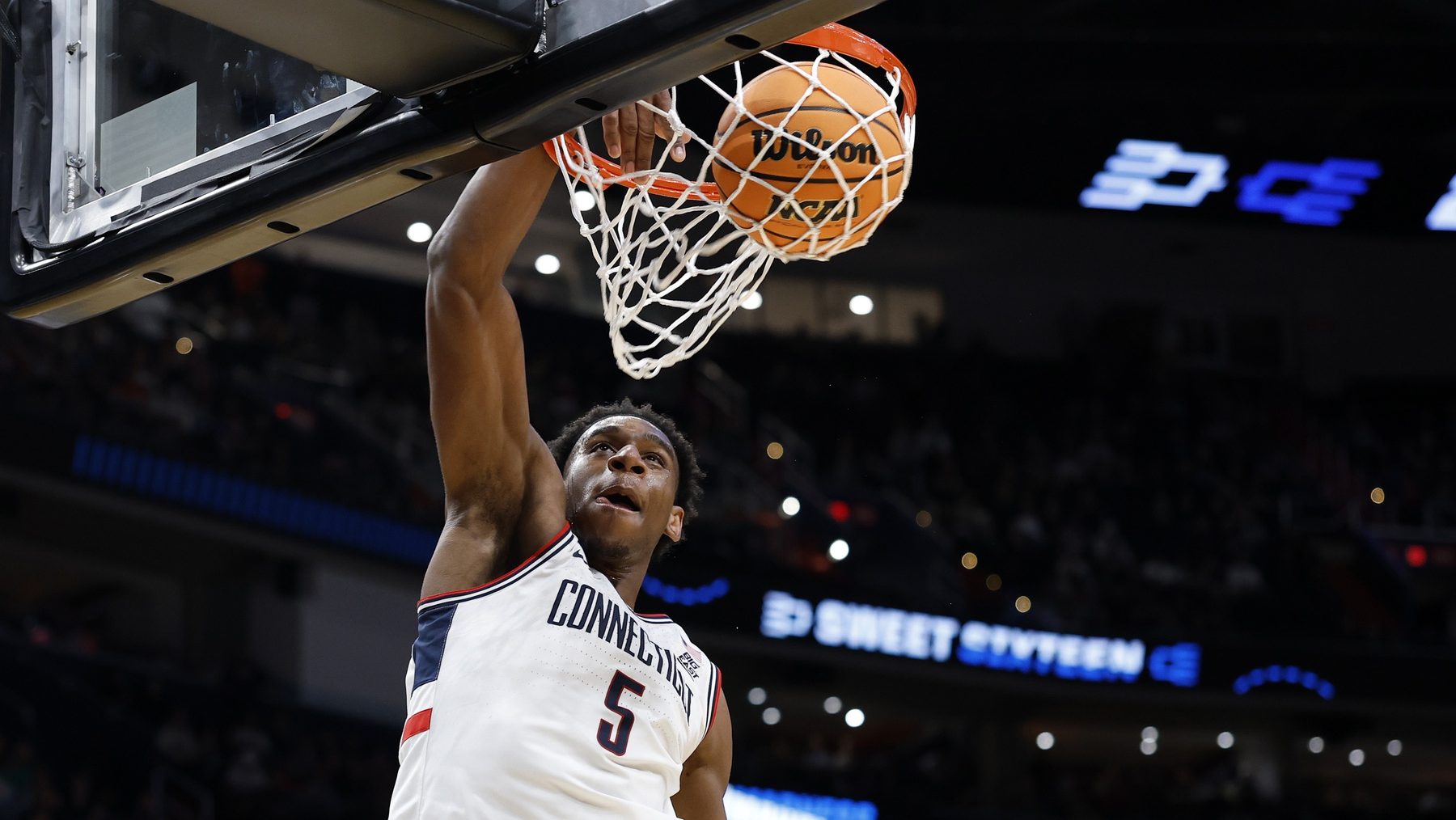
WASHINGTON — The Elite Eight matchup between No. 1 Duke and No. 2 UConn slated for Sunday night at Capital One Arena is straight out of a college basketball history book. Two storied programs, which haven’t met in more than a decade, will square off for a spot in the men’s Final Four.
It could also be called a meeting of two of college basketball’s “bluebloods”—a term long used to refer to men’s basketball programs with historic repeated success.
But the word’s meaning and significance was up for discussion over the weekend, as coaches disagreed over whether the historic giants of college basketball still have the same advantages over others in the era of “unrestricted free agency.”
Traditionally, prestige was enough to recruit top players. Now, with NIL in play, any school can jump in to jockey for top talent and titles.
Are bluebloods dead? On Thursday, multiple coaches in D.C. said no.
But perhaps the more pertinent question is whether the moniker—or that of the “Cinderella”—means anything anymore.
When asked that question by Front Office Sports on Saturday, Duke’s Jon Scheyer and UConn’s Dan Hurley appeared unsure, and perhaps a little too fatigued to make a sweeping statement about one of college basketball’s most charged terms.
The most important recruiting asset these days, they both agreed, is money.
“I just think the playing field has been leveled so much in our sport,” Hurley said. “If you’ve got the resources, if you’re willing to commit in basketball to have the best coaching staff, to obviously have the healthy NIL [budget], to travel in facilities and to run at a first-class level, whether you’re a mid-major like High Point or you’re Duke or UConn, you have as good a chance to consistently be in this tournament and be in contention.”
What’s in a Name?
“Blue Blood” was first used in a Brooklyn newspaper in 1927 in reference to specific players rather than their schools, according to an NCAA article from 2022. Later, in 1946, a basketball ratings system described in The Charlotte News attempted to create a list of top programs it classified as bluebloods.
Now, the phrase is often used to refer to a group of programs with years of success behind them, big-time coaches, and wealthy boosters and facilities: Kansas, Kentucky, Duke, and UNC are among them. More recently, as newer dynasties such as UConn and Villanova emerged, and programs like Indiana and Georgetown have faded, another question has loomed: Are there new bluebloods, too?
Despite the history of the term, Scheyer said he’s never used the phrase “blueblood” to describe Duke men’s basketball.
“I don’t know who determines that or who says you’re in or who says you’re out,” Scheyer said Saturday. Still, he added: “I don’t get into the definition of it, but I would hope that anybody that associates the highest level of college basketball would put Duke in that category.”
Legendary Coaches Debate
The debate began on Thursday ahead of the Sweet 16, when St. John’s coach Rick Pitino made a sweeping remark.
“Bluebloods,” he declared, “no longer control basketball any longer. There’s no difference between Kentucky, North Carolina than Illinois or St. John’s.” When asked to elaborate, he added: “I think it’s great.”
Pitino’s thesis: The era of unrestricted free agency has leveled the playing field, creating a world in which any program with enough financial resources can use the transfer portal to lure top athletes from historic programs.
Pitino, who has coached at Kentucky and Louisville—both in the traditional blueblood conversation—has found major success in the new era. In just three years, he brought St. John’s back from “hibernation” to its first Sweet 16 run in decades by embracing the transfer portal and paying players (backed primarily by billionaire benefactor Mike Repole). Red Storm star Zuby Ejiofor, for example, started his career at Kansas but was told he wouldn’t start. He found a home at St. John’s and stayed for three years.
Michigan State’s Tom Izzo, who leads a blueblood program himself, disagreed with Pitino’s premise. “I think a blueblood is somebody that’s earned it over time,” Izzo said. “I like the term because I think that means you’ve withstood the test of time and you’ve earned the right over years and years and years.”
Both Scheyer and Hurley agreed with Izzo’s premise that repeated success was perhaps the best measure of a program. “That’s the goal that I’ve had, and I think for our program, the best sign is to have consistency,” Scheyer said.
After all, it’s getting harder and harder to repeat success in an era where players can move freely every season, and where schools can tap wealthy alumni to fund multimillion-dollar rosters. Said Izzo before Michigan State was eliminated: “There might not be as many blue bloods anymore.”
Players ‘Not Sentimental’
All four coaches did agree that in this era of college basketball, where money means more than anything, schools can’t rely on their history to entice talented players.
“You can’t get by on your brand anymore,” Hurley said Thursday before the Sweet 16. “None of these kids care about that anymore. None of the people close to them care about it, because the majority of the people that are advising the kids now are agents who are looking at it from a business perspective, or families that are not sentimental about any of this.”
Scheyer reminisced about his days as a player, when NIL money wasn’t allowed, and a program’s reputation meant more than anything else. “When you think about when I was recruited, history, tradition, those things are very valuable,” he said. “That’s talked about less in the recruiting process now.”
Despite the equivocation and dismissal from some top coaches, some players do recognize the phrase. Duke freshman Nikolas Khamenia said Thursday: “I do believe Duke is a blueblood. I grew up watching a lot of college basketball games, schools like Kentucky, Duke, Kansas, Carolina were always referenced to me as bluebloods.” On Saturday, UConn junior Solo Ball used a different word, calling both his school and Duke “two storied dynasties.”
On Sunday, labels won’t matter to the Blue Devils and Huskies. The only thing both programs care about: winning right now.