Want more from Front Office Sports
in your search results?
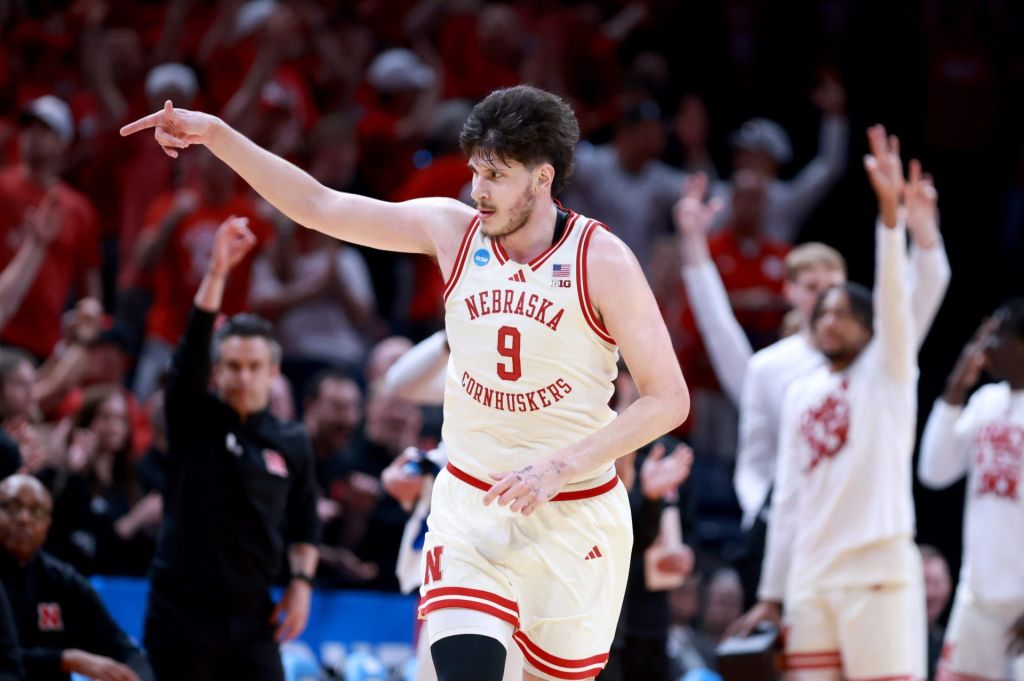
On Thursday, Nebraska’s men’s basketball team made history with their first-ever win in the NCAA Division I men’s basketball tournament. But they didn’t post a highlight reel on X.
Instead, the Huskers posted a graphic stating: “Dear Husker Nation, We regret to inform you that due to NCAA restrictions, there will be no immediate Cinematic Recap of Nebraska’s 27th win vs. Troy.”
They aren’t the only ones. Schools across the country have resorted to using GIFs, photos, screenshots, and even stick figure drawings to celebrate in-game highlights. They’ve written disclaimers to fans explaining the lack of videos using iPhone Notes app screenshots and letters.
The reason: the NCAA’s in-game footage licensing policy that limits—or in some cases outright prohibits—teams from posting their own in-game highlights from NCAA-owned championships on social media. If schools want less restrictive posting capabilities, they can purchase them for $5,000 per tournament, according to emails obtained by Front Office Sports.
The policies aren’t new or unique to the NCAA—all leagues and events have restrictions on the use of their in-game content. But the NCAA’s policies have drawn criticism from school and conference officials, who argue the policies are unnecessarily restrictive for the participating teams themselves.
TNT Sports (one of the networks part of the men’s media rights package) owns and operates the NCAA March Madness licensing rights, and the NCAA works with a company called Veritone to license and distribute them.
For men’s March Madness this year, teams can’t post any in-game clips on X, TikTok, or Snapchat. On Facebook and Instagram, they can post up to 60 seconds worth of in-game footage per game, but they can’t post anything during the game, and can only post up to two times for a maximum of 30 seconds of footage per post. As part of this, schools can use footage shot by their own content creator or shot and provided by the official broadcast, but the posts must request collaborations with the NCAA “March Madness” accounts.
That’s why, ahead of UVA’s first-round matchup against Wright State on Friday, UVA’s men’s basketball account posted what appeared to be a screenshot from an iPhone Notes app addressed to fans. “Due to restrictions, in-game content will be limited to .GIFs, memes, and notes app art. … Sit back, relax, and enjoy the show[.]”
One in-game post consisted of a glorified stick-figure drawing of Jacari White, complete with a cutout of White’s face, shooting a basketball.
The Huskers made their semi-viral disclaimer post because they wanted their fans to know that there was a reason for the lack of their usual postgame videos—especially following such a historic game. “Our social team just wanted to have a creative way to inform our fans why we wouldn’t have a regular video that they are used to after wins,” a Nebraska athletics spokesperson wrote to Front Office Sports on Saturday.
Duke men’s basketball, known for investing in its social media and content capabilities, at one point resorted to posting text-only in-game highlights on X. “11-0 RUN,” the Blue Devils wrote during their Round of 32 matchup against TCU (they added several dancing GIFs). “March Madness social policy does not allow us to post video from it, but vibes were high.”
The rules for in-game footage for the women’s tournament are slightly less strict. Teams can post up to four in-game highlights during each game, though each post can only total 30 seconds. They also have to include live “call to actions,” requesting fans to tune into the game live. After the games end, schools can post up to two minutes total, 30-seconds per post, on social media platforms.
The best workaround, it appears, is embedding videos posted from the NCAA Digital platforms after games, or furiously re-tweeting in-game highlights posted by other accounts, including the men’s and women’s official March Madness accounts, as well as CBS Sports, TNT Sports, and ESPN/ABC platforms.
This year, the NCAA gave schools the opportunity to opt in to more lenient rules. “This year, in response to a growing request from Member Institutions for expanded digital/social coverage, TNT Sports is offering an expanded highlight licensing option,” an email sent to schools and obtained by FOS read. But to do so, schools had to pay thousands of dollars.
Schools can use up to five minutes of in-game footage and ancillary footage (like press conferences or in-arena videos) after games conclude in exchange for a one-time payment of $5,000 for the men’s tournament, and another $5,000 for the women’s tournament, according to the emails FOS obtained. However, schools still can’t post the in-game footage to TikTok or X. Another option: Schools can purchase this option for all NCAA-sponsored championships for $15,000.
These options allow schools to post on “their digital/social pages in a manner consistent with their customary regular season Conference coverage,” the policy read.
It’s unclear how popular these offers were, however, given that schools could end up shelling out for the rights to post highlights for just one game if they didn’t advance past the first round.
Representatives for the NCAA did not respond to questions regarding how many programs had agreed to purchase these extra highlight capabilities.
Download the FOS App
The business of sports, in your pocket.



Scan the QR code to get the app now.