Want more from Front Office Sports
in your search results?
The long-term outlook for ESPN remains generally strong, as the sports-media giant still has the rights to next year’s Super Bowl, a broadcast foothold with nearly every major U.S. sports property, and an enhanced relationship with the NFL through its recent equity deal. The network’s near-term situation, however, still contains plenty of choppiness.
Disney’s earnings from its fiscal second quarter of 2026, released Wednesday, detailed just how much that’s the case. The company’s sports segment, composed almost entirely of ESPN, posted $4.6 billion in revenue for the quarter, up 2%, while segment operating income fell 5% to $652 million. Each of those sports measures easily trailed the across-the-board gains recorded in the other two major parts of the Disney empire, its entertainment and experiences segments.
The company tied the relative weakness coming out of sports to several factors, including fewer NBA games in the quarter, higher overall rights fees, and the absence this year of hockey’s 4 Nations Face-Off. The outlook for the current quarter is somewhat similar as Disney projects that its sports segment operating income will fall by 14% year-over-year, again due to higher programming expenses.
More broadly, Disney said ESPN is not as far along in its transition to a business model based more on direct-to-consumer revenue. The ESPN Unlimited DTC service is still less than a year old following its debut last August, and it remains far younger than sister streaming outlets Disney+ and Hulu.
“Compared to our entertainment brands, ESPN is earlier in its monetization evolution,” the company said.
Despite all of that, Disney executives still see sports as remaining a core element of the overall company business, and again dismissed any suggestion of spinning off ESPN.
“Sports rights are expensive and can be dilutive without scale, but we have scale in our most important market, the U.S., and the biggest sports media brand in the world, in ESPN,” said Disney CFO Hugh Johnston in an earnings call Wednesday with analysts. “We view sports as a key part of our programming strategy, and ESPN as an important contributor to our distribution portfolio. For sure, we have to continue to work through this economic transition for ESPN, while also better leveraging it for our overall business.”
A New Leader
The earnings call was the first for new Disney CEO D’Amaro since he formally succeeded Bob Iger in the job in March. D’Amaro’s arrival was paired with a material shift in the structure of Disney’s earnings calls, with the company departing from a traditional, open question-and-answer format to prescreened questions from analysts—similar to how Netflix conducts its calls.
Not surprisingly, the shift allows for greater company control over the overall narrative that emerges.
“As we manage this business in transition, we remain focused on serving sports fans in a way that fully captures the value of ESPN and live sports within Disney’s broader direct-to-consumer offering,” D’Amaro said.
Overall, Disney posted a 7% increase in revenue to $25.17 billion and a 4% rise in operating income to $4.6 billion. Following the earnings report, Disney stock rose more than 8% in early Wednesday trading.
No News Yet on the NFL
While Disney is still ingesting the assets gained in the NFL transaction, including a current distribution issue involving the NFL Network and Comcast, there have been no discussions with the league about a new rights deal. The NFL is preparing to reopen its domestic rights agreements, but the opt-out in ESPN’s pact doesn’t arrive until after the 2030 season, a year later than those for the league’s other major rights holders.
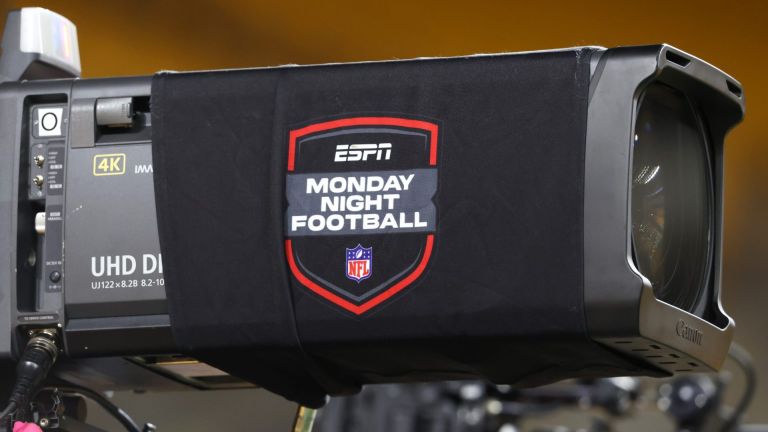
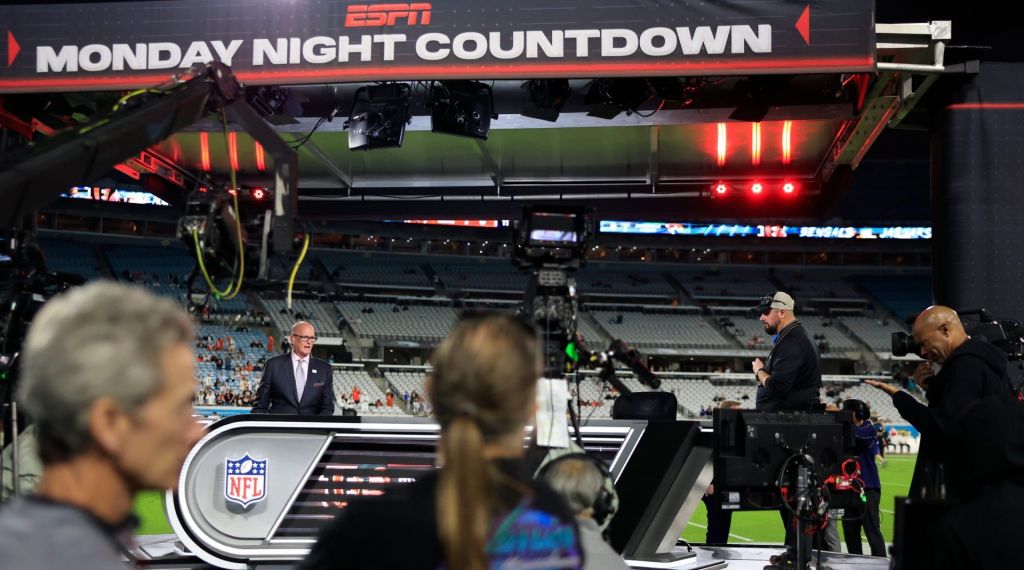
“Our relationship with the NFL is as broad and as deep as it’s ever been,” Johnston said. “We’re excited looking ahead to the upcoming NFL season with the NFL Network, and with RedZone linear now part of our distribution portfolio on top of Monday Night Football and broader NFL coverage.
“We haven’t yet engaged with the league on early renewal conversations. We’re not dogmatic about the process, and we’re always willing to have a conversation with the NFL in an effort to find new opportunities for growth. We expect to be in business with the league for years to come, and will, of course, evaluate this deal—as we would any deal—with discipline and a focus on driving value for Disney’s shareholders,” he said.
Download the FOS App
The business of sports, in your pocket.



Scan the QR code to get the app now.