Want more from Front Office Sports
in your search results?
Thousands of companies—based in the U.S. and abroad—are seeking a refund for President Donald Trump’s tariffs after the Supreme Court struck them down last month.
Along with Fedex, Costco, and Bausch & Lomb, sportswear apparel, shoe and equipment retailers—both household name brands and smaller importers—are in line for refunds, too. On Holdings and Skechers filed lawsuits in the U.S. Court of International Trade (CIT), which resolves trade disputes, last week, as did fitness wearable company Whoop. Peloton, Deckers, Asics, Brooks, Lululemon, Helly Hansen, and Columbia filed before the Supreme Court issued its ruling.
Other businesses that have filed suits seeking refunds from the government include Black Diamond Equipment, an outdoor and climbing gear company based in Salt Lake City, and Sports Brands, which imports products like golf clubs, golf head covers, ball markers, and golf towels, among other items, which it imports from China and Thailand, according to its Jan. 7 lawsuit filing.
The Penn Wharton Budget Model projects that reversing the tariffs, which Trump enacted by citing the International Emergency Economic Powers Act, will generate up to $175 billion in refunds.
The complaints follow the same pattern. The companies claim their lawsuits are necessary, because the Supreme Court’s ruling that Trump’s tariffs are unlawful does not guarantee they will be refunded by the government. They lay out the timeline of Trump imposing tariffs on U.S. trade partners in 2025 (he claimed they would reduce the U.S. trade deficit and raise government revenue ), and explain that court rulings—including at the nation’s highest court—show that what he did was not constitutional.
“Through this action, Plaintiff seeks a refund of all the IEEPA tariffs that it has deposited with interest, as provided by law, and such further relief as the Court deems appropriate,” On’s filing says.
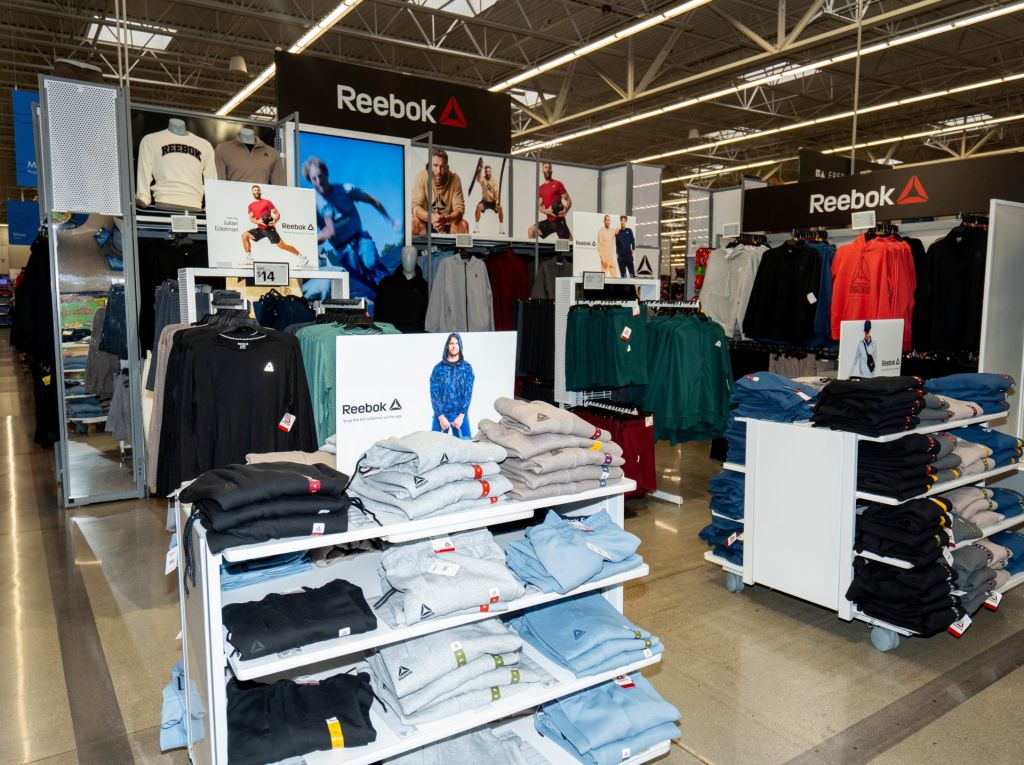
In its Dec. 2 filing, Reebok noted that even if the Supreme Court rules the IEEPA tariffs unlawful, “importers, including Plaintiff, that have paid IEEPA duties are not guaranteed a refund for those unlawfully collected tariffs in the absence of their own judgment from this Court.”
Some of the suits name Customs and Border Protection Commissioner Rodney Scott; Jamieson Greer, the U.S. Trade Representative; and the United States itself as defendants. All are requesting money back from tariffs paid, plus interest, claiming IEEPA does not authorize the president to impose tariffs on imported merchandise.
Last week, the Department of Justice asked the court for a pause on forced repayment of the tariffs to companies “for 90 days to allow the political branches an opportunity to consider options.”
On Monday, the U.S. Court of Appeals for the Federal Circuit—a federal appeals court that hears cases based on subject matter, like international trade or patent disputes, rather than geographic region—denied the government’s motion to delay any decision on issuing refunds.
Despite the federal circuit denying the government’s motion, companies seeking tariff relief will likely be waiting awhile.
“The government has given no indication that it will simply pay these claims without litigation,” Justin Nelson, a lawyer with Susman Godfrey, which is advising businesses seeking refunds, tells Front Office Sports. “The government said it will take years, I think they’re trying to scare people off.”
More than 1,000 cases have been filed in the CIT, says Sara Albrecht, chairman of The Liberty Justice Center, a libertarian nonprofit litigation firm that represented six small businesses suing the U.S. government over tariffs. Those six businesses, which together filed one suit, had their case consolidated with another lawsuit from Illinois-based toy company Learning Resources, and that combined case is the suit that the Supreme Court ruled on.
Albrecht tells FOS the many new cases have been filed despite the CIT “stating in December that all refund cases would be stayed until the Supreme Court ruled.” She says that shows “how quickly the docket can become clogged.”
“Those filings have all been set aside, and continuing to file duplicative cases only burdens a court that typically hears 50 or 60 cases per year,” she says.
Download the FOS App
The business of sports, in your pocket.



Scan the QR code to get the app now.