Want more from Front Office Sports
in your search results?
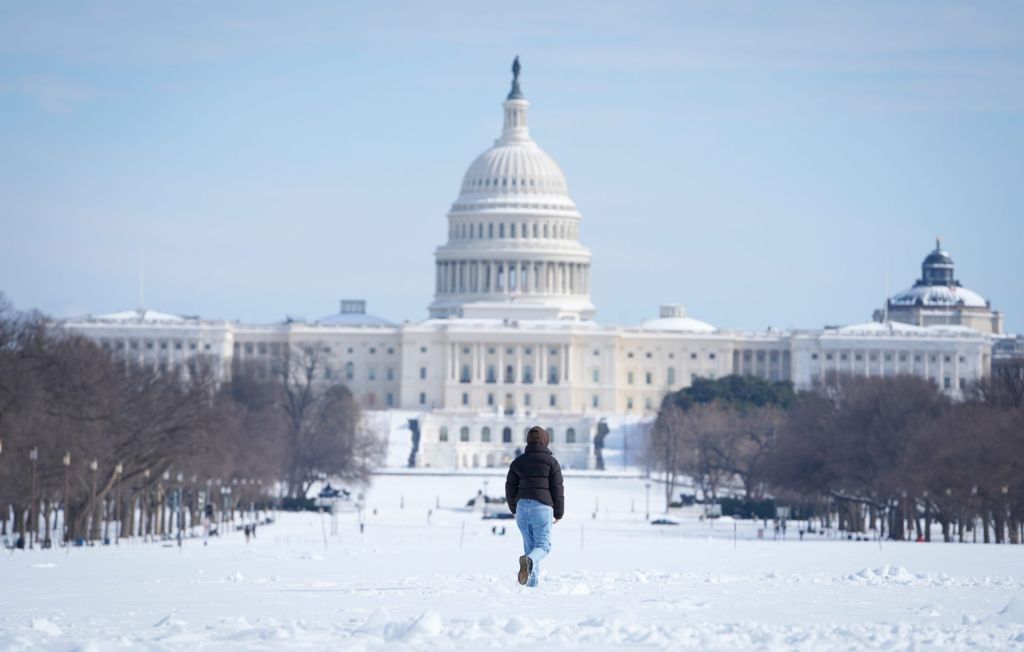
The NCAA spent $1.03 million on federal lobbying in 2025—almost twice the amount the governing body logged in 2024, according to federal lobbying disclosures reviewed by Front Office Sports.
The spending is the latest in a now seven year-long lobbying campaign waged by the NCAA and power conferences to convince Congress to pass a law that would protect what’s left of its amateurism model. But the NCAA’s investment has not yet paid off—to date, zero college sports bills reached the floor of Congress for a vote.
The federal lobbying disclosures, which list quarterly payments from clients to lobbying firms, don’t necessarily represent the full breadth of spending on lobbying activities: The NCAA and power conferences have also hired outside public relations firms and incurred travel expenses for sending commissioners and NCAA employees to Washington to lobby on its behalf. But they do provide a window into the NCAA and conferences’ general spending habits—and the NCAA’s failed attempt to get Congress to pass the pro-NCAA SCORE Act.
“Student-athlete leaders representing thousands of college athletes from all three divisions called on Congress to address the issues facing college sports that only Congress can address, including employment and limited antitrust protection, and the NCAA has been working on behalf college athletes and member schools to achieve those priorities,” Tim Buckley, NCAA senior vice president of external affairs, told Front Office Sports in a statement.
The NCAA has been lobbying Congress for more than 20 years, but the specific effort to protect amateurism began in earnest in 2019. The group’s lobbying spending has grown steadily since then to $530,000 in 2024. In all, the six (and now five, without the Pac-12) organizations—all of which are 501(c)(3) educational nonprofits with legal lobbying limits—have spent millions combined.
The NCAA and power conferences are seeking a ban on athletes being classified as employees; a uniform NIL standard to overrule individual state laws; and antitrust protections for the NCAA—and perhaps now a new body like the College Sports Commission—to enforce rules related to NIL, transfers, and eligibility.
Last year, however, the NCAA launched an unprecedented blitz, upping that spending from $530,000 to $1.03 million. Following the election of President Donald Trump and a red wave in Congress, the NCAA pushed hard to get legislation on the docket in 2025, increasing spending immediately. A wave of lawsuits challenging eligibility rules and the House v. NCAA settlement last June made things even more urgent.
In total, 2025 marked the first year the NCAA reported more than $1 million in lobbying spending. (The Big 12, Big Ten, SEC, and ACC continued their own lobbying efforts last year as well.)
The NCAA worked with Brownstein Hyatt Farber and Shreck, consistently listed as one of the highest-grossing lobbying firms, with clients like Purdue Pharma. In addition, the NCAA took on a new firm last year: theGroup DC, which describes itself as bipartisan. (The NCAA had previously worked with KBK Consulting Group, but ended that relationship before 2025.)
The NCAA also employs its own in-house full-time lobbyists, led by former professional tennis player Dawn Buth, who has worked in the D.C.-based government relations office since 2018, according to her LinkedIn.
Though the NCAA and power conferences have spent the most money, other stakeholders have hired lobbyists of their own. Among them: the American Football Coaches Association; a group of NIL collectives called The Collective Association; athlete advocacy group Athletes.org, and a collection of Olympic sports coaches associations. Texas Tech University board chairman, booster, and billionaire friend of President Donald Trump, Cody Campbell, has also bankrolled a lobbying effort of his own through his organization Saving College Sports.
Last year, however, it seemed as if the NCAA and conferences might be closer than ever to reaching their goal.
In July, a group of House Republicans (and a couple of Democrat co-sponsors) introduced an NCAA-friendly bill called the SCORE Act, which included all three points on the NCAA’s wishlist. But after passing multiple committees in the House, House Republican leadership delayed votes twice due to a lack of support.
There were plenty of reasons the bill didn’t reach the floor, FOS reported at the time, including external political dynamics, rather than the contents of the SCORE Act itself. But the SCORE Act’s fate was considered a colossal failure of the NCAA’s lobbying machine.
As of January, the bill has still not yet been scheduled for a vote on the House floor. Either way, it is widely considered to die in the Senate.
Editor’s note: A previous version of this story miscalculated the total amount the NCAA spent on lobbying in 2024 and 2025. It was $1.03 million in 2025, not $1.75 million, and $530,00 in 2024, not $890,000.
Download the FOS App
The business of sports, in your pocket.


Scan the QR code to get the app now.