Negotiations for a new CBA between the WNBA and the WNBPA this week revealed new details around proposed items outside of the salary model.
In addition to proposing a seven-figure max base salary, the league withdrew team-paid housing, suggested an earlier start date to the season, and added a draft combine to the table.
Players have not been in favor of removing team housing or an early start date, with more than one expressing concerns to Front Office Sports over how this will impact those subjected to trades and others who are signed to temporary contracts.
The early start date has drawn heavy criticism, with multiple players telling FOS the WNBA is not yet the premier league in terms of salaries, resources, and benefits. As a result, they believe the league should not interfere with outside earning opportunities unless it’s ready to compensate them in a way that warrants their exclusivity to the WNBA.
The WNBA has not explicitly stated a desire to implement exclusivity, meaning players would not be permitted to play in other leagues, according to multiple sources. However, those same sources said exclusivity has been implied with the proposed longer season, coupled with the same prioritization rules that exist in the current CBA. Prioritization was introduced in 2020 and requires players to be in market by the start of training camp or face suspension. The earliest proposed start date for training camp would be mid-March with the season concluding by the end of November.
The lengthened schedule would interfere more heavily with EuroLeague, which runs from September to April, and the new start-up five-on-five league Project B, which will run from November to April.
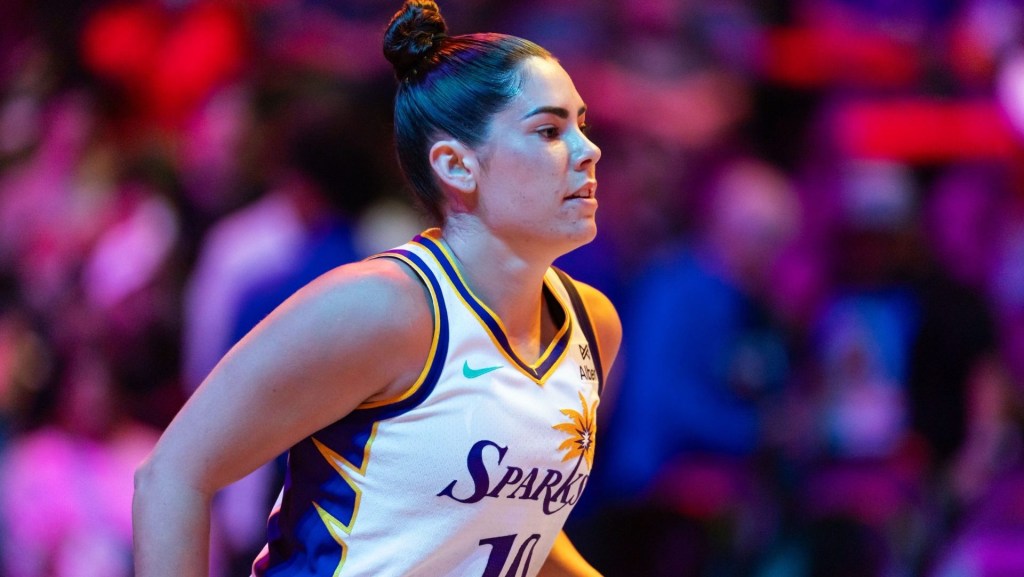
WNBPA president Nneka Ogwumike, Alyssa Thomas, Jonquel Jones, Jewell Loyd, Kelsey Mitchell, and Sophie Cunningham are among the players already signed to play in Project B’s inaugural season. The league is offering players multi-million dollar contracts.
The draft combine, which has been in the league’s proposals since last spring, is lacking some much needed detail according to sources familiar with the negotiations. As of now, questions remain on when the combine would be held and who would be mandated to attend. What was included in the league’s proposal is a rule that would penalize invited players for not attending the combine by docking their rookie pay by half. This would only be enforced if players missed the combine without an excused absence.
The WNBA’s history of pre-draft combines includes those held in the mid 2000s when the draft occurred at Final Four sites. Some coaches recalled pre-draft workouts dating back to the late ’90s that drew attendees from the defunct American Basketball League as well as overseas talent.
Former WNBA coaches and execs FOS spoke to gave mixed reviews of the previously held combine. According to one coach, the combine consisted of multiple teams of less than 10 players who were put through drills before scrimmaging. Many of the top players did not attend, which resulted in it being more of an evaluation of players selected in later rounds.
Ultimately the league moved away from these combines because they had little impact on the outcome of the draft and were costly, multiple sources said. League- or team-operated medical evaluations were also not part of past combines, which current WNBA coaches and executives feel would be extremely beneficial ahead of the draft in addition to top players being required to attend.
Multiple general managers FOS spoke to also suggested the league allow teams to fly players out for individual pre-draft workouts. Others suggested this could be a competitive advantage for teams, because players could refuse to work out for certain teams in order to force their way to a preferred team.
Some league sources suggested this could create an undesirable competitive landscape. At the WNBA’s size of just 13 teams—15 in 2026 with the addition of the Portland Fire and Toronto Tempo—they believe this could have negative impacts on the league’s progression.
“One of the fears is the haves and the have nots,” one league executive told FOS. “Agents could start to control what places a player goes to. Does that unintentionally create a division in the league?”
![[Subscription Customers Only] Jun 15, 2025; Seattle, Washington, USA; Botafogo owner John Textor inside the stadium before the match during a group stage match of the 2025 FIFA Club World Cup at Lumen Field.](https://frontofficesports.com/wp-content/uploads/2026/02/USATSI_26465842_168416386_lowres-scaled.jpg?quality=100&w=1024)
![[Subscription Customers Only] Jul 13, 2025; East Rutherford, New Jersey, USA; Chelsea FC midfielder Cole Palmer (10) celebrates winning the final of the 2025 FIFA Club World Cup at MetLife Stadium](https://frontofficesports.com/wp-content/uploads/2026/02/USATSI_26636703-scaled-e1770932227605.jpg?quality=100&w=1024)

![[US, Mexico & Canada customers only] Feb 6, 2026; Riyadh, SAUDI ARABIA; Jon Rahm in action during the third round of play at LIV Golf Riyadh at the Riyadh Golf Club.](https://frontofficesports.com/wp-content/uploads/2026/03/USATSI_28173562_168416386_lowres-scaled.jpg?quality=100&w=1024)
![[US, Mexico & Canada customers only] Sep 28, 2025; Bethpage, New York, USA; Team USA's Bryson DeChambeau reacts after hitting his approach on the 15th hole during the singles on the final day of competition for the Ryder Cup at Bethpage Black.](https://frontofficesports.com/wp-content/uploads/2026/03/USATSI_27197957_168416386_lowres-scaled.jpg?quality=100&w=1024)