Want more from Front Office Sports
in your search results?
CHICAGO — A key sticking point of the WNBA’s labor negotiations was team housing, which teams have provided players in-season for decades.
The WNBA initially proposed cutting team housing as salaries skyrocketed, but when the two sides finally reached a collective bargaining agreement in March, housing was a key part.
All players can request housing until 2028 and, starting in 2029, players making less than $500,000 will be provided team housing.
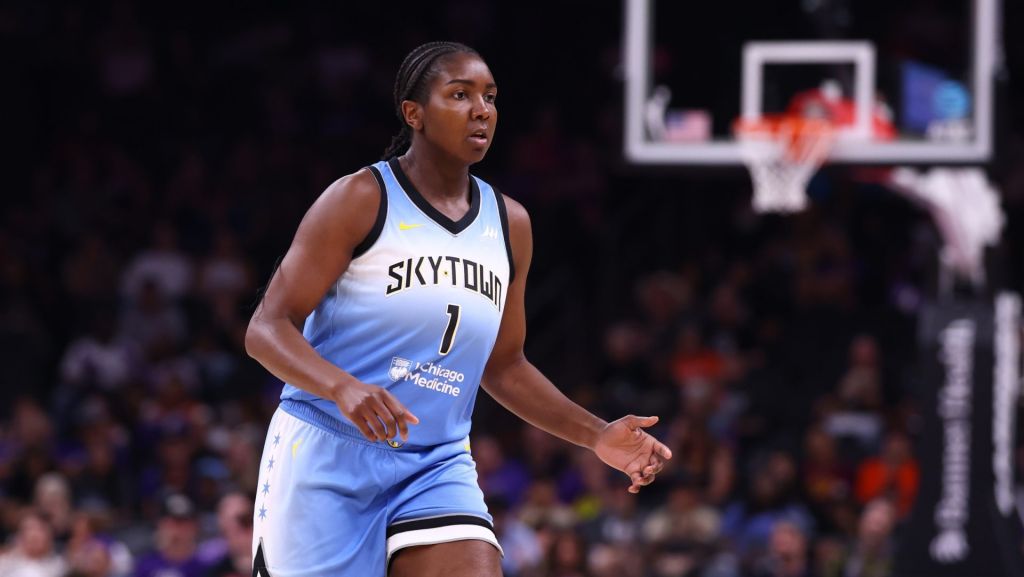
At the Chicago Sky’s media day Thursday, WNBPA secretary Elizabeth Williams explained how the union pushed the league on the importance of housing.
“As female athletes, we can’t just go places and feel safe and comfortable,” Williams said. “That was one aspect of it. And then again, just the movement of players throughout our league. Stability-wise, it’s really important.”
Williams, who re-signed with the Sky on a two-year, $1.2 million deal in the compressed offseason, added that the in-person meetings in March—the notorious eight-day marathon in New York—is when the union was able to properly illustrate its point.
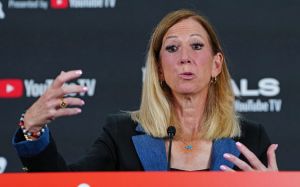
Earlier this month, WNBA commissioner Cathy Engelbert was asked what surprised her the most in the CBA talks. She said it was how hard the players pushed for housing and compared them to her own children.
“I just assumed having two children in their 20s that paid for their own housing, that once they were making these much increased salaries, that that wasn’t something they would need or want,” Engelbert said. “But they made it very clear it was very important to them. It was an emotional issue. … So probably the housing was one where they were very, very clear, and we listened very, very hard to get them to a good place on that.”
The WNBA and WNBPA ratified the new CBA in late March, but the full CBA has yet to be distributed to front offices.
Other CBA Benefits
While the increased salaries were the most drastic change in the CBA, there were several smaller changes that the players negotiated for that Williams highlighted Wednesday.
Williams said it was important to distribute payments to retired players. The new CBA includes a one-time recognition payment that will pay $100,000 to retirees with 12 or more years of service, $50,000 to retirees with 8–11 years of service, and $30,000 for retirees with 5–7 years of service.
“It wasn’t what we think is enough, but it’s something,” Williams said.
WNBA legend Rebecca Lobo, currently an ESPN WNBA analyst, said earlier this month that she was not aware that the current players were negotiating a monetary reward for the retirees.
“I did not know that was one of the things that the players were asking for,” Lobo said. “It just reflects really well on the current players and their desire to take care of some of the players from the past.”
Williams also cited setting facility standards, expanding team staffing requirements, and additional family planning benefits as key parts of the CBA. This includes a family room required in practice facilities starting 2027 and a salary cap exception for pregnancy and childbirth.
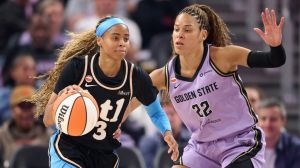
Skylar Diggins, Williams’s new teammate and a mother of two, said Thursday she had previously been forced to pump milk in locker rooms because there were no designated spaces to do so.
“Things have changed a lot, and I love to see the evolution of it,” Diggins said.
Download the FOS App
The business of sports, in your pocket.



Scan the QR code to get the app now.