
Want more from Front Office Sports
in your search results?
When Wimbledon began nearly two weeks ago, all eyes were on Serena Williams.
After a four-year absence from the Grand Slams, the 44-year-old returned on a wild card and lost in three sets to 20-year-old Maya Joint in the first round. Days later, she withdrew from the first round of doubles with her sister, Venus, due to a knee injury she sustained during her match with Joint.
It was a disappointing end for Serena, who, alongside Venus, used to dominate Wimbledon, splitting 12 of the 17 women’s singles titles between 2000 and 2016. They also won six doubles championships in that period.
But since the pair aged out of their primes, women’s tennis has become far less predictable.
The last player to win consecutive Grand Slams was Naomi Osaka (2020 US Open and 2021 Australian Open). And as Wimbledon enters its women’s singles final Saturday, the post-Williams story continues.
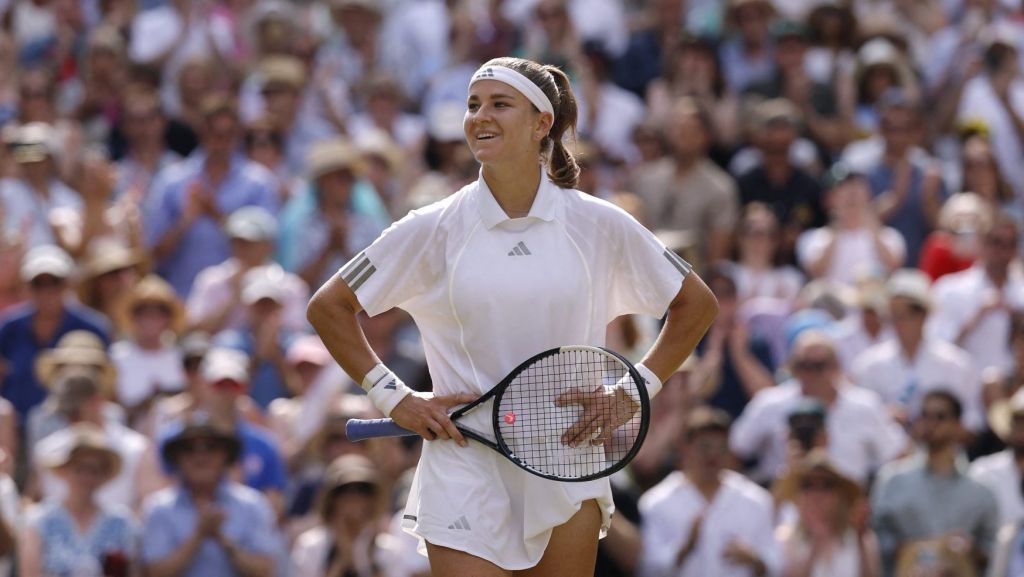
The final will feature Karolína Muchová and Linda Nosková, two Czech players who have never won a Grand Slam title. (This makes a Czech player guaranteed to win Wimbledon for the third time in four years.) A new champion was already guaranteed early in the second week, after Muchová eliminated 2024 champion Barbora Krejčíková in the round of 16.
It will be the ninth consecutive time that Wimbledon will crown a first-time winner. The last time a past champion took the title: Serena Williams in 2016.
Women’s tennis has produced several stars throughout the past decade, including six-time Grand Slam champion Iga Świątek and four-time winner Aryna Sabalenka. But they have proved to be beatable. Świątek, who won Wimbledon last year, was upset in the third round this year.
The parity in women’s tennis is in stark contrast to the men’s, where the Big Three of Roger Federer, Rafael Nadal, and Novak Djokovic passed the proverbial baton to the duopoly of Jannik Sinner and Carlos Alcaraz.
On one hand, the level playing field offers opportunity for more players to taste success and the life-changing money that comes with a title. That’s especially important in tennis, where players outside of the top 100 have to stretch to fund their careers. At Roland-Garros last month, surprise finalist Maja Chwalińska said she struggled to pay for her hotel extensions during her three weeks in Paris. That won’t be a problem after she nearly tripled her career earnings with her Cinderella run.
But dominant stars often drive ratings and interest, as Serena did during her heyday—and continued to show during her return last week. Viewership for Chwalińska’s final against Mirra Andreeva at Roland-Garros last month was down 44% compared to last year’s final, which featured world No. 1 Sabalenka and Coco Gauff, the most famous American. The 2026 men’s French Open final between Alexander Zverev and Flavio Cobolli was down 25% from last year’s five-hour classic between Alcaraz and Sinner.
ESPN has boasted a strong start to Wimbledon viewership this year, but the women’s final is facing an uphill battle without star power or an American hopeful. Last year’s final averaged 897,000 viewers on ESPN, a 31% increase from 2024, despite Świątek pulling off a double bagel over Amanda Anisimova. It helped that Anisimova was the first American to make the Wimbledon final since Serena in 2019. Gauff would’ve likely delivered a strong viewership increase this year, but she lost a third-set tiebreak to Muchová after relinquishing match point.
With the loss, Gauff remains stuck on two Grand Slam titles. In the post-Williams era, though, that makes her one of the game’s biggest stars.