Tim Brando Agrees to Multi-Year Extension With Fox Sports
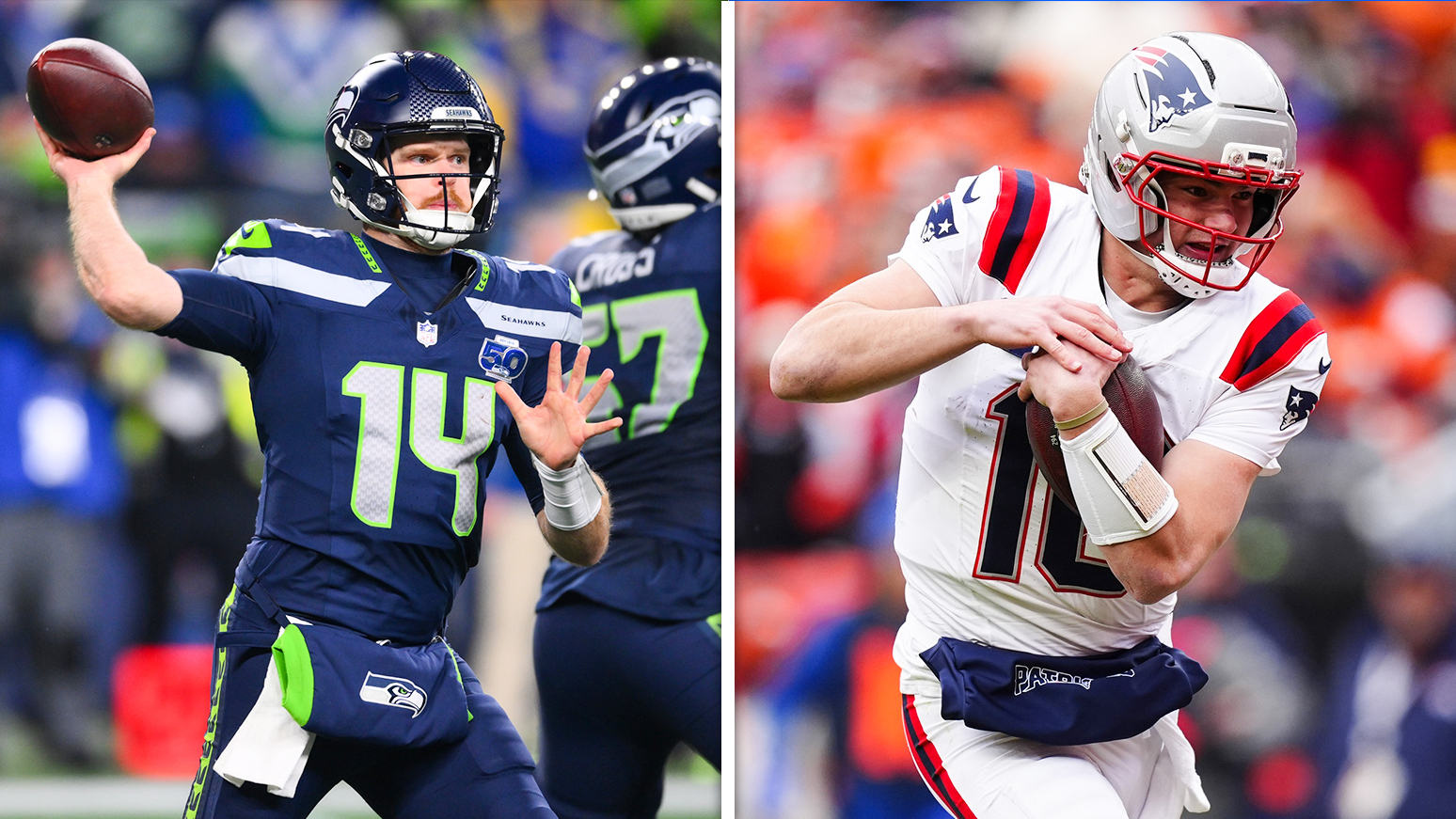
If you think you’ve been hearing more about prediction-market platforms this week, it’s not your imagination—companies are trying to capitalize on the biggest sports-betting day of the year.
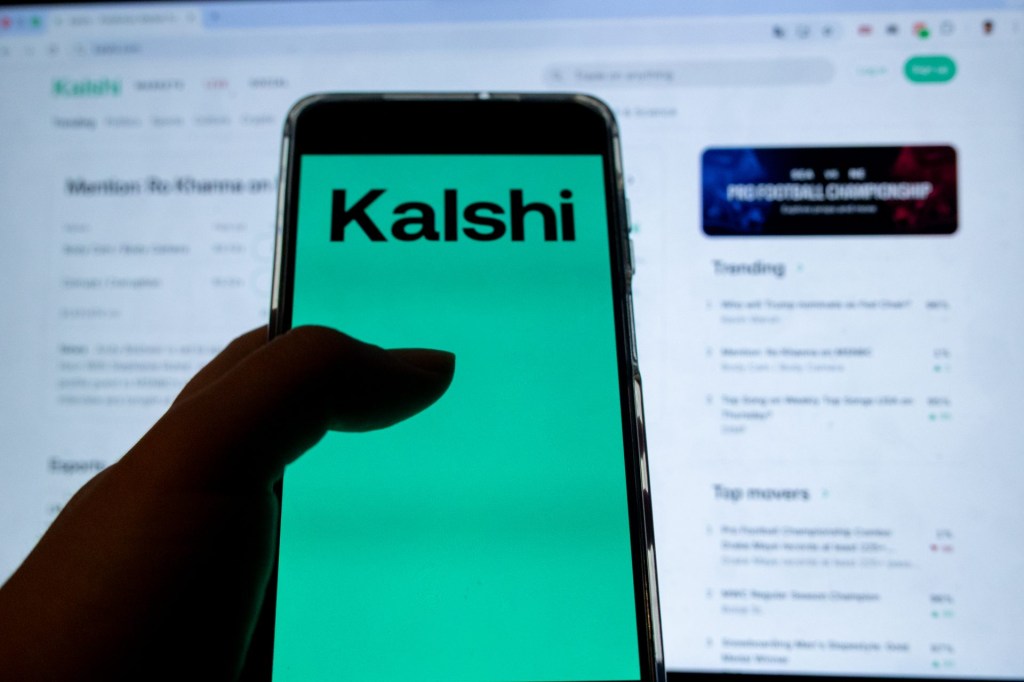
Leading up to Super Bowl LX between the Seahawks and Patriots, Polymarket and Kalshi unveiled dueling “free market” promotions—Kalshi paid for $50 worth of groceries per person who showed up at a grocery store on Third Avenue in New York City on Tuesday, and Polymarket announced a $1 million donation to Food Bank For New York City, while also unveiling plans for a five-day pop-up store that will launch Feb. 12 and offer free groceries.
Meanwhile, Crypto.com launched a new platform that will allow margin trading, and Robinhood rolled out hundreds of Super Bowl markets.
One year ago, Polymarket was still prohibited in the U.S., Kalshi had just launched its first sports event contracts, DraftKings and FanDuel didn’t have prediction-market platforms, and companies including Robinhood and Crypto.com were primarily focused on traditional stock trading.
A year later, everything has changed.
Prediction-market mania came fast and fierce in 2025. Polymarket and Kalshi raised billions of dollars; DraftKings and FanDuel launched their own platforms; and Robinhood, Crypto.com, and others introduced a slew of sports event contracts. Even President Donald Trump’s Truth Social is planning a prediction-market platform—although no date has been set for its launch.
The legality of sports event contracts across the U.S. is still an open question. The platforms argue there is a distinction between what they offer and traditional sports betting, and for now they fall under the exclusive jurisdiction of a federal regulator called the Commodity Futures Trading Commission, whose new chair has signaled support for prediction markets.
Numerous lawsuits are winding through the court system, and state and federal lawmakers as well as officials have begun to try to get a handle on the industry’s growth—from insider trading concerns to the general idea that sports event contracts are sports betting “masquerading” as something else.
The NFL has not embraced prediction markets, and in fact has expressed concern about a lack of safeguards—although NFL EVP Jeff Miller told Front Office Sports on Wednesday at Radio Row that the league may eventually come around. The league is not allowing prediction-market Super Bowl commercials this year.
But it can’t stop platforms from offering sports event contracts, although the platforms mostly call the Super Bowl the “big game” or the “pro football championship” in order to avoid any legal headaches.
Hundreds of Super Bowl–related contracts are available across various platforms—from who will win the game, to which artists will perform with Bad Bunny during the halftime show, and what announcers will say during the broadcast. Total trading volume is deep into the hundreds of millions of dollars, and may well have surpassed $1 billion. (All data is as of Saturday morning.)
Kalshi
More than $180 million has been put on just the market for who will win this year’s Super Bowl—more than five times the total trading volume last year (69% of traders view Seattle as the favorite).
Kalshi has numerous other markets, from the spread to props and parlays (which it calls combos) and more. A quarterback is seen as the most likely position to win MVP, although 9% of traders have put money on it being a defense or special teams player (roughly $433,000 has been put on that market). Seahawks quarterback Sam Darnold has the best chance of being the player who wins MVP—with more than $12.8 million put on that market.
More than $9.3 million has been put on which brands will advertise. Him & Hers, T-Mobile, and Pepsi are viewed as almost guaranteed with 98% chances for all.
Almost $3.5 million has been put on which celebrities will attend the game, with Tom Brady, Gavin Newsom, and Mark Wahlberg seen among the most likely.
When it comes to mention markets—which allow users to bet on what will be said during the broadcast—safety, MVP, and Lombardi are among the most predicted, and more than $1.5 million in total is being traded.
Polymarket
Polymarket’s U.S. relaunch hasn’t exactly gone off without a hitch, but it’s still positioned to be a potential disruptor in the market. Its U.S. app featured no NFL markets until Thursday morning, when one—on which team will win the game—appeared. But its international site has many options.
More than $699 million has been placed on who will win, with the Seahawks significantly favored. Roughly $912,000 has been put on which song Bad Bunny will open with (“Tití Me Preguntó” is the overwhelming favorite).
Close to $66,200 has been placed on whether Bad Bunny will say “Fuck ICE” during the halftime show; it’s currently at 7% and has been trending down since peaking at 24% on Jan. 23.
Polymarket users say there’s only a 17% chance Bad Bunny will wear a dress or skirt during the halftime show (around $37,000 has been placed on that market).
State Farm, Toyota, and Salesforce are among the most likely candidates to have a Super Bowl ad, and more than $440,000 has been put on that market.
More than $2.8 million has been put on who will win MVP, with Darnold seen as most likely followed by Patriots quarterback Drake Maye.
Robinhood
Last year, Robinhood was forced to pull back its planned Super Bowl event contracts not long before the game, after receiving a request to do so from the CFTC.
This year, it has a large slate of offerings, including who will win the game, first-quarter and first-half winner, and which songs will be played at halftime. In total, roughly 115 million contracts have been traded relating to who will win the Super Bowl, player props, and “combos.” More than 8.4 million contracts have been placed on who will win MVP; Robinhood users also think Darnold is most likely to earn that honor.
Robinhood also has contracts related to the halftime show, including which song Bad Bunny will open with, as well as which brands will advertise.
DraftKings and FanDuel
Sports event contracts on the prediction-market platforms from DraftKings and FanDuel were launched in only certain states at the end of 2025, with a focus on those where online sports betting is not legal, like Texas, California, and Georgia.
The website for DraftKings Predictions shows a long list of markets, from who will win the game to when the first touchdown will be scored (you can put money on it being within the first 5 minutes, 10 minutes, or 15 minutes). There are also “combos,” such as “Smells Like Team Spirit” (which to hit would need the Seahawks to win and Kenneth Walker III and Jaxon Smith-Njigba to score touchdowns), and “The Flying Elvis” (which includes the Patriots winning, Stefon Diggs scoring a touchdown, and the two teams combining to score more than 45.5 points).
The site does not appear to show specific amounts of money that have been traded. DraftKings on Friday announced expanded offerings in time for the Super Bowl through a deal with Crypto.com—the platform now allows users to put money on play props, like how many passing or running yards a player will amass.
The FanDuel Predicts app does not show any Super Bowl–related contracts, but that’s because sports event contracts are not available to users in New York. FanDuel is expected to have sports event contracts available in time for the game.
Crypto.com
Crypto.com made a big splash this week, announcing a new platform called OG that is envisioned as a one-stop shop for traders. Users can choose from markets on the outcome of the game, the winner of the coin toss, what color Gatorade will be poured on the winning coach, plus parlays.
OG CEO Nick Lundgren tells FOS there will be more than 300 markets for the Super Bowl alone.
“We are merging the idea of social networks with prediction markets, as well as general news,” he says.
Perhaps most notably, OG will allow for margin trading—which means users will be able to borrow money so they can trade using more money than they have available. OG boasts being the “first prediction markets platform to offer margin trading.”
Fanatics
Fanatics Markets launched in December in 24 states, including California, Texas, and Florida.
It offers event contracts on who will win the Super Bowl, player props and MVP (Seahawks are favored and Darnold is viewed as the mostly likely MVP winner), as well as “novelty” markets like how long the national anthem will be and whether the team that wins the coin toss will win the game.
Fanatics has numerous business lines, including merchandise, content, sports betting, and now prediction markets, and has recently taken heat for the quality and availability of its Super Bowl gear.
But Fanatics Betting and Gaming CEO Matt King told FOS on Radio Row that the company is not worried about critics: “We’re just getting started,” he said.
As to controversy that has surrounded prediction markets, he is cognizant there are issues being argued in courts across the country, but says Fanatics Markets has all the same protections that its sports betting business has.
“We took all of the things we do around integrity, all the things we do around consumer protection and sports betting, and we applied them to prediction markets, regardless of what the law requires,” he said. “We know it’s the right thing to do because we know these are things that work on the sports betting side to keep integrity and consumer protection high.”