Want more from Front Office Sports
in your search results?
The U.S. government is proposing new travel changes that would require some visitors to turn over five years’ worth of social media for review before they enter the country.
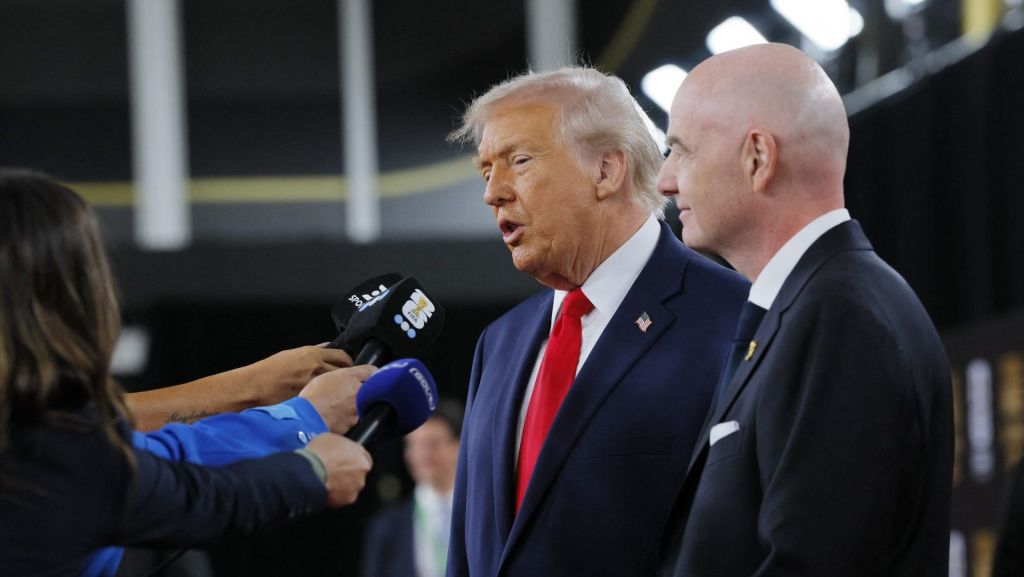
The announcement comes six months before the U.S., Mexico, and Canada are set to host the FIFA men’s World Cup and welcome fans from around the globe.
President Donald Trump’s Customs and Border Protection agency announced the proposed changes through a notice in the Federal Register. The proposal, which includes a 60-day period seeking public comments, outlines several changes to tourist and visa policies. The one about social media would largely apply to travelers from European countries, many of which are sending teams to the World Cup.
“This is very clearly a ghastly attempt to prevent people from a specific type of politics from entering the United States, even for leisure or to attend the World Cup,” Matthew Guariglia, senior policy analyst at the digital privacy nonprofit Electronic Frontier Foundation, tells Front Office Sports.
The notice doesn’t lay out which platforms count as social media or what constitutes the “mandatory data element.” It’s not clear what the review would include.
“The ambiguity of language has always been able to help administrations like this because they really are the ones who get to define what the data is, how to turn over their data, and even what is social media,” Guariglia says.
The notice says the “mandatory” social media handover would be required to apply for the Electronic System for Travel Authorization, an existing program set up for visitors from countries that don’t require visas to enter the U.S. for less than 90 days.
A total of 42 countries are currently on this list, mainly from Europe. Other World Cup participants like Japan, Australia, New Zealand, and Qatar are also on the list.
The current ESTA application, which costs $40, already requires travelers to enter their name, date of birth, and passport information, and answer questions about diseases, past visas, and criminal history. The designation lasts for two years.
In March, a French scientist was denied entry to the U.S. after immigration officers found criticism of the Trump Administration’s research cuts on his phone. In 2019, a Palestinian Harvard student from Lebanon was denied entry at the border after immigration officers found his friends had posted critically about the U.S. on social media, even though he told the officers he didn’t engage with their posts or make any political posts of his own.
In addition to five years of social media history, the new proposed applications would also ask for—“when feasible”—personal and business telephone numbers from the last five years, personal and business email addresses from the last 10 years, “IP addresses and metadata from electronically submitted photos,” biometric data including “face, fingerprint, DNA, and iris,” and the names, birth dates and locations, residences, and past five years of telephone numbers of the traveler’s family members.
All of this surveillance could bar or dissuade fans from attending the World Cup or coming to the United States at all.
“If you’re going to start disallowing people from coming on vacation to the United States because their politics might be a little bit left of center, the economy is going to be hit in a bad way,” Guariglia says.
International tourism is already down across the U.S. this year and is expected to drop to 85% of 2019 levels, the U.S. Travel Association said in October. As of September, European travel to the United States had dropped by more than 10% compared to last year.
A spokesperson for CBP did not answer questions about the World Cup, but said in a statement: “Nothing has changed on this front for those coming to the United States. This is not a final rule, it is simply the first step in starting a discussion to have new policy options to keep the American people safe.”
FIFA did not respond to questions.
The State Department already began requiring applicants for certain types of visas including students to make their social media profiles public in June, and expanded that policy last week to soon include skilled workers and their dependents.
Given the current proposal, athletes and staff traveling for the World Cup would likely be exempt from the social media rules because they would enter the U.S. through a separate process than an ESTA application, such as a P-1A athlete visa, O-1 extraordinary ability visa, or similar work permit.
The Department of Homeland Security made exceptions for athletes, staff, and their immediate family members coming to the World Cup and other major sporting events from countries on Trump’s banned travel list, which includes tournament participants Haiti and Iran. Fans are not included in those exemptions.
Download the FOS App
The business of sports, in your pocket.



Scan the QR code to get the app now.