Want more from Front Office Sports
in your search results?
Private equity continues to pour billions into sports, but one particular area has been conspicuously absent from the gold rush: college sports.
In recent years, private equity firms have aggressively bought up stakes in entire leagues, pro teams, concessionaires, media entities, and apparel brands, building up expansive portfolios, while college sports have been largely left out of the mix.
That could change very soon.
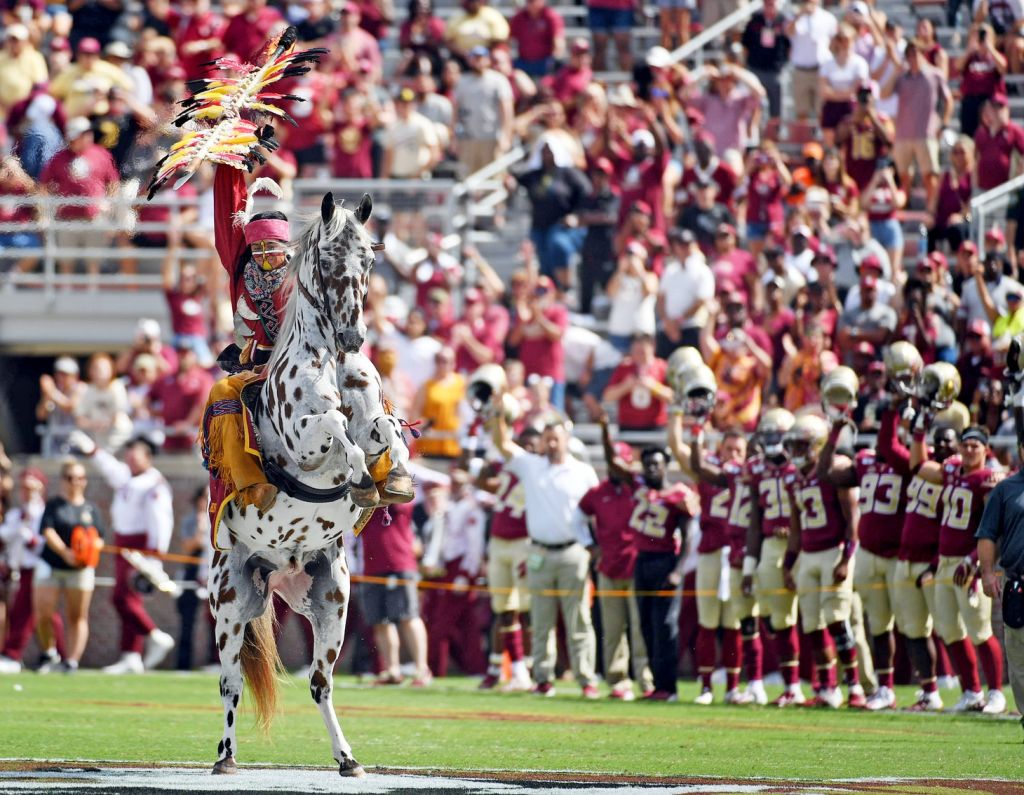
Already, Florida State has reportedly engaged with private equity giant Sixth Street on a potential investment in the school’s athletic department, with JPMorgan Chase helping the school on a broader effort to bring in institutional investors. Private equity firms are increasingly eyeing college sports as a place for new opportunities, particularly as that segment of the business of sports becomes more professional in its structure and operations.
“We are spending a lot of time looking at the rapid change around the commercialization of what used to be considered amateur sports,” said Greg Bettinelli, partner for The Chernin Group, the prominent California-based firm led by Hollywood producer and businessman Peter Chernin.
“From the way content is presented to the commerce and fan-engagement opportunities being created, tied to the sports and the athletes, we want to see it all,” Bettinelli said.
Driving Factors
Traditionally, private equity firms have been met with significant impediments to any heavy involvement in college sports.
Many of the leading institutions in this space are public universities, and as a result are heavily governed by a variety of state laws, nonprofit regulations, and institutional bylaws that have prevented straightforward investments mirroring those in the professional ranks.
But recent developments have helped change that framework and open a new level of receptivity.
First — and likely foremost — is the massive, football-driven conference realignment of the past two years that has, particularly this summer, fundamentally redefined the landscape of college sports. The Big Ten, SEC, and Big 12 have all fortified their positions, with the ACC most recently following suit.
And even within pockets of that supposed new Power 4 of college sports, there is a rising concern that keeping up with the sharply escalated arms race of this new paradigm will be all but impossible without outside aid. In early August, Florida State president Richard McCullough described an “existential crisis” in which the Seminoles’ athletics department was running $30 million behind in annual revenue compared to rival schools in the SEC and Big Ten.
With the revenue gaps between college sports’ haves and have-nots only growing, the search for alternative sources of capital can only widen.
“The issue at hand is what can we do to allow ourselves to be competitive in football and get what I think, selfishly, is the revenue we deserve,” McCullough said. “This continues to be a very difficult issue.”
It isn’t exactly a new one for college sports, either. In 2019, concerns over the growing revenue gap led the Pac-12 Conference to hire The Raine Group to explore in vain a potential financial raise from private equity — long before its recent collapse.
The practice is now common in Europe and elsewhere as an increasing number of pro teams turn to private equity to help solve their competitive and revenue problems. La Liga giant Barcelona has sold pieces of its operation, including some of its media business, to outside investors, and is even taking the next step by working with private partners to list parts of the business on public markets.
Deal Structures
Many private equity deals in sports are structured around a straight minority ownership stake in a business — or, in the case of many team-based investments by private equity, a distribution of certain revenue streams in return for the initial cash outlay.
In college sports, the nature of the business makes such traditional deal forms more complex. In addition to the public status of many universities, potential deals are complicated by the fact that most schools’ athletic department commercial rights are already tied up with third parties. Dozens of major schools are currently aligned with external sales and marketing companies such as Learfield and Playfly Sports.
“In Europe, where we’ve seen a lot of this, there are rights that are available,” said Chris Russo, CEO of sports advisory firm Fifth Generation Sports and a former managing director with investment bank Houlihan Lokey. “But in college sports, these rights are not as widely available.”
As a result, some of private equity’s foremost exposure to college sports thus far has been through investments in companies such as Playfly, whose backers including Maryland-based Access Holdings, or the Sixth Street-controlled Legends, whose multifaceted business works with major schools such as Notre Dame, Florida State, Kansas, and Villanova.
Other private equity sources told Front Office Sports that the decision-making power of many colleges will also prove to be an obstacle to some dealmaking in this space. Athletic directors, university presidents, boards of directors or trustees, and donor committees all hold various levels of authority.
But those hurdles will ultimately be subordinate to college sports’ increasing need for cash and private equity’s interest in the space — making the next wave of deals all but inevitable.
Download the FOS App
The business of sports, in your pocket.



Scan the QR code to get the app now.