Major League Baseball is perhaps on the cusp of large-scale economic reformation. How the league gets there, though, will speak volumes on not only its next era, but how well it capitalizes on a current surge in fan interest.
It will be a “labor year” for MLB in 2026, as the current, five-year collective bargaining agreement with the MLB Players Association expires Dec. 1. Talks will begin in earnest well before that, and some preliminary sessions have already occurred.
While the stakes are always high for these rounds of negotiation and they help set the course for how the sport operates, the upcoming bargaining features a set of factors perhaps unprecedented in baseball history.
Among the issues at play as those labor talks begin:
- The defending champion Dodgers, MLB’s first repeat World Series winners in a quarter century, had a 2025 luxury-tax payroll nearly five times the lowest-spending team, the Marlins. Such a spread mirrors what happened a generation ago, when then-commissioner Bud Selig appointed a “blue-ribbon panel” to study economic imbalances, ultimately leading to greater revenue-sharing in the league and more taxing of high-spending teams.
- Local media, a critical revenue source for clubs, continues to experience unprecedented levels of stress and disruption. Regional sports operator Main Street Sports is potentially on the verge of collapse, just a year after emerging from bankruptcy.
- Young talent is starring at accelerated rates, with Pirates ace Paul Skenes becoming the No. 1 pick in the draft, garnering two All-Star Game starting nods, and winning a Rookie of the Year Award and a National League Cy Young Award, all before his 24th birthday.
- The middle class in the sport is continuing to wane, with a greater number of players either not eligible for free agency or at a superstar level.
Most fundamentally, though, MLB is grappling with a growing sense that fans in too many markets believe their local teams aren’t competitive—even as the league enjoys historic gains in attendance, regular-season viewership, and postseason audiences.
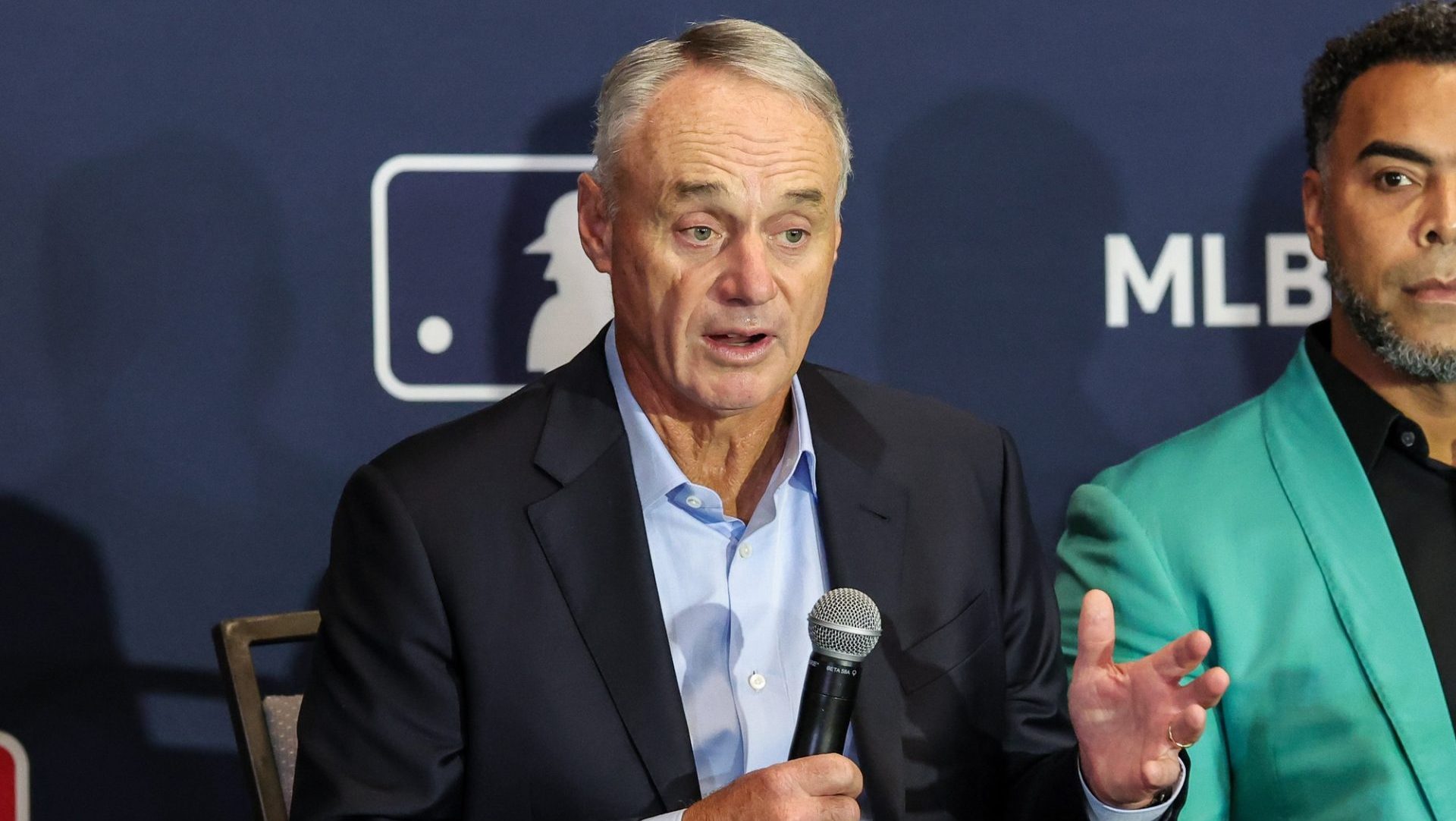
“We have a significant segment of our fans that have been vocal about the issue of competitive balance, and in general, we try to pay attention to our fans, so it is a topic of conversation,” MLB commissioner Rob Manfred said in November.
On the other side of the table, the players have long worried that owners will propose a salary cap, something that management has periodically pushed for decades. The MLBPA, however, has resisted such moves for its entire existence.
“It fundamentally erodes guaranteed contracts. It pits players directly against one another,” MLB executive Tony Clark said of a salary cap. “It is the opposite of what you often hear it described as.”
As that union concern exists, MLB also spent much of 2025 making its case directly to players as Manfred toured the league. That strategy is informed in part by the 2022 labor negotiations in which the MLBPA’s executive subcommittee unanimously voted against the owners’ final collective bargaining proposal, but the full membership ratified it.
“The strategy is to get directly to the players,” Manfred said in June at an investor day for the publicly traded Braves. “I don’t think the leadership of this union is anxious to lead the way to change. So we need to energize the workforce in order to get them familiar with or supportive of the idea that maybe changing the system could be good for everybody.”
Even some high-spending teams such as the Yankees have expressed support for a salary floor—something typically connected to a cap.
“Something that would be reasonable enough that it would improve competitive balance significantly in the sport,” Yankees managing general partner Hal Steinbrenner said when asked about a potential floor. “Many fans already argue it’s not been enough.”
Throughout 2026, interest will be heavy regarding the progress, or lack thereof, in the labor talks. It’s already expected that MLB will lock out the players when the current deal expires and try to force bigger changes. That would somewhat resemble what happened in 2022, when a 99-day lockout preceded that season.
Even as Manfred says management’s bargaining proposal has not been finalized, he is insistent that he does not want to lose games, and he is aiming to keep the labor situation out of the public eye as much as possible.
“There has never been a lost game since I became involved as an employee of baseball, and it is my goal to get this next one done keeping that record intact,” said Manfred, who joined MLB full-time in 1998. “It’s a lot of work to be done between now and then, but that’s my goal.”




![[US, Mexico & Canada customers only] Feb 5, 2026; Riyadh, SAUDI ARABIA; Sergio Garcia in action during the second round of play at LIV Golf Riyadh at the Riyadh Golf Club.](https://frontofficesports.com/wp-content/uploads/2026/03/USATSI_28164468_168416386_lowres.jpg?quality=100&w=1024)
