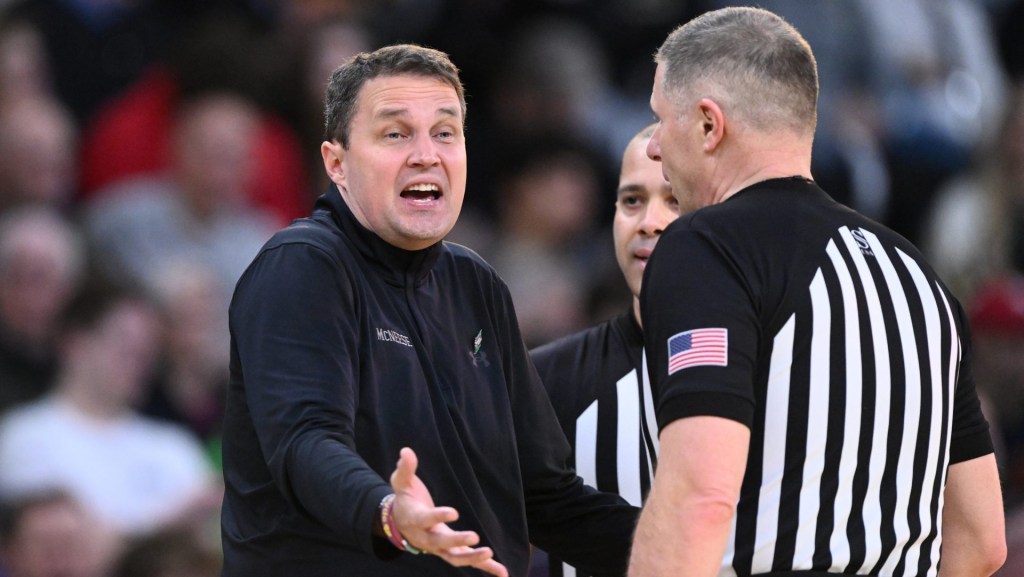
The first round of the 2025 College Football Playoff concluded Saturday night after 24 hours of matchups that led to two upsets, first-ever home team losses, and a disappointing showing for the Group of 6.
The results raise questions about the future formats FBS commissioners and Notre Dame should consider as they weigh expanding the Playoff and rewriting some of the qualification rules. (While all FBS commissioners will participate in the discussions, the final format must still be approved by the commissioners of the Big Ten and SEC.)
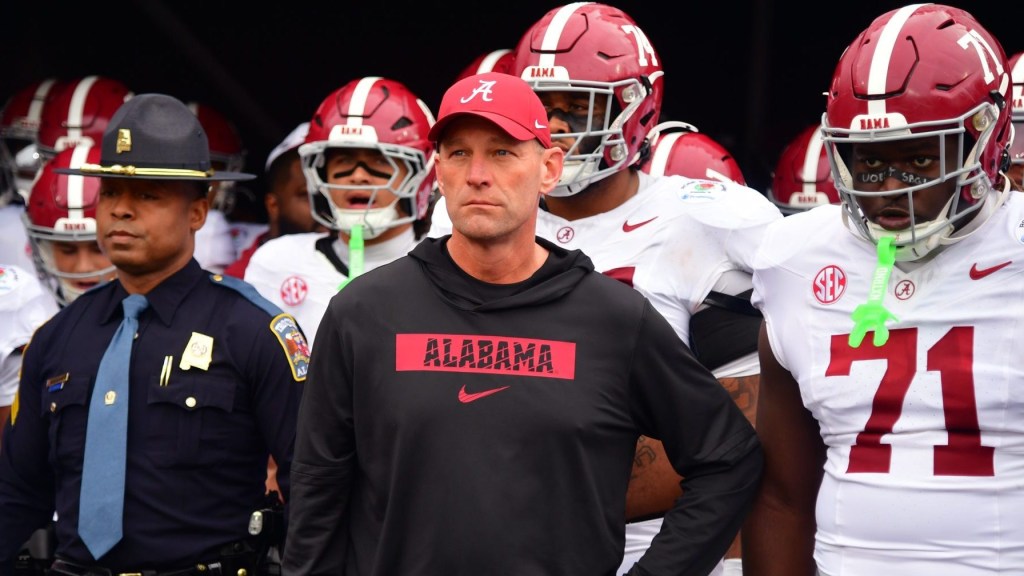
- On Friday night, No. 9 Alabama mounted a 17-point comeback win to beat No. 8 Oklahoma 34-24 in Norman.
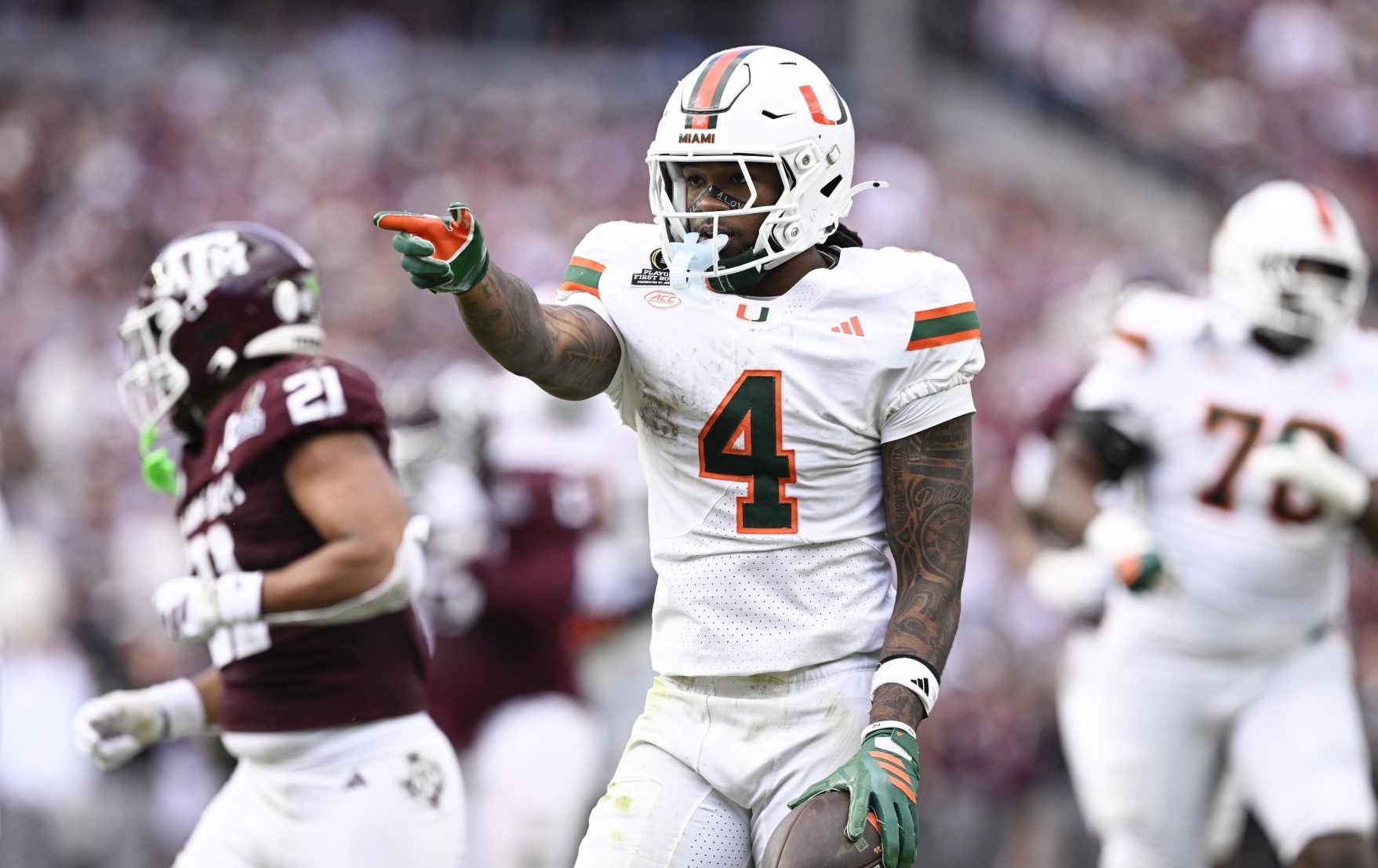
- Saturday’s early game, a defensive battle between No. 7 Texas A&M and No. 10 Miami, ended with a 10-3 Hurricanes road win.
- Led by recently promoted head coach Pete Golding, No. 6 Ole Miss trounced No. 11 Tulane in Oxford, 41-10.
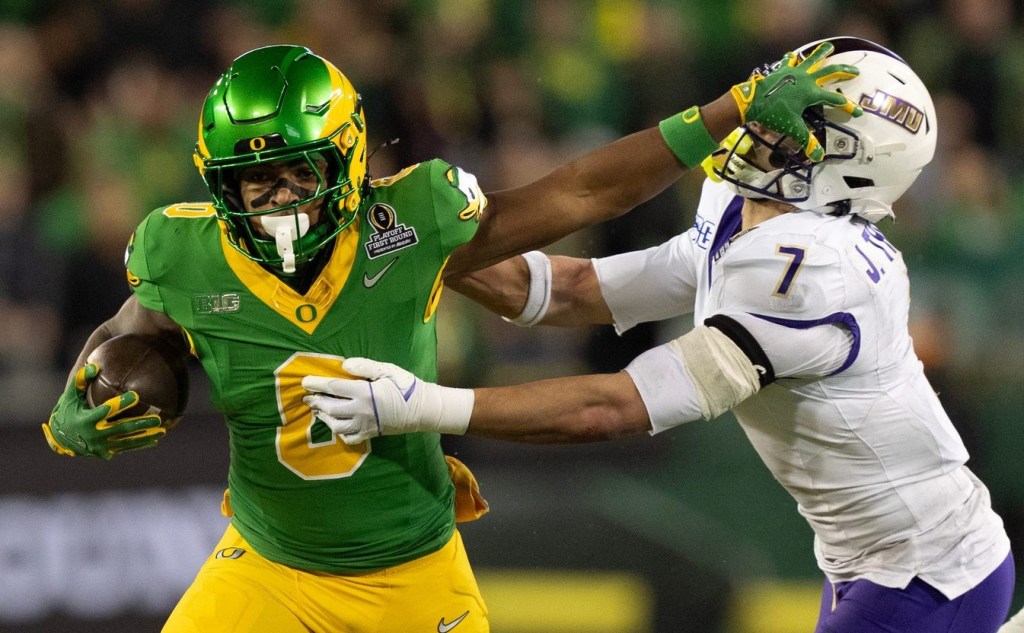
- The nightcap results were similar, with No. 5 Oregon blowing out No. 12 JMU, 51-34, in Eugene.
All four winners earned another $4 million each in payouts for their respective conferences.
Selection Committee Vindicated
The hottest and most controversial topic before the Playoff kicked off was the inclusion of Miami in the field over Notre Dame. The selection committee had previously ranked Notre Dame above Miami during the now-controversial Tuesday bid night weekly rankings reveals, but flip-flopped when the final field was released. The reasoning: When the committee finally had to consider the two head-to-head, they opted to give the Canes the No. 10 spot because Miami beat Notre Dame 27-24 during the first week of the season. (The Irish were the first team out, and ranked 11th.)
The committee also faced some controversy over its inclusion (and relatively high ranking) of Alabama after the Crimson Tide were trounced by Georgia in the SEC championship game. The committee said it didn’t want to penalize Alabama for playing in a conference championship game.
But given that both Alabama and Miami have advanced past the first round, the committee’s choices now seem prescient. Perhaps the wins will offer football fans and pundits alike more faith in the group that chooses the fate of college football.
But it also perhaps provides an endorsement of further Playoff expansion, as schools that were left out of the field—including BYU and Vanderbilt in addition to Notre Dame—could have competed for championships as well.
Group of 6 Struggles
Meanwhile, the FBS commissioners and university presidents who chose—and then approved—the current format may face some scrutiny for allowing outmatched Group of 6 programs.
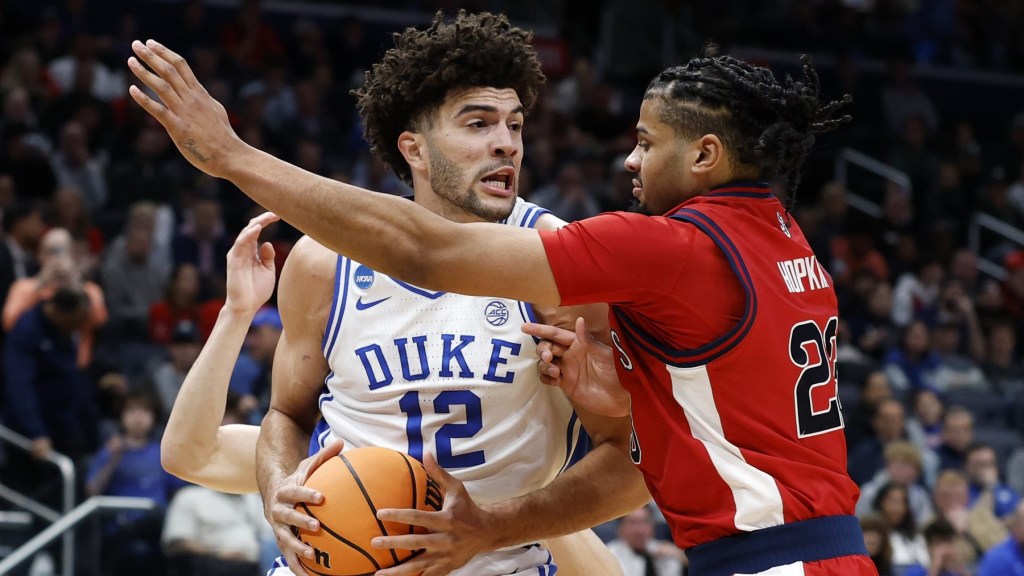
The current format awarded automatic qualifiers to the top five highest-ranked conference champions. This year, the format earned Tulane a bid as the American Conference champion. Because the ACC champion, Duke, was unranked, now-eliminated JMU earned the fifth conference champion slot.
Next year, that won’t be possible. A memorandum of understanding signed last year by FBS commissioners and Notre Dame agreed that, in 2026, each power conference will receive one automatic qualifier for its conference champion, leaving only one left for the Group of 6.
But there are other questions: Should future fields not allow a Group of 6 conference champions any automatic bids? Should there not be automatic bids for conference champions at all?
While some have suggested an even more radical change—giving the Group of 6 a separate Playoff altogether—that won’t be contractually possible in the next several years. The MOU guarantees the inclusion of the Group of 6 schools in the CFP generally.
Other stipulations to consider: The MOU gives the Big Ten and SEC unilateral power to choose the next playoff format, as well as a guarantee that Notre Dame will get a Playoff slot if it lands in the top 12 of the final overall rankings next year.
However, the MOUs are only valid for formats of up to 14 teams; it is unclear what happens if the SEC and Big Ten sign off on larger future fields.