ESPN to Launch CFB Show With Josh Pate, ‘BWTB’ Hosts
When Aaron Rodgers tore his Achilles tendon in the opening minutes of his Jets debut in 2023, the then-39-year-old quarterback didn’t resign himself to the months-long recovery timeline that usually follows.
Within days, a photographer spotted two men delivering a portable hyperbaric chamber to Rodgers’s Malibu home. Soon afterward, he was stacking stem cell injections with red-light therapy, electromagnetic pulses, compression boots, and anti-gravity treadmills—all part of a hyper-optimized routine that had him back on the practice field less than three months after surgery.
Across pro sports, recovery has become central to the business of being a professional athlete—a matter of sustaining peak performance through grueling training schedules and full-contact games. The investments and innovations are helping more players compete at elite levels—and earn—into their late 30s and 40s, even in leagues including the NBA and NFL, where the average retirement age has historically topped out around 28.
“Recovery is the name of the game,” Stephen Spiro, head athletic trainer for the Cleveland Cavaliers and chairperson of the National Basketball Athletic Trainers Association, tells Front Office Sports. “We talk about it on a daily basis. Whether you have younger players, older players—as a staff, we’re trying to get them educated on things we know can benefit them throughout their years.”
Teams are backing this up with multimillion-dollar recovery budgets. The shift is most apparent in modern training facilities.
John Carney, a former NFL kicker who played in the league for 23 years before retiring in 2010 and now runs Carney Coaching, noticed it immediately when he visited the newly renovated performance center of one of his former teams, the Saints. “I was blown away by how much they’ve invested in recovery,” he tells FOS. “They have their own cryotherapy tank, they have a float tank, they have compression boots, they have Theraguns. … Over a third of the training room is designated for recovery.”
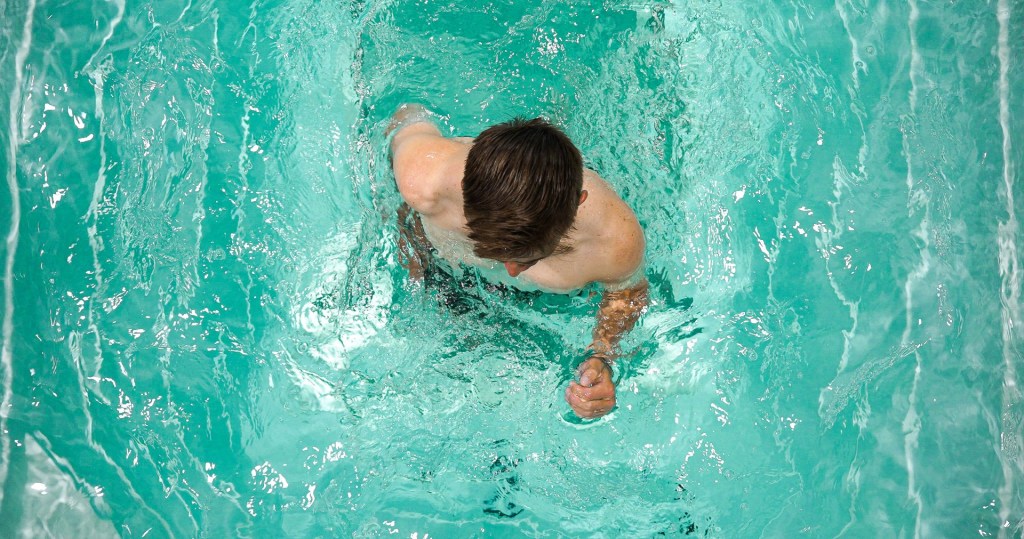
There’s a HydroWorx underwater treadmill with multi-angle cameras that offer gait analysis. The company’s aquatherapy pools, which lessen strain on the joints and add resistance during workouts, are used by almost every NFL team and can cost $270,000 or more for custom setups. The cryotherapy chamber is filled with nitrogen vapor that drops as low as -150 degrees Celsius during a three-minute session, triggering an anti-inflammatory response in the body. Units typically start at about $50,000 a pop.
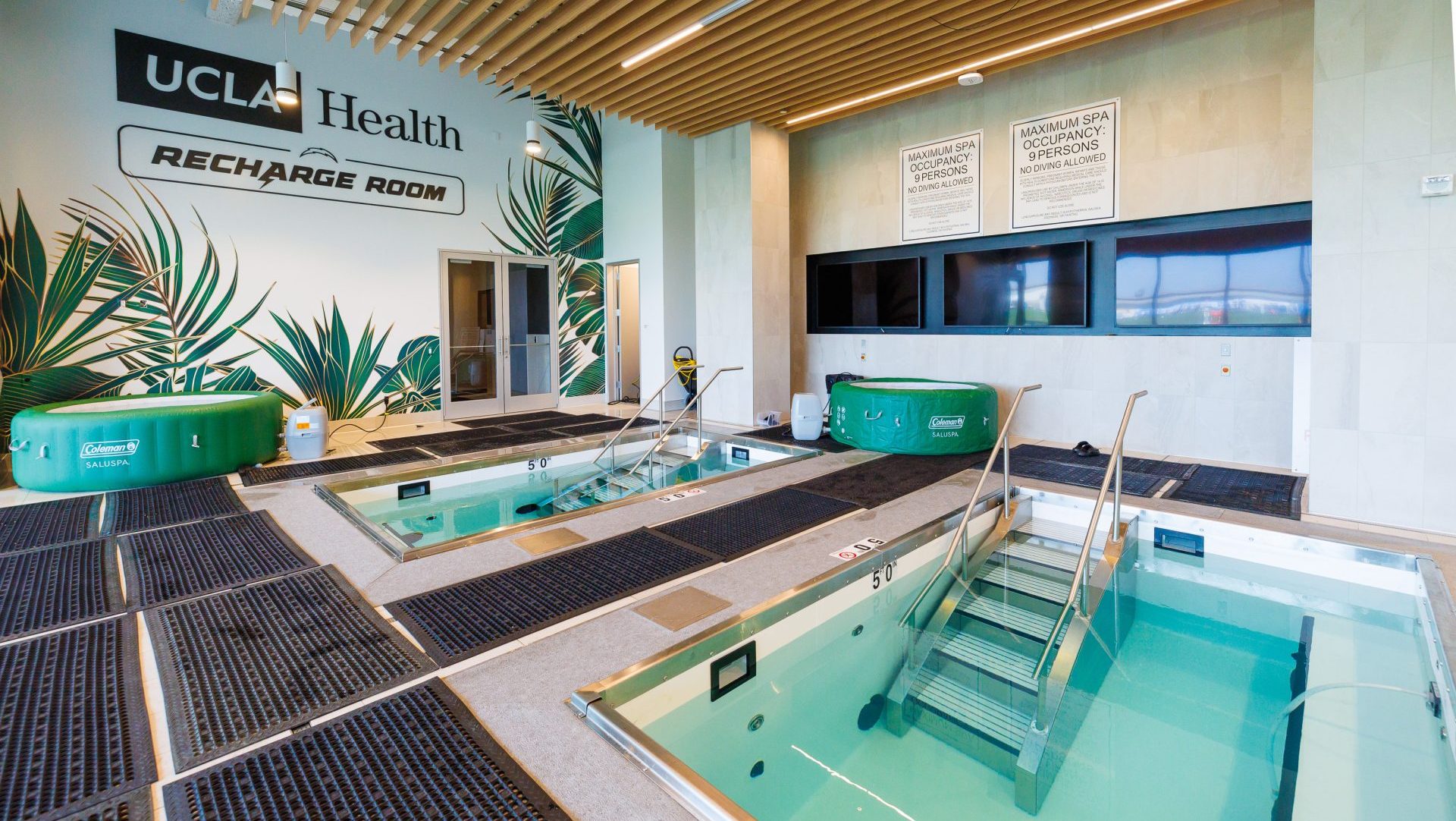
The Chargers’ new $250 million headquarters features a “Recharge Room” (at top) with shockwave therapy machines, laser devices, and TECAR units for electrotherapy—equipment that collectively runs well into the hundreds of thousands of dollars.

Before flying to London in October this season for their game against the Jaguars, Rams players prepared with sessions in the Ammortal Chamber, a $159,500 wellness device that integrates red-light therapy, pulsed electromagnetic field therapy, molecular hydrogen, breathing techniques, and acoustic vibration therapy. Matthew Stafford, the team’s 37-year-old quarterback, used the unit when he was out with an injured back during training camp; he’s since returned to the field with what he’s called one of “the best stretches” of football in his career.
“You tell a player that, hey, you can go into one unit and get three or four modalities in one, that’s a really special thing,” says Reggie Scott, the team’s SVP of sports medicine and performance. Some players do a 15- or 30-minute session in the chamber daily when it’s on-site, he adds. “I always say, a good product with our players is when they’re asking for more usage. And here we go, we’ve been using the product ever since.”
When Keke Lyles started working with the NBA in the late 2000s, recovery meant a cold plunge that “looked like a horse trough.” Maybe a steam room, though players mostly used those after late nights out, not as part of their training regimen.
By the time Lyles became director of performance for the Golden State Warriors in 2013 and later executive director for the Atlanta Hawks, the teams were designing their new practice facilities, adding red-light therapy beds, NormaTec compression systems, and sensory deprivation tanks, along with sleep specialists and personalized recovery protocols for each player.
“The decision-makers are listening to their players,” says Lyles, now a consultant for the sports-technology company BetterGuards, which makes specialized ankle braces that have been purchased by more than two-thirds of NBA teams. “As players bring up, ‘These are things we want to do,’ owners are listening, GMs are listening, and you see that investment get made pretty quickly. And then as soon as one team does it, within the next year, four or five teams have already incorporated something similar.”
Word travels quickly through pro leagues, especially when anyone thinks they can get an edge in their game. “You have players who are kind of trendsetters or who are interested in this stuff,” Lyles says, citing LeBron James, Andre Iguodala, and Chris Paul as examples. “Kevin Durant might see what LeBron’s doing, and they start to talk. One team has it at the facility, so now other teams have to have it.”
The influence of elite players extends beyond facilities into personal spending. At nearly 41, James is the oldest player in the league and still one of the best. Younger players have noticed this longevity.
James has been widely reported to spend approximately $1.5 million annually on recovery—employing a personal biomechanist, chefs, massage therapists, nutritionists, and recovery specialists dedicated to keeping him on the court. It’s a staggering sum, but one that makes financial sense when a single additional season of elite play can be worth $40 million to $50 million in salary alone—not to mention endorsements and long-term legacy value.
Although James has laughed off questions about the exact figure (which originated with Bill Simmons in a 2016 podcast interview), he acknowledges the time investment is massive. And whatever the cost, his routine has set a high benchmark in the industry.
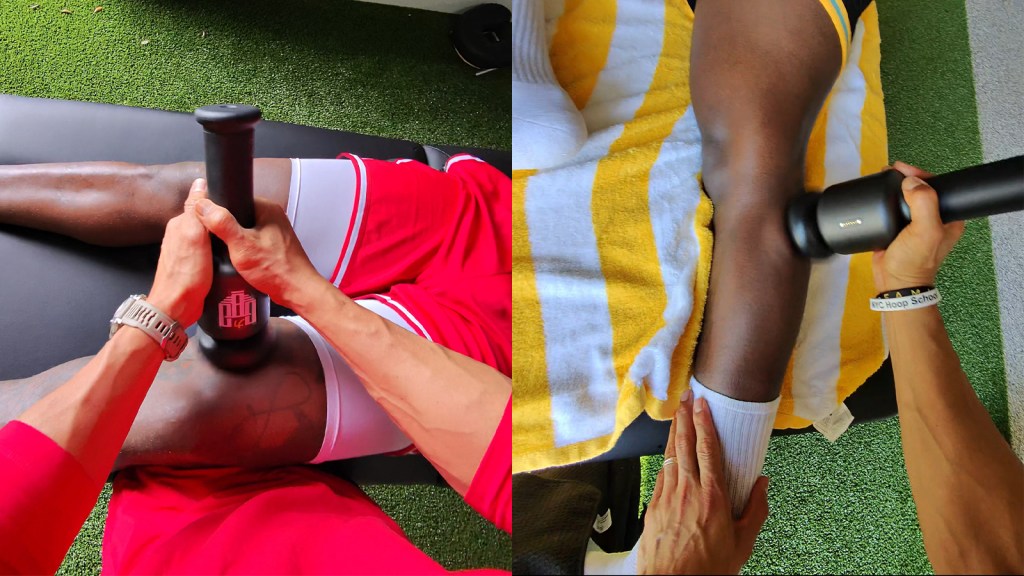
“He’s made it more mainstream and more public knowledge that this is what it takes to do this at a high level for this long,” says performance coach Mike Guevara, who works full-time with Houston Rockets guard Fred VanVleet and sits on the medical advisory board of Rally, an orbital massage gun. “The more you invest in your body, hiring the right people—chef, trainer, PT, therapist—is going to equal more contracts. It’s really that black and white to me.”
San Francisco 49ers tight end George Kittle, 32, has estimated he spends up to $250,000 annually on a wellness regimen that includes stem cell injections and red-light therapy; he’s even signed influencer deals with some brands to cut down on costs.
In an Architectural Digest home tour, Utah Jazz power forward Kevin Love, 37, showed off a collection of home recovery equipment worth more than $50,000—before taxes, delivery fees, and the costs of relocating the whole setup to a new city after a trade.
Sports agent Todd Ramasar recognized the value sports science could bring to his NBA clients early in his career. As founder and CEO of Life Sports Agency, he has since built an infrastructure of experts focused on proactive injury prevention and performance optimization.
His strategy has delivered: Pascal Siakam, for instance, the 27th pick in 2016, has become one of the league’s superstars, earning more than $40 million annually with nearly $150 million in career earnings. Siakam has played an average of 31.3 minutes per game over 643 career games, making him one of the league’s most consistent players.
“The best ability is availability,” Ramasar says.
If an elite athlete extends their career by even one year, the return on a six-figure recovery investment pays for itself many times over.
In contract negotiations, Ramasar now presents availability data alongside performance metrics. “We’re showing the team, here’s the data on the player’s performance, here’s the data on the player’s availability, and here’s how this player compares to other players at their position or in the league. And by showing them that data, it strengthens our case for why the player should be compensated at a certain level.”
That message is reaching players earlier in their careers. Lyles has noticed the change in mindset, particularly among younger players. “In the early 2000s, before 2010, there might have been one player on a team that talked about recovery,” he says. “And now everyone—it is normal now. Over the last 15 years, it’s really become a part of their daily lives.”
Players now arrive in the pros tracking their heart rate variability on Whoop straps and monitoring sleep quality through Oura rings. “I’ve got rookies coming in now asking about recovery strategies, recovery modalities,” says Scott.
“I think it was about my mid-30s when I realized physiologically that my body wasn’t recovering at the same rate it used to recover in my 20s,” Carney says. “All athletes that play past their mid-30s really have to adjust and customize their training with more of a focus on recovery.”
Training together in the offseason, Carney and fellow kickers Steve Weatherford and Nick Folk—who’s still playing at 41—formed an informal think tank. “We would trade information back and forth, whether it was something we discovered through trial and error,” Carney says. “We were calling it ‘going to the lab’ to figure out how to train hard, how long it takes to recover, what training takes the most time to recover from.”
From a league perspective, optimizing player health “is a critical business case,” says Tom Ryan, SVP and head of basketball R&D at the NBA, who leads the league’s Launchpad program investing in emerging technologies. “We’re a star-driven league, and making sure our best players are on the court for as many games, as many minutes, and as many seasons as possible is core to our business.”
Launchpad recently backed Somnee, a wearable using neurostimulation to improve sleep initiation and maintenance. The league’s schedule creates unique challenges: games ending at 10:30 p.m., postgame media obligations, weekly travel.
“You might get to your hotel room at two o’clock, you’re jazzed up from a game, and you need something to calm down,” Ryan explains. A six-week pilot study with coaches, staff, and referees showed Somnee improved sleep interruption, quality, and total sleep—early results that suggest the technology could help address one of the league’s most persistent wellness challenges.
The convergence of technology, education, and investment is fundamentally reshaping athletic performance. “How do records continue to be broken?” Carney asks. “Why does the human body continue to excel and be stronger and faster and more explosive than it was 15 years ago? I think we’re only going to continue to see records broken and athletes playing longer and performing at higher levels.”