Want more from Front Office Sports
in your search results?
The sneaker market is bigger than you think.
Sneaker and athletic footwear in general have been big players in the athletic retail sector over the past several fiscal quarters. From Nike and On Running to Adidas and Lululemon, the industry plays a significant role in the overall sports apparel market.
Statista’s recently published report on the athletic footwear market indicates that the global “athletic footwear market” was reached $127.3 billion in 2021.
However, according to the same report, the market is only expected to grow at a 4.9% rate. For context, global airport operations are expected to grow at a 47% rate, per IBIS estimates.
Since 2010, Nike’s share of revenues from the footwear segment have gone from 11% to 28% of total revenues, representing an 8.42% compounded annual growth rate — not exactly “rip-roaring.”
Nike’s biggest competitors by market cap have demonstrated less growth. Over the past decade, Adidas ($41.77 billion market cap) and Puma ($11.93 billion market cap) have shown proportionally smaller revenue attributable to footwear sales and slower growth than the Swoosh.
- Adidas CAGR: 5.48%
- Puma CAGR: 5.98%
- Percentage of Adidas 2021 revenue from footwear: 12.84%
- Percentage of Puma 2021 revenue from footwear: 3.58%
Like many other consumer discretionary markets, this one has been impacted significantly by supply issues related to COVID. In December, Nike executives announced that temporary Vietnam factory closures decreased inventory production by 130 million units.
Today, increased costs make getting and producing enough products a recurring issue. Rising oil costs affecting synthetic production, continued supply chain issues in China, and rising labor costs have all cut into the ability to generate margins.
- Historically, athletic companies’ production processes have been based in China and Vietnam. For Nike, that represents over 70% of total shoe production.
- The spread of the Omicron variant led to serious shipping slowdown.
- According to supply chain data company FourKites, shipping and trucking volume out of Shanghai has decreased a respective 26% and 19% since March 12.
Whether or not the slowed growth in the sector is a long-term shift — or just the confluence of a series of unfortunate events related to logistics — is debatable. But the sneaker economy extends beyond regular retail commerce.
Slowed growth in one area can lead to opportunities for growth in others.
Sneakers As Alternative Assets
What about when sneakers are more than sneakers?
You can’t even really call “sneakerheads” a subculture at this point. The current U.S. sneaker resale market is estimated at $2 billion but expected to blow up 15 times that to $30 billion by 2030. One of the main reasons: value appreciation. Sneakers are increasingly viewed as an alternative asset.
- Alternative assets can most broadly be defined as those that fall outside the traditional definition of stocks, bonds, or currency investments.
- Over the past several years, there’s been a “democratization” of access to investments in traditional alternative assets: startups, investment funds, real estate.
- The most recent trend is access to investments in culture — new asset classes like sneakers.
Platforms such as Alt, SNKRS, Rally Rd, Otis, and GOAT not only allow individuals to purchase a new asset class in a curated manner, but also allow for fractionalized ownership of those very same assets.
At the end of 2021, Sotheby’s reported that 55% of the auction house’s new clients came from sneaker auctions.
Earlier in 2021, the resale market app GOAT raised $195 million in venture funding at a $3.7 billion valuation. The company claimed $2 billion in sales on the platform from mid-2020 through July 2021, with sneaker sales doubling.
Similarly to GOAT, resale platform StockX was able to raise capital at a $3.8 billion valuation with prospects for an IPO later this year.
When Clout Goes Digital
NFTs also have a real use case in the sneaker economy. Nike, Adidas, and Under Armour are well-established brands that developed early strategies to profit from them.
Nike made a big step in that direction in December when it acquired RTFKT, a startup that creates NFTs of sneakers and other collectibles. Nike has also infiltrated the metaverse with its involvement in Roblox and building its own digital economy.
Adidas sold roughly $23 million worth of its “Into The Metaverse” NFT within hours.
As it currently stands, brands don’t get a cut every time a sneaker is resold. That changes with NFTs. With NFTs, royalty structures can be baked into a blockchain. The virtual sneaker creator RTFKT takes a 10% cut for its digital sneakers on every secondary market sale — it’s part of the code.
With sneakers gaining steam as assets, NFT sneakers pair economic incentives and drop culture to produce new revenue streams for the footwear industry.
One Step Further
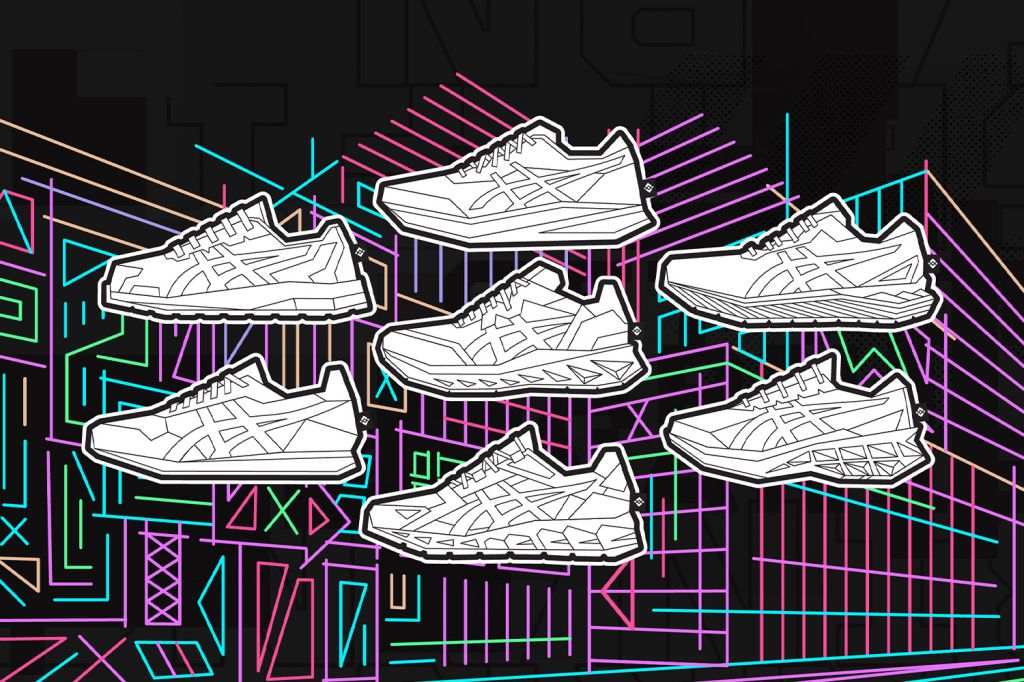
Asics recently partnered with Web3 company STEPN to debut a new line of NFT sneakers that allow owners to earn crypto by moving — aptly referred to as “move-to-earn.”
Like play-to-earn, the move-to-earn model rewards users in native cryptocurrency for their step count, which is tracked by a GPS-enabled mobile app.
As outlandish as the concept might sound, the company has traction.
- According to CoinDesk, STEPN earned $26 million in the first quarter of 2022.
- Per Chief Business Officer Shiti Manghani, the company had 100,000 daily active users as of mid-March, with more than 1 million downloads in total.
- The company raised $5 million from Sequoia Capital and others, as well.
Play-to-earn games such as “Axie Infinity” received outsized attention in 2021. Fitness-focused companies like STEPN appear to be emerging next.
The whole sneaker game is changing in front of our very eyes.
Download the FOS App
The business of sports, in your pocket.



Scan the QR code to get the app now.