Want more from Front Office Sports
in your search results?
Five English football teams have won the Premier League, the FA Cup, and the League Cup since 2000. Manchester United, Manchester City, Chelsea, and Liverpool are four of them. The other is Leicester City.
An unfashionable club from the east midlands, Leicester is the outlier in the group. Since winning a surprise Premier League title in 2016, its performance has deteriorated and it is now languishing in the third tier of the soccer pyramid. Its Thai chairman, Aiyawatt Srivaddhanaprabha, put the club up for sale in August for £200 million ($264 million).
Valuations for sports teams are rising steeply, including English soccer clubs. In the past year alone, a consortium led by Jeff Bezos bought a 38% stake in Liverpool that valued the club at £5 billion to £6 billion. Clearlake bought out minority shareholders at Chelsea over the summer at an assumed value of £5 billion.
However, even in an era of inflated value—and so many foreign investors and deep-pocketed celebrities eager to rush into global soccer—determining fair value for Leicester is tricky. It has shown it is capable of competing with these teams for trophies. But to restore the club to its former glories will require huge investment, on top of the sale price—which some soccer analysts say is simply out of line with what the club is worth. Will anyone shell out the money and take on the risk?
Downhill Slide
Leicester’s inclusion alongside four of England’s biggest clubs is underscored in the prospectus compiled by Citigroup to attract a buyer. It is a sunny perspective of a club that has never established itself among the elite.
During the Premier League era, Leicester has been a so-called yo-yo club. It has won promotion to the top division five times, but it has also suffered five relegations to the second-tier Championship.
The finest period in Leicester’s history came a decade ago. After winning promotion to the Premier League in 2014, it managed to stay up a year later. At the start of the 2015–16 season, bookmakers offered odds of 5,000 to 1 on Leicester winning the league. After a strong start, the club’s most famous supporter, television presenter Gary Lineker, said that if his team finished top of the league, he would present his weekly soccer show in his underwear. (He made good on the promise.)
In the end, the result wasn’t even close. With 81 points, Leicester finished 10 points clear of second-place Arsenal. It remains the only time in 30 years that the Premier League was won by a team outside of Manchester, Liverpool, or London.
The Premier League title ensured that Leicester qualified for the Champions League for the first time. They finished first in their group and beat Sevilla in the first knockout round. A narrow defeat by Atletico Madrid in the quarters was a highly respectable performance.
Then, inevitably, gravity took hold. Chelsea and Manchester City poached their best players in French midfielder N’Golo Kante and Algerian forward Riyad Mahrez. As is often the case, a club suddenly flush with cash spent it poorly. After drifting down the table, the team slipped out of the league altogether in 2023.
Worse was to come. Leicester was deducted six points in 2026 for breaching financial rules by running a greater loss than it was permitted. This hit was sufficient to relegate them for a second time, down to third-tier League One. Within weeks, King Power CEO Srivaddhanaprabha announced he was selling.
Asking Price
The investment case for Leicester lies largely in its cultural history and heritage.
The sales prospectus points out that there are only two larger cities in the country that have only one professional team, which boosts the size of the fanbase. The club has valuable infrastructure: It owns its modern 32,000-seat stadium, and its training ground is among the best in the country. Its academy has a burgeoning reputation for producing young players that can be sold in the transfer market.
But in spite of these assets, University of Liverpool soccer-finance expert Kieran Maguire tells Front Office Sports that he would be “amazed” if Srivaddhanaprabha “got anything near” his £200 million asking price. (A broker who declined to take on the sale told FOS that Srivaddhanaprabha was initially hoping for closer to £300 million.)
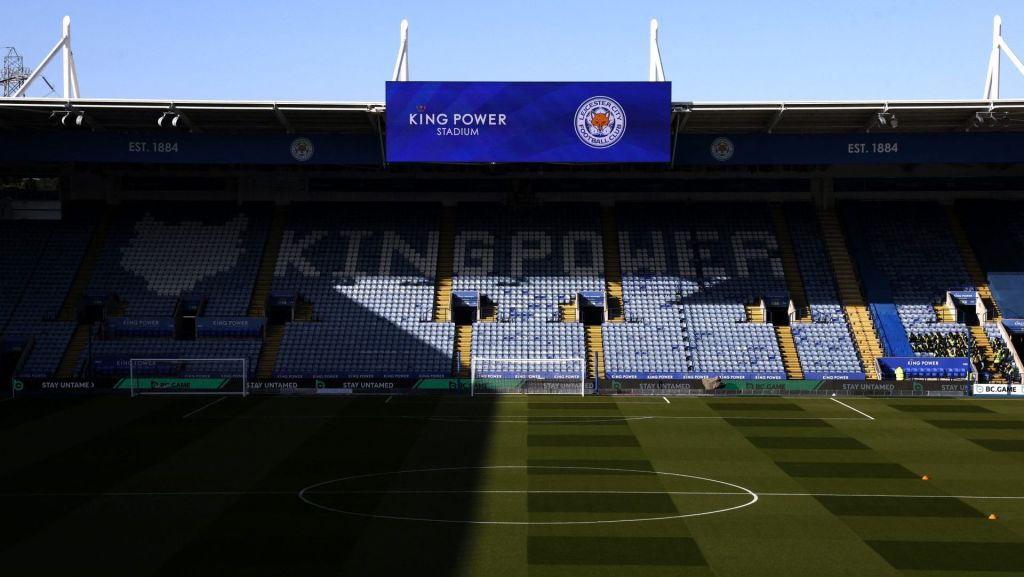
The two most recent sales of comparable clubs were those of Sunderland (2021) and Reading (2025). Both have large, modern stadiums and were purchased when the clubs were in League One. Like Leicester, their past performance and historical revenue suggested that they belong at least one division higher. But the cost and risk of restoring them to the Premier League was reflected in their sale prices. Although the details were not made public, a source told FOS that Sunderland was valued at around £30 million and Reading at £25 million. These deals give a sense of the optimism in Srivaddhanaprabha’s price for Leicester.
Eyes on the Prize
The only way to make money in English soccer is by reaching the Premier League. The competition’s global popularity has pushed up broadcasting rights. And because the value of these rights is shared relatively equally, merely participating in the league is sufficient for a substantial payday. In the 2024–25 season, for example, the team that finished bottom of the league still received £109 million.
But getting a team into the Premier League is both expensive and uncertain.
For Leicester, the first step is getting out of League One. This should be straightforward, as Leicester’s revenue dwarfs that of the other League One clubs. Yet there is also a learning curve to readjust to the third tier, where match facilities are basic and the style of soccer can be agricultural and inelegant. After the first seven matches of the 2026–27 season, Leicester are 14th.
Even if Leicester were promoted, life in the next tier up is tough. Knocking on the door of the Premier League has encouraged a culture of reckless spending among Championship clubs in the quest to move up. In 2024–25, 13 of the 24 teams in the league spent more on player wages than they earned in total revenue. This situation contributed to the teams making a combined net loss of £436 million, or an average of £18 million a team. Teams want to get out of the Championship as quickly as possible.
Adam Sommerfeld of Certus Capital, which advises on the transactions of sports teams, believes that winning promotion from the Championship to the Premier League is harder than ever. He tells FOS that Championship-club owners are a big group with “deep pockets who are all thinking the same way. They have all got the same access to data to help with player scouting and trading, which makes it harder to find an edge. The marginal gains approach is becoming more and more difficult.”
The dismal economics of English soccer outside of the Premier League means that potential suitors for Leicester must be willing to absorb losses for as long as it takes to win promotion.
This could happen quickly: Ipswich Town managed consecutive promotions from League One to the Premier League in 2023 and 2024. Or it could be a long slog. Two founding members of the Premier League—Leeds United and Nottingham Forest—both spent 15 years in the Championship before they returned to the big time. These considerations will push against Srivaddhanaprabha’s asking price for Leicester.
Sunderland represents something of a best-case scenario. After it was bought by a member of the Louis-Dreyfus dynasty, it was promoted to the Championship in 2022 and then the Premier League in 2025. The club invested £100 million in new players to try and stay up, and the bet paid off handsomely. In its first season back in the Premier League, Sunderland finished seventh and qualified for European competition for the first time in 50 years. Perhaps aware that his winning streak cannot go on forever, persistent rumors have suggested Louis-Dreyfus has explored selling the club at a valuation of £300 million.
Both Sommerfeld and Maguire believe that Srivaddhanaprabha will have to settle for an eight-figure sum.
Everything has become more challenging for Leicester to follow the same path. More foreign investors have bought into the English soccer pyramid and are chasing the same type of glory for lower-tier teams, which means competition for promotion is only getting stiffer. Player wages have continued to outstrip inflation. The Championship, League One, and League Two are all implementing tougher financial fair-play rules that prevent teams from winning promotion through owner financing alone. And England has appointed an independent regulator to play closer attention to club governance.
Leicester may have traded blows with the biggest clubs in England in recent memory, but the club’s heritage will not pay the bills. Instead, given the enormous investment required to put the club back into the Premier League, Srivaddhanaprabha is likely to have to lower his sights in order to secure a sale.
Download the FOS App
The business of sports, in your pocket.



Scan the QR code to get the app now.