Max Kellerman, LeSean McCoy Off DAZN Boxing Show As Mario Lopez Joins
Want more from Front Office Sports
in your search results?
HOUSTON — With World Cup get-in ticket prices in the thousands of dollars, Fan Fests in the 16 host cities have been a way for local fans to still get involved in the World Cup spirit.
Official Fan Fests are big watch parties put on by the local host committees, but are bound by FIFA rules and restrictions. The global governing body initially wanted every host city to have a free, daily event lasting the full length of the tournament. But it quickly became clear that that wouldn’t be possible, largely due to FIFA’s tight constraints around fundraising.
In Boston, Atlanta, and Kansas City, the Fan Fest will only be open for about half of the days between the tournament kickoff and final. In other places like Los Angeles, New York and New Jersey, San Francisco, and Seattle, organizers planned smaller events across the region rather than one large Fan Fest. L.A. is charging adults $10 to enter for its events.
Houston is one of the cities that went all-out for a free Fan Fest.
The local organizing committee planned a multi-block extravaganza in Houston’s East Downtown neighborhood that will run for all 34 match days of the 39-day World Cup. Houston’s event has common elements seen in other cities’ Fan Fests, like a main stage showing matches on a huge screen, a lineup of concerts by local artists, fan activations from both FIFA and host committee sponsors, food trucks, and hydration stations.
With a capacity of 7,500 people, Houston doesn’t have the largest Fan Fest, but its operation stands out. There’s a full-sized soccer pitch that serves as a second viewing area, a spot for open play, and a host of local youth matches. Space Center Houston operates a giant soccer ball that on the inside shows a 360-degree projection, like a short film, that visually takes viewers through outer space while incorporating highlights from both space and soccer history. A large indoor, air-conditioned dining area called Houston Hall gives fans a chance to cool off—under a light fixture designed to look like the underside of the Astrodome.
Houston mayor John Whitmire told Front Office Sports he’s been to the Fan Fest nearly every day.
“I grew up in Houston, been in office my whole adult life, and I’ve been to Super Bowls, World Series,” Whitmire said. “I really have never seen anything like this.”
The Fan Fest is a neighborhood affair. The surrounding blocks in East Downtown are full of local bars and restaurants partnered with the host committee where fans can enjoy matches, air conditioning, and rain cover.
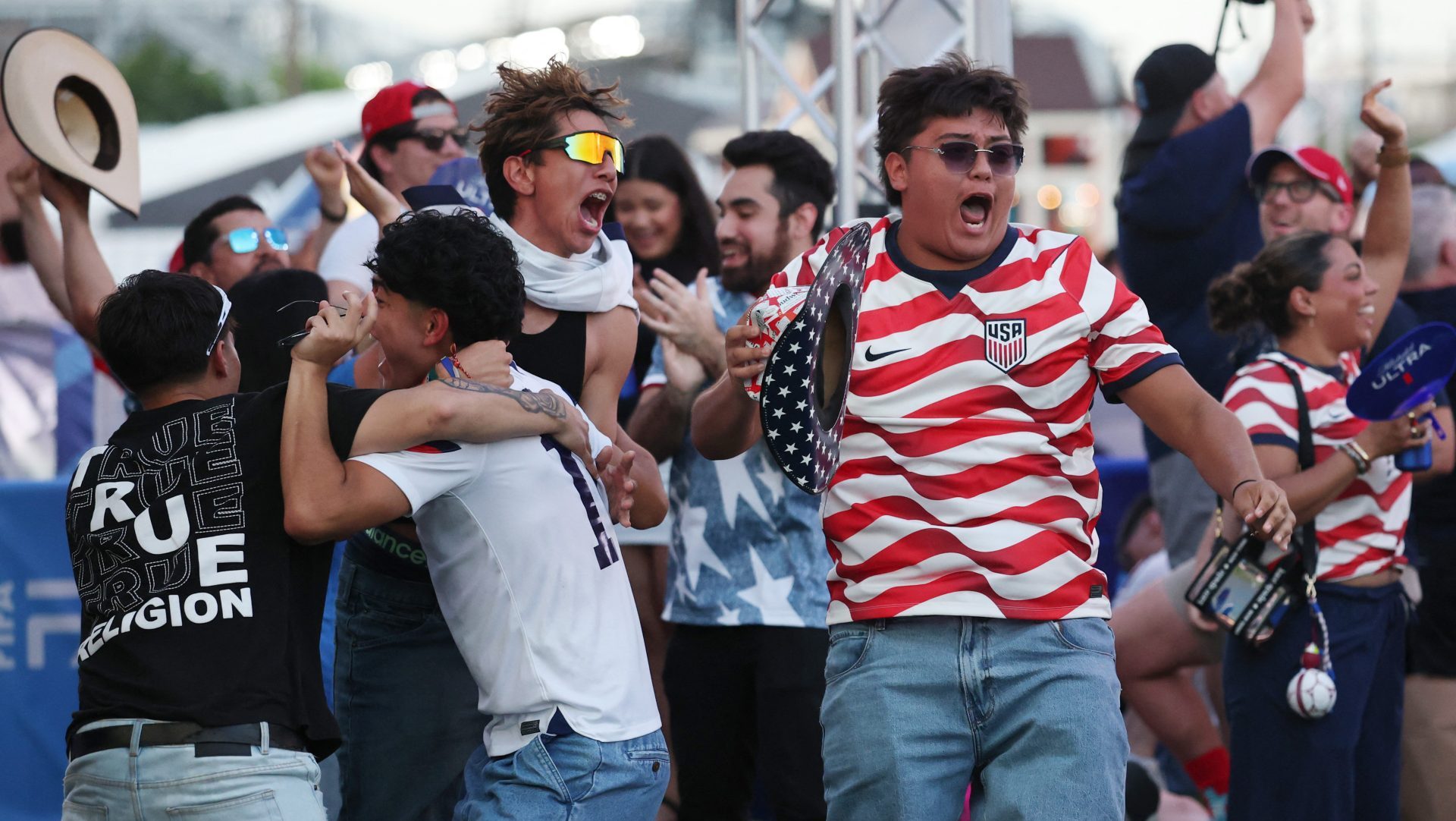
Organizers view the “Football Fiesta” as an extension of the Fan Fest that can triple or quadruple its 7,500-person capacity, which on its own is smaller than what some other host cities can handle. The street closures and increased parking fees had impacted some businesses who were involved, but many spacious bars were full after the U.S. win over Australia on Friday, and only got more packed after thunderstorms rolled in.
Shell Energy Stadium, home of Houston’s pro soccer teams, the Dynamo and Dash, is also steps away. The venue is hosting dozens of watch parties throughout the tournament, and was packed for Mexico–South Korea on Thursday.
During the same match, the Fan Fest got some major publicity when popular streamer IShowSpeed showed up. Both Whitmire and host committee president Chris Canetti told FOS they had to look up who he was.
“You would’ve thought Lionel Messi was here last night, or [Cristiano] Ronaldo, the hype and interest and excitement around him,” Canetti said.
Texas Heat
While the stadium hosting Houston’s seven World Cup matches is indoors, the Fan Fest must contend with Houston’s scorching summer heat and heavy humidity.
Heat was still the chief complaint among fans who spoke to FOS, both from Europeans and locals.
Ollie and Dan from England told FOS they were “not quite sure how,” but Houston felt hotter than their last World Cup stop in Monterrey, Mexico. Mike from Houston said the biggest difference between watching Wednesday’s Portugal match at the stadium versus Friday at the Fan Fest was the air conditioning.
Patti Smith, director of the Fan Fest, told FOS last month that heat mitigation is the host committee’s No. 2 priority after security.
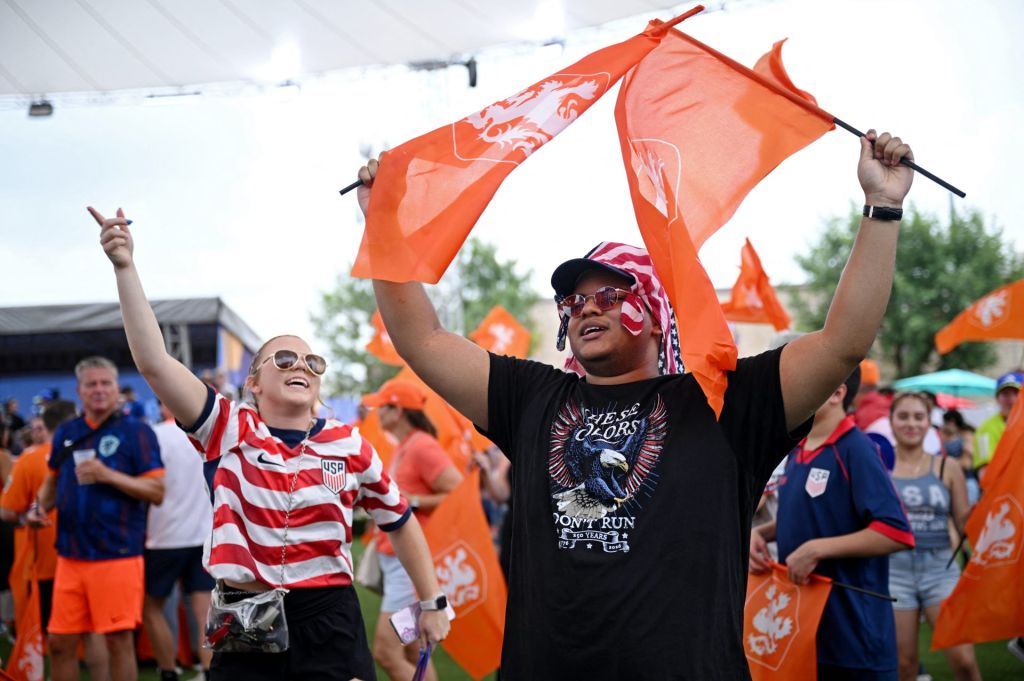
Several areas including Houston Hall, the Space Center’s activation, and two hospitality tents are air conditioned. The Football Fiesta also gives fans the option to head inside. In a creative solution, the Houston Fire Department occasionally sprays down fans gathered on the turf field. The Fan Fest also has five walk-through misting areas, and stations with sunscreen dispensers and water bottle fillers.
“We can’t control Houston heat, but we’re ready for it,” Smith said.
Funding a Fan Fest
Planning a Fan Fest that runs for the full length of the tournament is a massive undertaking that requires some serious cash. Part of the reason why Houston as well as Dallas are able to pull off bigger Fan Fests than in some other states is because of Texas’s event funding.
Texas code allows organizers to use millions in state funding for major sporting events like the World Cup through a method called the Major Events Reimbursement Program. The money is pulled from sales, hotel, car rental, and alcohol tax revenue generated by the event, and can go toward organizing committee expenses including Fan Fest. When Houston hosted the Super Bowl in 2017, Texas gave $22 million.
Whether the reimbursement program actually brings in enough economic impact to counter taxpayer costs has been debated in the state for years. But it’s certainly a big part of the planning process. “Being able to leverage that MERP was absolutely crucial to being able to execute [the World Cup] the way that we’ve done it,” Harris County-Houston Sports Authority CEO Ryan Walsh tells FOS.
In addition to state funding, Houston got $65 million for security costs from the $625 million allocated to host cities from the Department of Homeland Security.
The host committee doesn’t publicize how much money it’s raised from private sponsors, but it has a number of local supporters including Rice University and Houston Methodist Hospital. Saudi oil company Aramco, an official FIFA sponsor, double-dipped in Houston to build the soccer pitch, which will be reinstalled in the community after the tournament ends.
“Everybody’s gotten behind it in Houston,” said the host committee’s Canetti, listing off stakeholders like corporate sponsors, governments, airports, and local police and fire departments.
“There’s been literally dozens and dozens of organizations who were excited about the World Cup and did what they needed to do to make it a success.”
Download the FOS App
The business of sports, in your pocket.



Scan the QR code to get the app now.