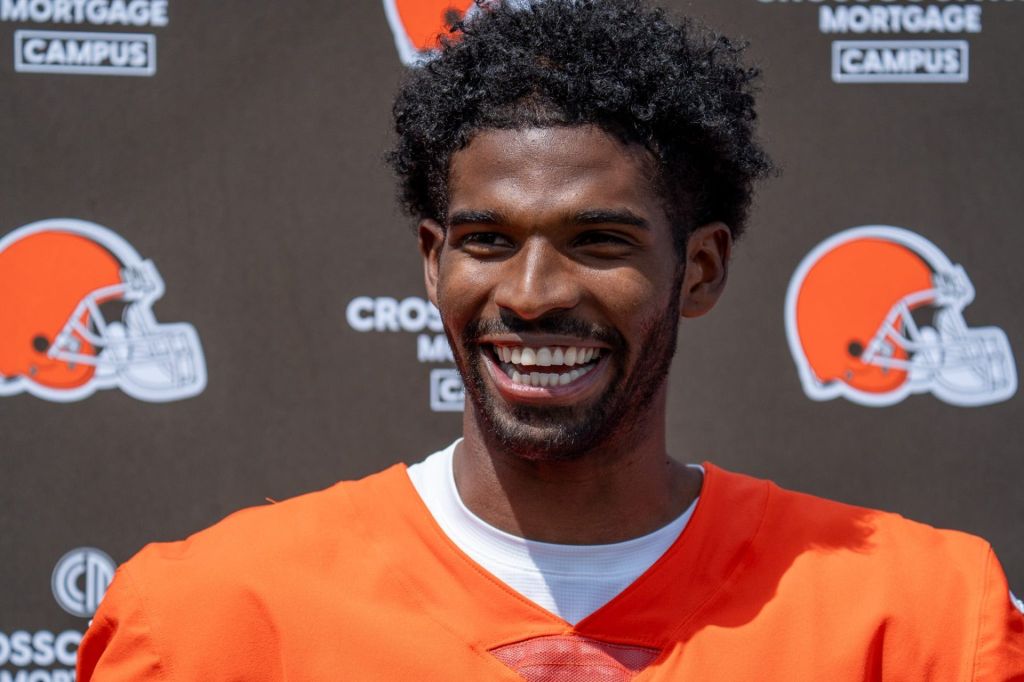
The record-breaking group licensing hauls by Shedeur Sanders and his former college teammate Travis Hunter weren’t the only eye-popping figures nestled in the NFLPA’s annual report filed last week with the Department of Labor.
Player revenue from trading cards exploded last NFL season, hitting $93.1 million for the period ended Feb. 28, 2026, up from $39.6 million in fiscal year 2025, a 135% increase. The 2025 figure was already a 35% jump from the season before.
It’s no secret that the trading card business has surged since the COVID-19 pandemic, but just how much is revealed from a Front Office Sports analysis of the past 10 years of NFLPA annual reports, known in labor circles as an LM-2.
From 2016 until 2025, the NFLPA’s commercial arm averaged nearly $29 million in annual royalties and marketing fees from its trading card partners. The vast majority of that income came from Panini, which in April was replaced by Fanatics as the licensee for cards, meaning the last NFL season was the final full season with Panini as the partner.
Until recently, the bulk of the income came from video games and jerseys. In the 2019 LM-2, for example, the NFLPA reported $56.8 million in revenue from Electronic Arts for video games, more than $30 million from Fanatics for jerseys, and $30 million from Panini for trading cards.
Despite Deion Sanders saying in an interview with FOS earlier this week that his son’s $17.7 million in group licensing income did not include jersey sales, sources at the union said jerseys are always included in the group licensing numbers for each player.
However, the same source confirmed the bulk of Sanders’s $17.7 million listed in the LM-2 (which does not break out each player’s income by category) came from trading cards, echoing remarks by NFLPA executive director JC Tretter to Pat McAfee that $15 million of the sum came from cards.
Sanders signed a personal contract with Panini shortly before the 2025 draft, and his income from that deal is reflected in the figure listed in the LM-2, the union source said. If he continues his deal with Panini next season, because Fanatics took over the league’s card deal, he will not be allowed to wear his Browns uniform on Panini cards. (Panini did not respond to a request for comment.)
Trading cards are one of the NFLPA’s top revenue sources now, and the momentum isn’t slowing. According to Grand View Research, the global market for trading cards in 2025 was $13.5 billion and is projected to grow to $24.7 billion in 2033. North America represents about 40% of the market, according to Grand View.
The surge in trading cards also reflects in part a broader effort among young athletes to build their own brand, whether through podcasts or digital content. “In the past, fans only interacted with players in the context of their teams,” said Ben Ruiz, VP of consumer products and strategy for NFL Players Inc., the union’s for-profit commercial and marketing arm. “That’s not the case anymore. With social media, podcasts, and multiple streaming series, our players are pop culture icons beyond the field and player IP is more valuable than it’s ever been.”
Players like Sanders and Hunter now enter the league with far greater commercial exposure thanks to the collegiate revolution in allowing players to take advantage of their NIL rights.
The jump in card revenue drove a significant increase in overall licensee NFLPA income. This income is generally reflected in the line in the LM-2 marked as “other receipts,” as opposed to income from players’ union fees. In the most recent fiscal year, other receipts were $405 million, up from $309 million.