Want more from Front Office Sports
in your search results?
Craig Tiley sees significant issues in collegiate tennis.
The incoming USTA CEO spoke with Andy Roddick on the former men’s No. 1 podcast, Served, and said that NCAA tennis is in a “crisis” in the NIL era.
“The challenge is actually that programs are being dropped,” Tiley said at the live taping at the USTA’s annual meeting in late March. “So no one’s getting the opportunity because the money is going towards NIL.”
The USTA announced in February that Tiley would be taking over as CEO this year, though he has yet to begin the role. He spent the last two decades with Tennis Australia, assuming the role of CEO in 2013.
Before moving to Australia, he was the head coach of the University of Illinois men’s tennis team from 1992 to 2005.
Several college men’s and women’s tennis programs have been discontinued over the last three years following the NCAA’s NIL rule changes and the landmark House settlement. The University of San Francisco, Gardner-Webb, and Eastern Illinois, are among the schools to have their dropped Division I tennis programs.
“Simply put, the cost structure and demands associated with competing in two different conferences (the Horizon League for men’s tennis and the OVC for women’s tennis) are no longer sustainable,” Eastern Illinois president Jay Gatrell wrote in his announcement last year. “Additionally, recruiting tennis student-athletes in the Midwest has proven more cost-prohibitive and challenging by the year.”
Tiley’s comments followed a discussion about NCAA eligibility rules with Roddick and USTA president Brian Vahaly, in which the latter expressed his concerns about the changing structure. He cited the growing number of foreign players in their 20s entering the collegiate ranks, a problem that’s not exclusive to tennis.
“I do get concerned a little bit as we think about the eligibility for college tennis and who’s playing it, to ensure that it’s a healthy pipeline for our youth,” Vahaly said.
Roddick argued that competing against more experienced players in college is “expediting the process” of real competition and development for American youth. He described the college system as a “minor league” for the pros.
“It is, but I think the question is, ultimately: Are we losing opportunities for some of our American youth who are not ready to go out on tour?” Vahally said.“We need opportunities for our young American players to play college tennis. It cannot just be a minor league professional system.”
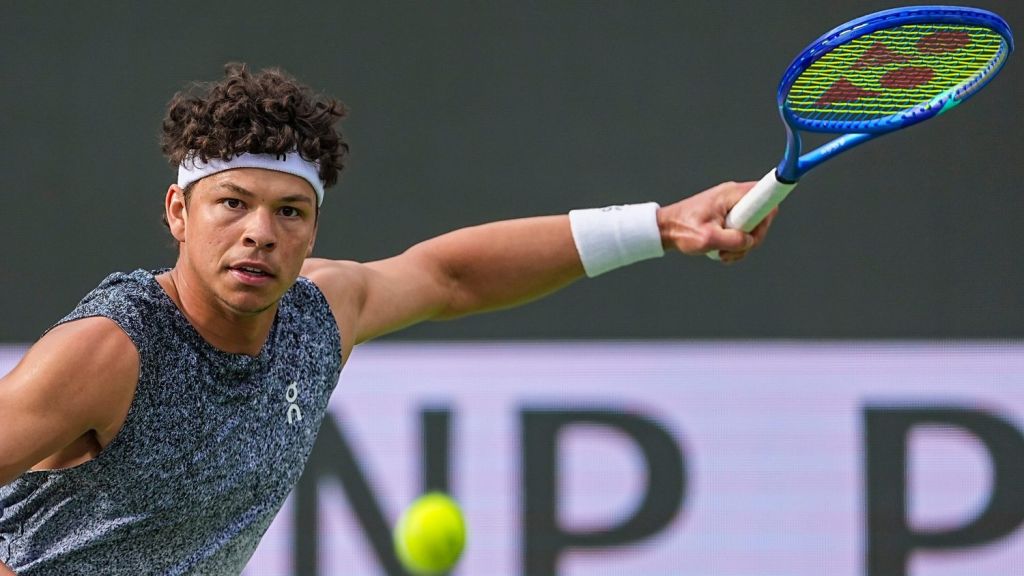
The majority of top American stars on the ATP and WTA did not play college tennis. The few who did include 2022 NCAA men’s singles champion Ben Shelton and 2021 NCAA women’s singles champion Emma Navarro.
The NCAA announced earlier this month that it’s exploring three preenrollment eligibility rule changes that could be implemented by next season. One of the proposed changes would require prospects to withdraw from opt-in professional league drafts or lose their NCAA eligibility.
While the rule would impact NBA prospects, the WTA and ATP Tour do not have drafts.
The rule proposal that directly impacts tennis would allow players to accept prize money without impacting their eligibility. The proposal, which was announced last week, came less than two months after the NCAA’s landmark settlement with UNC’s Reese Brantmeier and former Texas star Maya Joint regarding prize money they had previously won.
Download the FOS App
The business of sports, in your pocket.



Scan the QR code to get the app now.