Want more from Front Office Sports
in your search results?
Boston’s public transportation system announced trains from the city to World Cup matches in suburban Foxborough will cost $80 this summer, four times the usual cost for NFL and MLS games.
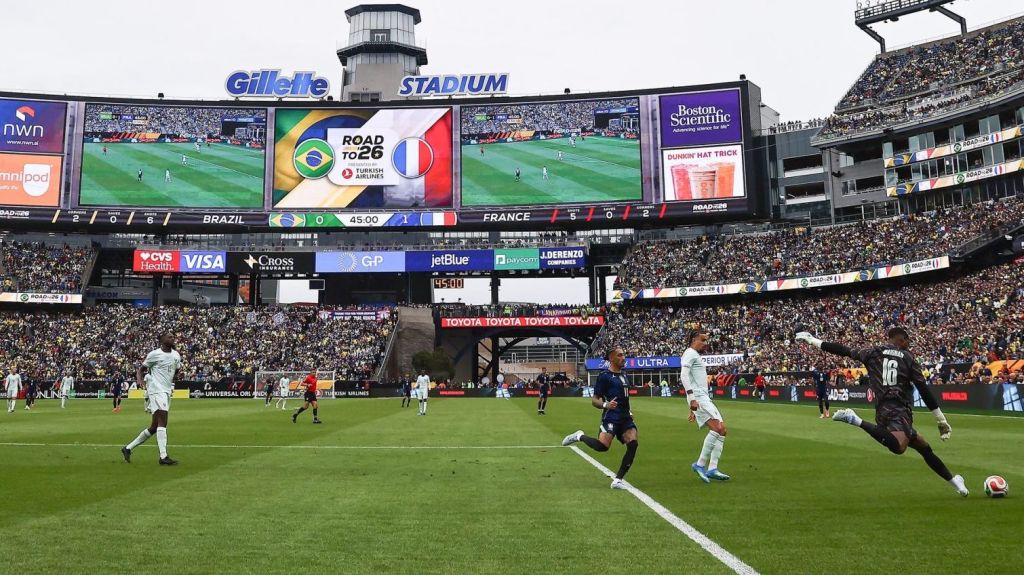
The Massachusetts Bay Transportation Authority said Monday it will run $80 trains between South Station and Gillette Stadium, which will be called Boston Stadium during the tournament. Passengers will be allowed to board the roughly 22-mile route only if they have a ticket to the World Cup match, the announcement said. Train tickets go on sale Wednesday.
The MBTA also announced last week it will make most Friday fares free in the summer and offer other discounts—meaning the transportation authority will target soccer fans while giving regular riders a break.
Also on Monday, The Athletic reported the local World Cup host committee, Boston Soccer 26, is considering organizing buses running to the stadium that could cost up to $90.
Foxborough will host seven World Cup matches this summer—including two knockout round games—with major teams like England, France, and Morocco all making stops in the group stage.
When asked for comment, an MBTA spokesperson said, “We are confident that the Commuter Rail will be one of the easiest, most affordable ways to get to and from Boston Stadium.”
The spokesperson said MBTA is anticipating up to 20,000 riders for each World Cup match, an “unprecedented amount of service,” because it usually carries only about 2,000 fans for Patriots games. Gillette Stadium has a capacity of roughly 65,000 people. The spokesperson said staffing, security, and late-night service are also raising costs, and noted the $35 million Foxborough station renovation project ahead of the tournament.
Boston Soccer and the Massachusetts Department of Transportation did not immediately respond to requests for comment.
The transit hikes are another expense added to the increasingly expensive World Cup experience, as FIFA’s latest ticket release last week saw higher prices for matches across the board, including more than $10,000 for seats to the July 19 final in New Jersey.
Fundraising Woes
Fans aren’t the only ones being squeezed.
Last week, Boston Soccer CEO Mike Loynd said “fundraising has been a challenge” and said the city might have to downsize its FIFA Fan Fest. Loynd told The Boston Globe that the committee’s budget might not reach $100 million, after initially anticipating it would be $170 million.
“It’s very difficult to fundraise for major events like this and especially with FIFA’s restraints on intellectual property and branding,” Loynd said. FIFA bans local organizers from generating sponsorship revenue at stadiums, and it limits the types of deals they can make with non-FIFA sponsors. Boston Soccer is also competing with America250 events for sponsorship dollars in the market this summer. The host committee’s chief commercial officer, Jon Persch, stepped down last month.
Boston has been at the center of several financial headaches related to the World Cup.
The town of Foxborough refused to grant FIFA a license to host matches at Gillette Stadium until someone covered its $7.8 million security bill up front. Robert Kraft and his sports company eventually stepped up to back the host committee in paying the town, and Foxborough approved FIFA’s license last month. Kraft is set to be reimbursed by the FEMA funds.
All host cities also got caught in a political standoff during the partial government shutdown. After the Department of Homeland Security said it could not release $625 million in FEMA security grants to host cities amid the shutdown, a meeting in March between FIFA and the White House finally freed up the grants the next week.
Amid negotiations with Foxborough, Boston Soccer said in an open letter on March 5 that it had $2 million in the bank, and expected “at least an additional $30,000,000 from state and federal funding and commercial activities.”
Download the FOS App
The business of sports, in your pocket.



Scan the QR code to get the app now.