Want more from Front Office Sports
in your search results?
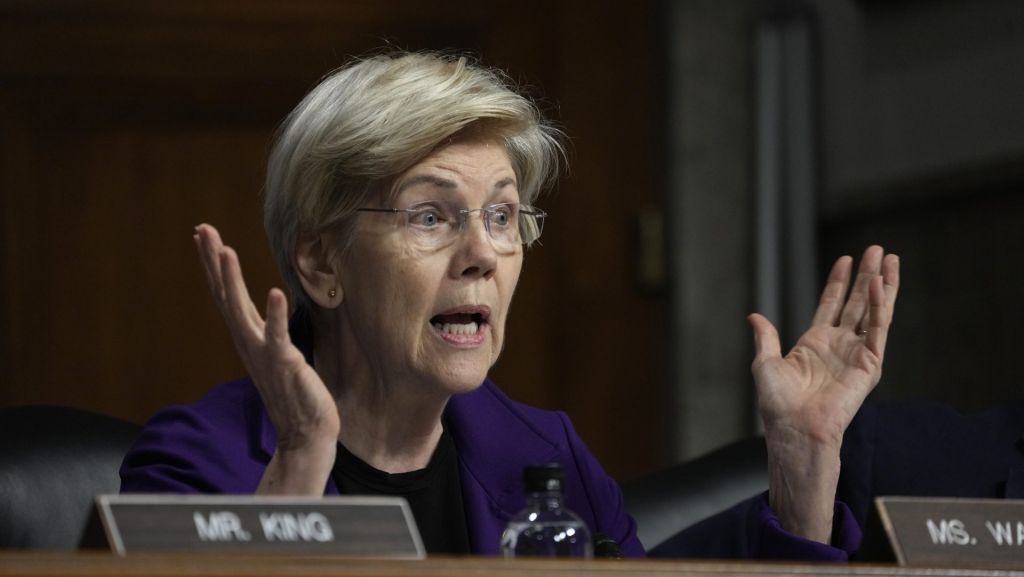
Sen. Elizabeth Warren (D., Mass.) and Rep. Pat Ryan (D., N.Y.) are urging the federal government to crack down on a sports media ecosystem where prices are soaring while access shrinks for fans, citing ESPN’s growing footprint as a prime example of the problem.
In a letter that will be sent to the Federal Communications Commission later on Tuesday, the lawmakers are pushing chairman Brendan Carr to more closely scrutinize consolidation and distribution practices that they say have made live sports increasingly expensive and fragmented. The letter comes in response to a February FCC request for public comment on “sports broadcasting practices and marketplace developments.”
There are over 8,000 public comments on the FCC docket, many of which are from individuals complaining about how expensive and confusing it has become to watch sports on TV.
“For decades, Americans have enjoyed turning on their television sets and quickly finding the
games they wanted to watch for free on an over-the-air broadcast,” the FCC wrote in its February statement. “Yet watching your favorite sports team play is not as easy these days.”
Warren and Ryan agree, but think the FCC could be doing more to help with the problem, citing its “broad authority to promote competition and protect against consolidation” in the media industry.
They say that “anticompetitive practices and corporate greed” have forced fans to pay exorbitant amounts to watch sports, and that multiple subscriptions are often required for people to follow their favorite teams. They point to the fact that NFL games are now “scattered” across 10 different TV networks and streaming services, and that some viewers are spending nearly $800 per season just to watch in-market and national games. The pair has similar concerns about the NBA and MLB.
Mergers and acquisitions in sports have been a major driver of the problem, according to the lawmakers. They say Disney’s acquisition of Fubo has contributed to “decreased competition in the sports streaming market.” That deal saw the ESPN parent buy a roughly 70% stake in Fubo and merge it with the Hulu + Live TV streaming service. It closed in October after a U.S. Department of Justice probe, and only came together after a planned sports-streaming joint venture between ESPN, Fox, and Warner Bros. Discovery was shuttered in the face of a federal lawsuit.
They also flag the recent deal under which the NFL acquired a 10% equity stake in ESPN, which was announced in August and closed in January, as harming competition and providing ESPN with “incentive to raise prices for viewers.”
That transaction was part of a trend of deals between media companies and the leagues they cover. In July, Fox bought a 33% stake in Penske Entertainment Corp., the parent company of the IndyCar Series, which also owns the Indianapolis Motor Speedway where the Indianapolis 500 takes place. The prior month, ESPN took a minority stake in the Premier Lacrosse League as part of a deal that also included a five-year extension of their media rights deal.
Finally, they highlight ESPN’s new deal with MLB, which provides a 30-game national package that will air on ESPN’s linear networks, as well as the new ESPN direct-to-consumer service. MLB separately reached media rights deals that will provide NBCUniversal and Netflix with some games. As part of the agreement with ESPN, MLB.TV rights were folded into ESPN, as were the access to local rights for the Diamondbacks, Guardians, Padres, Rockies, Twins, and Mariners.
Warren and Ryan say the deal with ESPN raises “additional concerns about a lack of competition that could lead to the entities limiting fans’ access to the games they want to watch on television or via streaming, while increasing the overall cost for access to those games.”
The lawmakers worry that ESPN has “not committed to keeping the price of MLB.TV the same for existing subscribers past the 2026 season.”
“The anti-competitive nature of ESPN and MLB’s new deal raises serious concerns about potential downstream effects on consumers and competitors,” the lawmakers write.
“To promote competition in sports media in support of the public interest, we encourage the Commission to act to protect sports fans from growing consolidation,” the letter concludes.
Download the FOS App
The business of sports, in your pocket.



Scan the QR code to get the app now.