The Charleston Open’s tournament director says its record-setting, equal prize money is not just for show.
In an interview with Front Office Sports ahead of the Charleston Open, tournament director Bob Moran said the $2.3 million purse for the tennis tournament—nearly twice as much as the $1.2 million mandated minimum purse for a WTA 500 event—makes business sense.
“We did not want to be in the business of subsidizing prize money,” Moran said.
Moran is also the president of local billionaire Ben Navarro’s family office, Beemok Sports & Entertainment, which owns and operates the Charleston and Cincinnati Opens. Navarro—the father of player Emma Navarro—bought the tournaments in 2018 and 2022.
“We’ve got to be selling enough tickets, our partnerships have to be in line, and our media dollars that we’re bringing in from our international partners—they all have to support the business of it,” Moran said.
The tournament also announced in February that an additional $200,000 will go to the WTA’s player benefit programs—a total of $2.5 million.
The Charleston Open, the main draw of which starts Monday, announced last year that starting in 2026, it would have equal prize money as 500-level events on the men’s tour.
ATP and WTA 500 events fall in third among the hierarchy of tennis events. The most prestigious are the four Grand Slams, organized independently from the WTA and ATP, followed by 1000-level events like the recently concluded Miami Open.
The tournament’s move to bring equal prize money is eight years ahead of the WTA’s goal to deliver equal prize money across all single-week, non-combined WTA 1000 and 500 tournaments by 2033. The WTA also aims to have equal prize money at combined WTA 1000 and 500 events by next year.
The Charleston Open was able to hit the milestone early due a deal with title sponsor Credit One bank, in which Navarro owns a significant minority stake.
Moran, who sits on the WTA board of directors and ATP Tournament Advisory Council, understands it likely does not make business sense for other WTA tournaments to offer equal prize money yet. He believes the renegotiation of media rights deals over the next few years will be the key to the rest of the tournaments hitting the tour’s goal.
“Right now, what the ATP is bringing in media dollars far outweighs the WTA,” Moran said. He said about 63% of prize money for a typical WTA 500 event is covered by international rights deals and partnerships. On the men’s tour, he says, rights and sponsorships easily cover all of the prize money costs.
“That’s where the business doesn’t make sense for people. Not yet. We were able to secure a partner to help us get there.”
Charleston’s Schedule Woes
World No. 6 Amanda Anisimova withdrew from the tournament Saturday due to injury. Top-30 player Emma Navarro, daughter of the tournament’s owner, withdrew a few days earlier.
The withdrawals put a spotlight on the Charleston Open’s awkward spot in the tennis calendar.
As a green clay court tournament in the U.S., it slots right into the end of hardcourt season as players prepare for the European clay court leg. But the tournament also follows a heavy early season schedule that several players have already voiced concerns about in recent months and caused mass withdrawals at the Dubai Tennis Championships in February.
Moran admitted that the Charleston Open doesn’t have a prime placement in the tennis calendar.
“We’re not in a great spot, to be honest,” Moran said. “The calendar is what it is. We’re just going to continue to fight and create a great event and do the things that we’re doing. Hopefully players will continue to recognize that and we might be a better option in the future.”
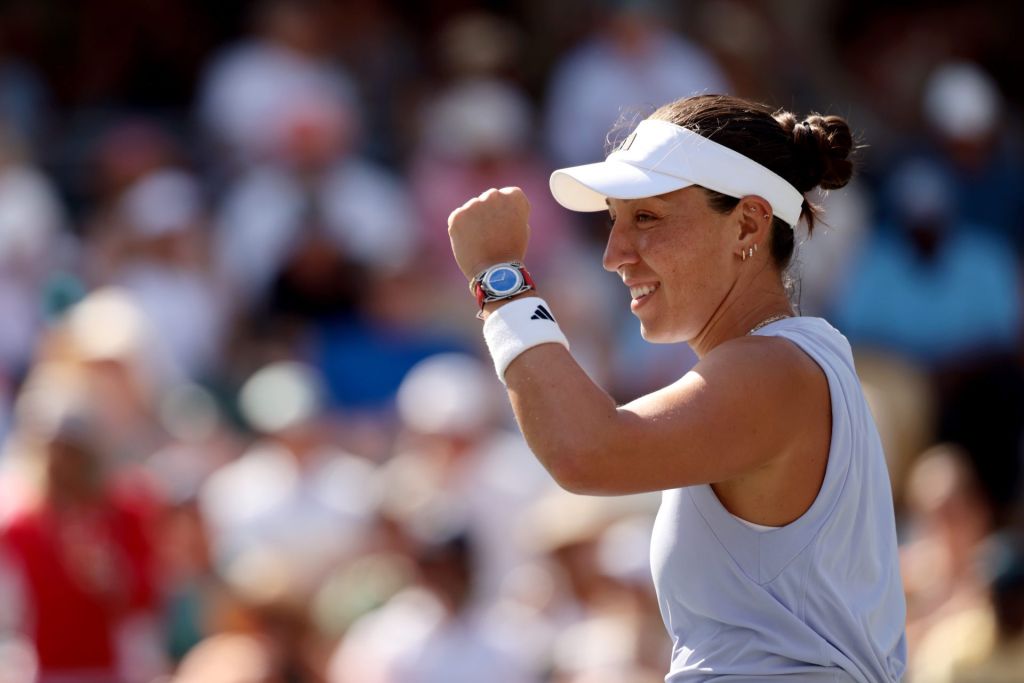
In an effort to improve the tennis calendar, new tour chair Valerie Camillo created a Tour Architecture Council in February led by world No. 5 and reigning Charleston Open champion Jessica Pegula. Pegula told FOS earlier this month at Indian Wells that she has no “actual idea” of how to fix the schedule.
Moran said he’s been combing through data on players’ attendance at WTA events to try to find solutions to the issue. He believes incremental changes—rather than drastic ones—will make the difference.
“I don’t think there’s dramatic change; I think it’s just smarter change, based on the analytics,” Moran said.